
What a 5-Year BOP Recertification Includes
5-Year BOP Recertification: Scope, Testing, and Service Planning
See what a 5-year BOP recertification includes and schedule service with MEYER from Corpus Christi or Odessa.
MEYER’s 5-year BOP recertification scope typically includes teardown, detailed inspection, testing for failure points and stressors, replacement of worn sealing or pressure-control components as needed, calibration and function verification, and the documentation package needed to return equipment to service within specification. After that first answer, the real planning question is not whether a recertification matters. It is how to schedule it without creating avoidable downtime, incomplete paperwork, or last-minute rental pressure. OSHA describes the BOP stack as a critical barrier used to shut off the well hole and prevent a blowout, while API 16D establishes design standards for the control systems used to operate BOPs and associated valves. Here at MEYER, we treat a 5-year recertification as a controlled maintenance event that has to protect well control readiness, service records, and rig schedule at the same time. We support that work through factory-trained technicians, preventive maintenance programs, six-month inspections, five-year re-certifications, aftermarket recertification support, and nationwide service coverage anchored by our Corpus Christi headquarters and West Texas service footprint. In this article, we break down what belongs in the recertification scope, how to separate routine inspections from full recertification work, when shop service makes more sense than field service, and how we help crews stage service or rental support around active drilling programs.
A 5-year BOP recertification is a structured inspection, testing, and documentation process used to confirm that blowout preventer equipment and related control systems remain fit for service within applicable specifications. It is commonly used to restore confidence in mechanical integrity, pressure control performance, and compliance records. For operators working across U.S. shale basins and international markets, it helps by reducing well control risk and clarifying maintenance status before the next drilling campaign.
Table of Contents
Teardown, inspection, and replacement items
Calibration, testing, and documentation package
Scheduling around rig uptime and maintenance windows
Configuration Comparison and Operational Value
6-month inspections vs 5-year recertification
Shop service vs field service use cases
Odessa and Corpus Christi recertification logistics
Forgotten Specs: Items Crews Miss Before Recertification
Field Operations Insight: Staging Spare Units to Reduce Downtime
Core Recertification Scope
Key Takeaway: We recommend treating a 5-year BOP recertification as a full service event that verifies mechanical condition, pressure-control performance, and documentation readiness instead of a simple repeat of routine inspection work.
Teardown, inspection, and replacement items
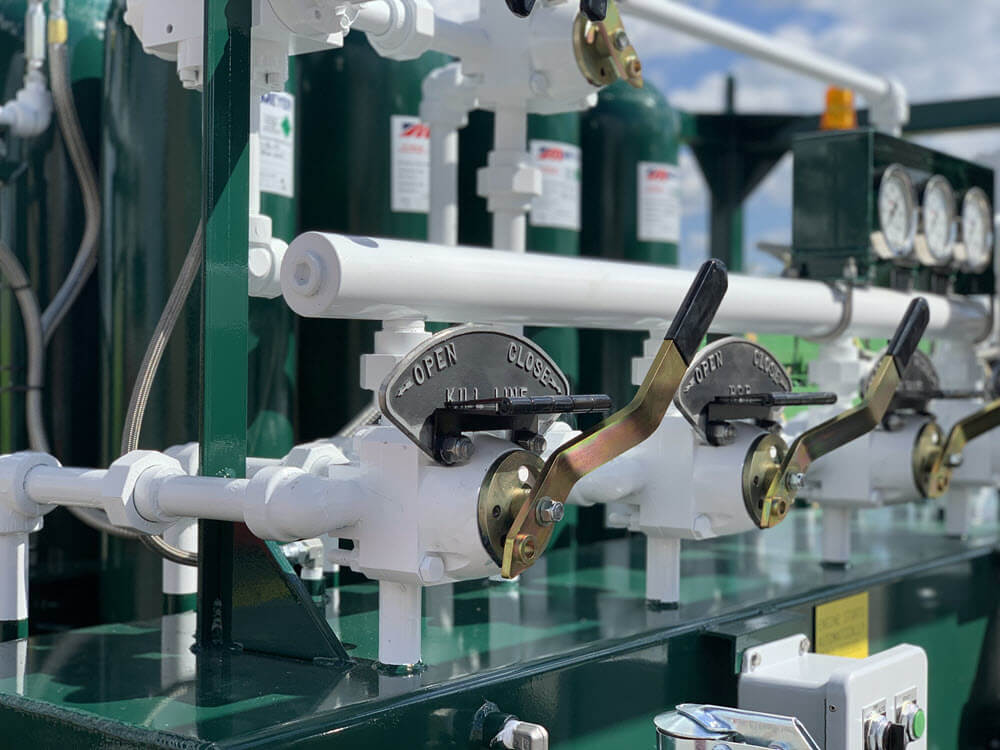
A true five-year recertification starts with controlled teardown and component-level evaluation. Our technicians do not treat this as a visual once-over. We approach it as mechanical verification of the assemblies that affect well control integrity, sealing reliability, and repeatable operation under pressure. MEYER’s certification and service pages make that service posture clear by tying recertification to testing for failure points, stressors, and thorough mechanical inspection of accumulators, blowout preventers, and hydraulic systems.
In practice, that means we review the condition of the equipment that actually determines whether the system will close, hold, and respond as intended. On a BOP control package or related hydraulic system, we are looking for wear, contamination, seal degradation, calibration drift, hose issues, bottle concerns, and other signs that the unit has moved outside acceptable service condition. For operators, that distinction matters because a worn component can still look acceptable from the outside while creating response-time, leakage, or pressure-retention problems in the field.
We typically organize the teardown scope around these priorities:
- pressure-containing and pressure-controlling components
- sealing elements, hoses, and wear items
- hydraulic control hardware and function-critical assemblies
- contamination checks and fluid condition concerns
- damage, corrosion, or fatigue that can affect return-to-service decisions
That approach aligns with how OSHA frames the BOP system as a well-control barrier rather than a simple accessory on the rig. If the barrier is not mechanically ready, the paperwork alone does not protect the operation.
This is also where complementary support equipment enters the picture. We often see recertification planning improve when crews review the condition of associated accumulator units, hydrostatic test units, and aftermarket BOP-related assemblies at the same time. MEYER supports accumulator manufacturing, aftermarket service, and pressure-control recertification under the same broader service network, which helps us assess the equipment package as a working system instead of isolated components.
Calibration, testing, and documentation package
Once teardown findings are addressed, we move into testing and documentation with the same discipline. Recertification only helps the customer if the equipment comes back with a usable record trail and confirmed performance. Our service pages emphasize six-month inspections, five-year re-certifications, calibration, hydraulic and hydrostatic testing, drawdown tests, and function tests because those activities are what turn service work into field-ready proof.
The documentation package matters for two reasons. First, your internal maintenance and audit trail needs a clean record of what was inspected, what was replaced, and what was tested. Second, operations teams need to know what condition the unit is in before it goes back into service or into a staged spare position. We recommend that every five-year event leaves the shop with a traceable service summary, test documentation, and clear status on any limits, follow-up items, or recommended related maintenance.
Where applicable, we also tie the discussion back to API 16D expectations around the control systems used to operate BOPs and associated valves. The standard establishes the design framework for those control systems, and our job on the service side is to help confirm the maintained equipment remains ready for the duty it is expected to perform. That is one reason we prefer a controlled recertification scope over informal field fixes when the service interval has reached a major milestone.
Request a Recertification Quote
Scheduling around rig uptime and maintenance windows
The best five-year recertification plan is built backward from uptime requirements. We advise customers to schedule the work around known rig moves, stack maintenance windows, or campaign transitions rather than waiting for a narrow gap between active jobs. That recommendation is grounded in what MEYER already offers: preventive maintenance, field service, centralized dispatch, and both short-term and long-term rental support when service timing gets tight.
Our goal is to keep the recertification from becoming a schedule surprise. When crews wait until the stack is urgently needed, they reduce options. Shop capacity, replacement parts, transport timing, and related support equipment all become more compressed. We recommend identifying the service window early, confirming the scope before shipment, and deciding in advance whether you will stage a spare accumulator, test unit, or related pressure-control asset to protect the drilling schedule.
That planning mindset is especially important for contractors moving between basins or managing multiple crews. A five-year event should be visible on the maintenance calendar long before it becomes an operations problem. Based on what we see in service, the customers who plan the event as a project usually control downtime better than the customers who treat it as a last-minute repair call.
Configuration Comparison and Operational Value
Key Takeaway: We recommend using routine inspections to maintain readiness between campaigns, but using a 5-year recertification to reset condition confidence, documentation quality, and major service visibility.
6-month inspections vs 5-year recertification
Routine inspection and full recertification do different jobs. We provide both, but we do not advise operators to treat them as interchangeable. Our service and certification pages explicitly position six-month inspections and five-year re-certifications as separate service tracks, which is the right operational framing for maintenance planning.
| Scope Item | 6-Month Inspection | 5-Year Recertification |
|---|---|---|
| Primary objective | Maintain service readiness | Re-establish full service condition confidence |
| Depth of work | Inspection and targeted maintenance | Structured teardown, inspection, testing, and repair scope |
| Component access | Limited by in-service practicality | Deeper access to wear and hidden failure points |
| Documentation level | Routine maintenance record | Full recertification and test package emphasis |
| Downtime impact | Lower if planned well | Higher, but more comprehensive |
| Best for | Between major service intervals | Major milestone maintenance event |
Based on MEYER product specifications and service descriptions.
Here is the operational verdict. If your goal is to keep equipment in rotation with minimal interruption, six-month inspections are the right tool. If your goal is to confirm deeper condition, catch issues that routine access will miss, and return equipment with stronger documentation and service visibility, a five-year recertification is the correct move. We recommend that operators resist the temptation to stretch routine inspections into something they are not designed to replace. That usually saves a little time up front and creates more uncertainty later.
Shop service vs field service use cases
The next decision is where the work should happen. We support field and facility-level service, but not every task belongs in the field. MEYER’s service pages reference field servicing, GPS-equipped service vehicles with centralized dispatch, facility-level BOP resealing and testing, and hydraulic and hydrostatic testing. That gives us the flexibility to match the method to the job rather than force every scope item into one setting.
| Decision Factor | Shop Service | Field Service |
|---|---|---|
| Best use | Full recertification scope and controlled testing | Targeted inspections, troubleshooting, and select maintenance |
| Work environment | Repeatable and controlled | Fast response near the active operation |
| Documentation control | Stronger for major service events | Useful for field records and interim work |
| Parts access | Better for deeper rebuild scope | Better for urgent limited repairs |
| Downtime tradeoff | More transport planning, better work control | Faster response, narrower practical scope |
| Ideal application | Planned five-year event | Between-interval service support |
Based on MEYER service capabilities and field support descriptions.
We usually recommend shop service for the core of a five-year recertification because it gives us better work control, better traceability, and a better environment for the testing and documentation package. Field service still has real value. It is often the right choice for troubleshooting, pre-shipment inspection, related support equipment checks, or interim maintenance before the unit is sent in. In other words, field service supports the recertification plan, but it should not automatically replace the plan.
For quick decision support, we advise these use cases:
- Drilling contractor + active Permian schedule + due major service interval = shop recertification with staged spare support, because schedule risk is usually higher than freight inconvenience.
- Operator + Gulf Coast asset near Corpus Christi + controlled outage window = shop recertification from our Corpus Christi service base, because transport and response are easier to coordinate.
- Maintenance team + suspected issue between major intervals + immediate readiness concern = field service first, then planned shop scope if findings justify it, because not every problem needs a full teardown on day one.
When you need to define scope before moving equipment, we can review the asset class, current interval status, related support equipment, and preferred downtime window with your team. Our engineers and service personnel work from a manufacturing, rental, and aftermarket base, so we can usually help you answer the practical questions early: what should go to the shop, what should be checked in the field first, and what supporting units should be staged to keep the schedule intact. We also support equipment beyond our own product line through stocked service centers and competitor-support capability that MEYER references on its service page. If you need a quote, a service plan, or a recertification window built around a drilling program, we can start that discussion through meyernow.com/request-more-information.html or at 877-44-MEYER. We do that work every day with customers who need maintenance planning tied to real rig timing, not generic maintenance language.
Regional Field Authority
Key Takeaway: We plan recertification differently in West Texas and along the Gulf Coast because transport timing, operating environment, and schedule exposure are not the same.
Odessa and Corpus Christi recertification logistics
Our regional planning starts with where the equipment is working and how fast the customer may need it back. In West Texas, our Odessa area footprint supports maintenance and recertification work close to Permian activity, while our Corpus Christi headquarters supports Gulf Coast operations and offshore-adjacent logistics. MEYER’s service locations page lists headquarters in Corpus Christi, West Texas locations in Odessa, Houston support, Kilgore, Oklahoma City, North Dakota, Pennsylvania, Colorado, MEYER-Fabritech in Houston, and the Hytec division in Grand Junction, giving us an 11-location domestic service network for planning around customer geography.
That network matters because the service problem is not identical from basin to basin. Our team in West Texas sees more pressure around remote scheduling, freight coordination, and keeping equipment moving across active drilling programs. Along the Gulf Coast, our Corpus Christi team is positioned to support offshore and inland operations where rapid response and coastal logistics matter more. MEYER’s Corpus Christi location page specifically highlights rentals, hydraulic testing and recertification, preventive maintenance, field servicing, and support for Gulf Coast energy operations.
For field operations, the practical recommendation is simple. If your asset is tied to a high-utilization program in the Permian, plan the recertification early and decide whether to stage a spare before the equipment leaves service. If your asset is near Corpus Christi, Houston, or other Gulf Coast activity, use the shorter logistics chain to tighten the service window and reduce dead time. We also keep the broader equipment picture in view. Rental accumulators, greasing units, SPYDER manifolds, and hydrostatic test units are all part of MEYER’s fleet and can support continuity when a major maintenance event is already on the calendar.
When you already know the window for your next five-year event, we can help you turn that into a service schedule instead of a service surprise. Our nationwide service network includes 11 domestic locations, and our rental fleet includes more than 300 pieces of equipment, which gives us real flexibility when one unit is down for a planned maintenance event. If your job is centered in Odessa, Corpus Christi, Houston, or another active service point, we can coordinate the recertification scope with transport, field review, and support equipment availability. We also have factory-trained technicians, preventive maintenance capability, and aftermarket recertification support across pressure-control equipment categories. To line up the work, call 877-44-MEYER or send the equipment list and timing request through meyernow.com/request-more-information.html so we can help build the service plan around the drilling schedule.
Forgotten Specs: Items Crews Miss Before Recertification
Key Takeaway: We see recertification delays most often when equipment arrives without clear service history, incomplete accessory scope, or unresolved contamination issues.
One of the easiest ways to lose time on a five-year event is to send the equipment in without the information needed to define the work cleanly. We recommend that crews confirm the asset list, service interval status, known operating issues, and related equipment that should be reviewed with the main unit. When that information is missing, the shop spends time identifying the problem before the actual recertification work can move efficiently.
The items most often missed are not always dramatic. They are the practical details that determine whether we can move straight into scope, testing, and documentation:
| Pre-Service Item | Why It Matters | Common Result if Missing |
|---|---|---|
| Asset identification | Confirms exact unit and service history | Scope confusion and avoidable delays |
| Known operating issues | Focuses inspection on real field concerns | Rework or second-round troubleshooting |
| Accessory list | Confirms hoses, panels, bottles, and related assemblies | Incomplete service event |
| Contamination status | Helps plan cleaning and inspection effort | Longer prep and uncertain findings |
| Timing requirement | Sets priority around job schedule | Missed turnaround expectations |
| Return-to-service need | Determines if rental staging is required | Increased downtime risk |
This is also where related product knowledge helps. If the recertification ties into a BOP accumulator unit or other control hardware, we want to know that before the job starts because MEYER builds and supports those systems under applicable API-16D guidelines and offers aftermarket support and rentals around them. The more complete the incoming picture is, the easier it is for us to keep the service event controlled, documented, and tied to the next operating deadline.
Field Operations Insight: Staging Spare Units to Reduce Downtime
Key Takeaway: We often recommend staging a spare unit before a major recertification because the cost of a planned backup is usually lower than the cost of waiting on one critical asset.
A five-year recertification is one of the clearest situations where staged backup equipment can protect schedule and cost. Our rental pages confirm that we support short-term, long-term, and lease options across a fleet of more than 300 units, including accumulators, greasing units, SPYDER manifolds, mobile test units, shop test units, and flushing units. That matters because the drilling program usually does not pause just because a major maintenance interval arrived.
We do not recommend a staged spare for every job, but we do recommend it when the unit is single-point critical, the schedule is tight, or transport timing is exposed. In those situations, the backup is not extra spend for its own sake. It is a way to convert uncertainty into a controlled maintenance window. Based on what we see in the field, that is often the better total-cost decision.
- stage a spare when the asset is critical to immediate return-to-service
- stage a spare when the basin is remote or freight timing is uncertain
- stage a spare when multiple jobs depend on the same equipment class
- skip the spare only when the outage window is wide and schedule exposure is low
That logic is strongest in the Permian, Bakken, and other high-movement environments, but it also applies on the Gulf Coast when vessel, yard, or customer timing is compressed. We can help determine whether you need a spare accumulator, related support equipment, or only targeted field support while the recertification is in progress.
Key Takeaways
- A 5-year BOP recertification is deeper than a routine inspection and should be planned as a major maintenance event.
- We use teardown, testing, and documentation to confirm service condition instead of relying on visual checks alone.
- Shop service is usually the better fit for full recertification because it improves work control and record quality.
- Our 11-location service network and 300+ rental fleet help us protect uptime during planned service windows.
- MEYER BOP accumulator support, aftermarket services, and testing capability make it easier to coordinate related well-control equipment.
Frequently Asked Questions About 5-Year BOP Recertification
What triggers a 5-year recertification?
A five-year recertification is typically triggered by the maintenance interval itself, but we also advise customers to consider it when service history is incomplete, equipment condition is uncertain, or the unit is moving into a higher-consequence operating program. Our certification pages position five-year re-certifications alongside six-month inspections because they serve different maintenance purposes. If the equipment is due by interval and your team still has unanswered questions about condition or documentation, we recommend moving forward with the larger scope rather than trying to extend routine checks beyond their intended role.
How long does a 5-year BOP recertification take?
The timeline depends on asset type, findings during teardown, parts condition, transport time, and how complete the incoming documentation is. We do not give every customer the same turnaround answer because that is how schedules get missed. Our recommendation is to set the target window early, define the scope before the unit ships, and decide whether a spare should be staged. With service centers, centralized dispatch, and rental support, we can help build a plan around the job schedule rather than leaving timing to guesswork.
Can we handle competitor equipment?
Yes, in many cases we can. Our service page states that our service centers are stocked to support MEYER products and most of our competitors, which is important for contractors running mixed fleets. We still want the equipment list and current condition before confirming scope, because multi-brand service planning works best when we know the exact assemblies and support needs. If your fleet includes competitor units plus MEYER accumulators, greasing units, or test equipment, we can review that package together and build the service plan around the full operation.
Should you stage a rental unit during service?
We recommend staging a rental when the recertified unit is critical to the drilling schedule, when the basin is remote, or when the service window is narrow enough that any delay would create standby cost. Our rental fleet includes accumulators, greasing units, SPYDER manifolds, hydrostatic test units, and flushing units, with short-term and long-term options available. That gives us room to match the backup decision to the job instead of forcing one answer on every customer.
We handle five-year BOP recertification work with the same priority we give any well-control service event: controlled scope, clear documentation, and schedule awareness. From our headquarters at 6733 Leopard Street, Corpus Christi, TX 78409, we support customers through an API-16D-licensed organization with factory-trained technicians, aftermarket recertification capability, and service coverage across 11 domestic locations. When a major maintenance interval is approaching, we recommend planning the scope early and deciding whether a staged rental asset from our 300+ piece fleet will protect your drilling schedule. We can review the unit list, the service window, and any related support equipment before the job starts. To request a quote or schedule service, call 877-44-MEYER
MEYER
Manufacturing, rentals, service, and aftermarket support for oilfield equipment.
Need to coordinate a 5-year recertification window?