

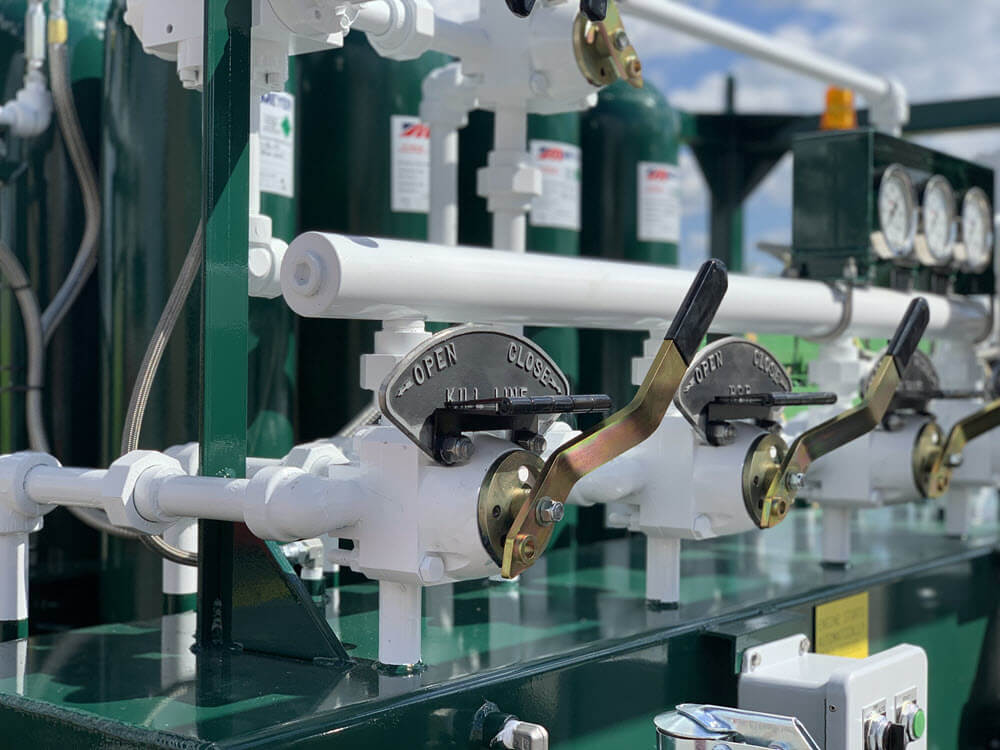
API Spec Q1 Oilfield Manufacturer | MEYER
See what API Spec Q1 means for oilfield equipment manufacturing quality and request MEYER documentation support.
API Spec Q1 for oilfield equipment manufacturers is a quality management system standard for organizations that provide products for the petroleum and natural gas industry. MEYER uses API Q1 as part of our broader manufacturing, service, inspection, and documentation discipline, alongside API 16D, API 6A, and ISO 9001:2015 credentials. For buyers, quality managers, operators, and drilling contractors, API Q1 helps confirm that a manufacturer has controlled processes for documentation, traceability, supplier management, corrective action, and manufacturing quality.
API Spec Q1 is different from a product-specific equipment specification. API 16D applies to control systems for drilling well control equipment, while API Q1 addresses the quality management system behind the organization providing oilfield products. A BOP accumulator buyer should care about both. Product requirements help define what the equipment must do. Quality system requirements help show how the manufacturer controls work, records, changes, purchasing, inspection, and nonconforming product through the manufacturing process.
Our team works with operators, procurement teams, quality managers, drilling contractors, rental companies, and pressure control professionals who need more than a verbal assurance that equipment was built correctly. They need records that support vendor qualification, audits, recertification planning, aftermarket service, and long-term field confidence. This article explains what API Spec Q1 governs, how it differs from API 16D and internal QA, what documentation buyers should request, and why supplier traceability matters as oilfield equipment programs become more data-driven.
Definition: API Spec Q1 is a quality management system standard for organizations that provide products for the petroleum and natural gas industry. It is commonly used to control manufacturing processes, documentation, traceability, supplier management, and corrective action. For operators working across US shale basins and international markets, it helps by strengthening vendor qualification and equipment documentation confidence.
Table of Contents
Quality Management Fundamentals for Oilfield Equipment Manufacturing
Documentation, Traceability, and Manufacturing Controls
How Q1 Differs From Product-Specific Equipment Specs
API Spec Q1, API 16D, and Internal QA Comparison
API Spec Q1 vs API 16D vs Internal QA Table
Procurement, Audit, and Vendor Qualification Use Cases
Corpus Christi Manufacturing and Multi-Location Service Documentation
Contrarian Insight: Why a Product Spec Alone Does Not Prove Manufacturing Discipline
Future Perspective: Digital Quality Records and Supplier Traceability
Frequently Asked Questions About API Spec Q1 Oilfield Equipment Manufacturers
Quality Management Fundamentals for Oilfield Equipment Manufacturing
Key Takeaway: API Spec Q1 helps buyers evaluate the manufacturer’s quality system, not just the final equipment tag, drawing, or product specification.

What API Spec Q1 Governs
API Spec Q1 governs the quality management system used by organizations that provide products for the petroleum and natural gas industry. The current 10th edition of API Specification Q1 establishes quality management system requirements for organizations providing products for the petroleum and natural gas industry. In practical buyer terms, Q1 helps show whether the manufacturer has controlled processes for how work is planned, reviewed, documented, corrected, and improved.
We treat API Q1 as part of the discipline behind our manufacturing and service work. It connects to how we manage documentation, purchasing, inspections, supplier inputs, records, corrective actions, and quality responsibilities. It does not replace product-specific requirements such as API 16D. Instead, it supports the system that helps our team build, service, inspect, and document oilfield equipment in a consistent way.
When we discuss API Spec Q1 with buyers, we focus on practical controls:
- Documented quality management procedures and responsibilities.
- Controlled records for manufacturing, service, inspection, and certification work.
- Supplier and purchasing controls for critical inputs.
- Traceability practices tied to equipment, parts, and service documentation.
- Corrective action processes for nonconforming work or product issues.
- Internal review practices that support continual improvement and customer requirements.
The specification cluster is this: API Spec Q1 does not simply tell a buyer that a manufacturer understands oilfield terminology. It indicates that the organization’s quality system is expected to control how products are made, documented, checked, corrected, and supported. We recommend treating API Q1 as part of vendor qualification because it speaks to manufacturing discipline behind the equipment.
| Quality Area | What Buyers Should Ask For | Why It Matters |
|---|---|---|
| Quality system status | Current API Q1 documentation or certification support | Supports vendor qualification and audit readiness |
| Product specification | Applicable API 16D or equipment-specific documentation | Connects equipment design to product requirements |
| Traceability | Material, component, service, and inspection records | Helps connect equipment history to field support |
| Inspection records | Testing, certification, repair, and recertification documents | Supports compliance reviews and service decisions |
| Corrective action | Process for handling nonconforming work or product issues | Shows how the manufacturer responds when issues occur |
| Supplier control | Purchasing and supplier qualification records when applicable | Reduces risk in critical equipment programs |
Documentation, Traceability, and Manufacturing Controls
Documentation is where quality becomes visible to the buyer. A customer may see a finished accumulator unit, grease manifold, test unit, or repaired pressure control component, but the records show how the work was controlled. We help customers review documentation for equipment manufacturing, service, inspection, testing, repair, recertification, and certification support because those records often matter during audits, vendor qualification, and field readiness reviews.
Traceability is equally important. If a buyer cannot connect equipment history to service records, inspection status, certification documents, or supplier inputs, the equipment becomes harder to manage over its full service life. Our team supports traceability through controlled documentation tied to the equipment and work performed. That is especially important for BOP accumulator units, pressure control equipment, API 6A-related service, and aftermarket work.
Manufacturing controls help reduce variation. They help define how work is planned, verified, recorded, and corrected. For buyers, that means fewer assumptions and stronger records when equipment moves from manufacturing to service, rental fleet support, or field deployment.
How Q1 Differs From Product-Specific Equipment Specs
API Q1 and API 16D are not the same thing. API Q1 addresses the manufacturer’s quality management system. API 16D applies to control systems for drilling well control equipment. A buyer evaluating a BOP accumulator unit should ask about both because one addresses the quality system behind the work and the other addresses product-specific equipment requirements.
Internal QA is also not the same as API Q1. Internal QA may be useful, but it is defined by the company unless it is tied to an external standard or certification framework. API Q1 gives buyers a more formal way to evaluate whether a manufacturer’s quality system is built around recognized petroleum and natural gas industry requirements.
We recommend buyers avoid treating product specs and quality system credentials as interchangeable. A product can be designed to a standard, but the manufacturer still needs controlled processes to build, inspect, document, and support it consistently.
API Spec Q1, API 16D, and Internal QA Comparison
Key Takeaway: API Q1, API 16D, and internal QA can all support buyer confidence, but they answer different questions about the manufacturer, the product, and the company’s internal process.
API Spec Q1 vs API 16D vs Internal QA Table
Procurement teams often see API references grouped together, but the distinctions matter. API Q1 helps evaluate the organization’s quality management system. API 16D helps evaluate requirements tied to BOP control systems and related accumulator equipment. Internal QA helps show how the company manages its own processes, but buyers should ask how those processes are controlled, documented, audited, and connected to recognized standards.
| Factor | API Spec Q1 | API 16D | Internal QA |
|---|---|---|---|
| Primary Focus | Quality management system | Drilling well control control systems | Company-defined quality process |
| Best For | Vendor qualification and manufacturing discipline review | BOP accumulator and control system requirement review | Daily internal checks and company procedures |
| Buyer Question Answered | How does the manufacturer control quality? | Does the equipment align with the product specification? | What does this company check internally? |
| Documentation Value | Quality system records and controlled procedures | Product-specific technical and compliance records | Internal logs, checklists, and work instructions |
| Audit Use | Strong vendor qualification signal | Strong equipment specification signal | Useful only if records are controlled and reviewed |
| Ideal Application | Manufacturer evaluation before purchase or service contract | Accumulator, closing unit, and well control system review | Internal process control and day-to-day verification |
Based on MEYER product specifications.
The comparison verdict is clear: API Q1 helps buyers evaluate the manufacturer’s quality management system, API 16D helps buyers evaluate product-specific well control equipment requirements, and internal QA helps show daily process discipline only when it is controlled and documented. We recommend procurement teams request both quality system documentation and product-specific documentation before approving a manufacturer for critical oilfield equipment.
Procurement, Audit, and Vendor Qualification Use Cases
API Q1 is especially useful when the buyer needs to qualify a manufacturer before placing a purchase order, scheduling recertification work, or approving a rental and service partner. The use case changes by team, but the documentation question stays the same: can the manufacturer show how quality is controlled?
- Procurement team + new BOP accumulator purchase + API Q1 review: We recommend requesting quality system documentation because the buyer needs confidence in the manufacturer before approving the build.
- Quality manager + vendor audit + API Q1 and API 16D comparison: We recommend reviewing both quality system credentials and product-specific equipment documentation because they answer different audit questions.
- Drilling contractor + field repair program + service documentation review: We recommend checking repair, inspection, and recertification records because field equipment history affects future readiness.
- Rental company + fleet qualification + traceability review: We recommend controlled equipment records because rental assets may move across customers, basins, and service intervals.
The decision-support passage is this: buyers should treat API Q1 as a vendor qualification tool and API 16D as a product-specific well control equipment tool. We advise procurement teams to request both when the equipment affects well control, pressure control, field safety, or rental fleet readiness.
If your procurement or quality team needs documentation support, we can help review the correct package before the audit or purchase review begins. We can discuss API Q1, API 16D, API 6A, ISO 9001:2015, inspection records, service documentation, BOP accumulator manufacturing, aftermarket repair, and certification support. Our engineering and service teams can also help clarify which documents support a new equipment build, rental review, repair program, or vendor qualification process. We support operators, drilling contractors, quality managers, procurement leads, and rental companies through our manufacturing and service network. Call 877-44-MEYER or use our request more information form to request quality documentation support.
Corpus Christi Manufacturing and Multi-Location Service Documentation
Key Takeaway: Quality documentation should follow the equipment from Corpus Christi manufacturing through service, rentals, repairs, and recertification work across multiple oilfield regions.
Quality Records Across Manufacturing, Service, and Aftermarket Support
Our Corpus Christi, Texas headquarters supports manufacturing, documentation, service coordination, and customer communication for well control equipment programs. When a BOP accumulator unit, grease manifold, hydrostatic test unit, flushing unit, or pressure control component moves from manufacturing into field use, the records matter. They help connect the build, inspection, service, repair, and recertification history to the equipment that crews rely on.
Our service network adds another layer. West Odessa, Houston, Kilgore, Epping, Oklahoma City, Longmont, Grand Junction, Clymer, Corpus Christi, and our other domestic locations may support equipment after it leaves the original build environment. That means documentation cannot live only in the shop where the equipment was first produced. Records need to support multi-location service, aftermarket support, rental fleet management, and customer audit requests.
Regional conditions also affect documentation needs. Permian Basin customers may need fast service and H2S-related planning. Bakken operations may need cold-weather inspection history. Gulf Coast and Houston-area work may involve facility support, port access, or offshore-adjacent logistics. International customers may need documentation earlier because transport and review windows are longer. The field operations passage is direct: quality records are most valuable when they can travel with the equipment’s lifecycle, not stay buried in one internal folder.
| Documentation Type | Where It Helps | Buyer Value |
|---|---|---|
| API certification documentation | Vendor approval and compliance reviews | Supports qualification before purchase or service work |
| Manufacturing records | New equipment builds and custom projects | Connects build history to equipment requirements |
| Inspection and test records | Service, repair, recertification, and field readiness | Supports maintenance decisions and audit responses |
| Repair and aftermarket records | Equipment lifecycle and future service planning | Helps customers understand equipment condition over time |
| Rental fleet records | Rental readiness and customer turnover | Supports confidence when equipment moves between jobs |
| Supplier traceability records | Critical component review and quality audits | Reduces uncertainty around manufacturing inputs |
Based on MEYER product specifications.
If your team needs records for vendor qualification, service documentation, rental review, repair history, or recertification planning, we can help identify the right documentation path. We have 11 domestic service locations and a rental fleet of more than 300 pieces of oilfield equipment, which gives our customers support across manufacturing, rental, service, repair, and aftermarket programs. Our Corpus Christi headquarters, West Odessa location, Houston support, Kilgore team, and Epping service presence help us keep field needs connected to documentation requirements. For this second step, we recommend using our service locations resource or calling 877-44-MEYER to discuss documentation support. We can help you determine whether the request belongs with manufacturing, service, certification, aftermarket, or rental support.
Contrarian Insight: Why a Product Spec Alone Does Not Prove Manufacturing Discipline
Key Takeaway: A product specification can define equipment requirements, but it does not by itself prove that the manufacturer controls the quality system behind the work.
A product spec is important, but it is not the whole story. It may define requirements for an accumulator unit, control system, valve, or pressure control component, but it does not automatically prove the manufacturer has a controlled quality management system. Buyers need to know both what the equipment is intended to meet and how the manufacturer controls the work that produces it.
This is where API Q1 becomes valuable. It helps buyers evaluate whether the organization has quality management controls around documentation, traceability, purchasing, corrective action, and process discipline. That matters because two manufacturers can claim product knowledge, but the one with stronger quality system controls gives the buyer a better basis for trust, audit readiness, and long-term support.
Our recommendation is simple: do not stop at the equipment spec. Ask how the manufacturer controls records, inspections, nonconforming work, suppliers, corrective actions, and service documentation. For critical oilfield equipment, manufacturing discipline is part of risk management.
Future Perspective: Digital Quality Records and Supplier Traceability
Key Takeaway: Oilfield buyers will increasingly expect quality records that are easier to review, easier to transfer, and tied more directly to equipment history.
Quality documentation is becoming more digital, more searchable, and more important to procurement teams. Paper records still matter, but buyers increasingly want faster access to certificates, inspection records, repair histories, supplier traceability, and service documentation. We see that need across equipment purchases, rentals, aftermarket work, recertification, and audit responses.
A stronger digital quality record program should help buyers answer:
- Which equipment does this record belong to?
- What standard, certification, or service requirement does the record support?
- What inspection, repair, or certification work has been performed?
- Which supplier inputs or critical components need traceability?
- What changed since the last audit, service event, or rental turnover?
- Who can provide the documentation when the equipment moves across basins?
We expect documentation expectations to keep rising because buyers want faster vendor approval, stronger equipment history, and clearer support for compliance reviews. The most useful records will connect the equipment, the work performed, the applicable standards, and the service history in a way the customer can act on.
Key Takeaways
- API Spec Q1 addresses the manufacturer’s quality management system.
- API 16D addresses product-specific well control equipment requirements.
- MEYER is licensed under API 6A, API 16D, API Q1, and ISO 9001:2015.
- Buyers should request documentation for manufacturing, inspection, repair, and certification work.
- Quality records support vendor qualification, rental fleet review, aftermarket work, and audit readiness.
Frequently Asked Questions About API Spec Q1 Oilfield Equipment Manufacturers
What is API Spec Q1?
API Spec Q1 is a quality management system standard for organizations providing products for the petroleum and natural gas industry. We treat Q1 as part of the quality discipline behind manufacturing, service, documentation, and corrective action. For buyers, API Q1 helps show that the manufacturer has structured controls for how work is planned, performed, recorded, corrected, and reviewed. It is especially useful during vendor qualification, procurement audits, and critical equipment purchase decisions.
Is API Spec Q1 the same as API 16D?
API Spec Q1 is not the same as API 16D. API Q1 addresses the quality management system used by a manufacturer or organization providing oilfield products. API 16D applies to control systems for drilling well control equipment, including BOP accumulator and closing unit applications. Based on what our teams see in procurement reviews, buyers should ask for both quality system documentation and product-specific documentation when equipment affects well control readiness.
Why does Q1 matter for buyers?
Q1 matters because buyers need confidence in the manufacturer’s process, not only the final product. A quality system supports documentation control, traceability, supplier management, inspections, corrective action, and audit readiness. We recommend API Q1 review for operators, procurement teams, quality managers, and drilling contractors evaluating BOP accumulators, pressure control equipment, rental fleet partners, or aftermarket service providers. Strong records make later service, recertification, and compliance reviews easier to manage.
Can MEYER provide quality documentation?
We can support documentation requests tied to certifications, manufacturing, inspection, service, repair, recertification, and rental equipment review. Our team can help identify the correct record path for procurement teams, quality managers, operators, and drilling contractors.
Closing
API Spec Q1 helps buyers evaluate the quality management system behind oilfield equipment manufacturing, service, and documentation. From our headquarters in Corpus Christi, TX, we build, rent, service, repair, inspect, and certify equipment for operators, drilling contractors, procurement teams, quality managers, and rental companies. We are an API-16D licensed manufacturer, and we are also licensed under API 6A, API Q1, and ISO 9001:2015. Our 300+ piece rental fleet and 11 domestic service locations give customers support across manufacturing, rental, service, aftermarket, and certification needs. Call 877-44-MEYER or use our request more information form to request documentation support or discuss vendor qualification requirements.
MEYER
Manufacturing, rentals, service, certification, and aftermarket support for oilfield equipment.
Need support with API Q1, API 16D, API 6A, ISO 9001:2015, vendor qualification, or certification documentation?
Related Articles
Keep reading more MEYER articles on API certification, compliance, accumulator readiness, and service documentation.
API-16D Guidance
API 16D Certification Standards in Corpus Christi
See how API-16D compliance supports accumulator, manifold, and hydraulic control reliability for pressure control operations.
Compliance Planning
Oilfield Compliance Checklist 2025
Review compliance planning, inspection readiness, and documentation practices for oilfield equipment programs.
Aftermarket Support
Trust MEYER’s Aftermarket Oilfield Services for Longevity and Compliance
See how repair, recertification, inspection, and aftermarket support can help extend oilfield equipment service life.
Accumulator Systems
BOP Accumulator Systems in Corpus Christi
Review how accumulator systems support hydraulic pressure, BOP response, and well control readiness for Gulf Coast drilling conditions.