

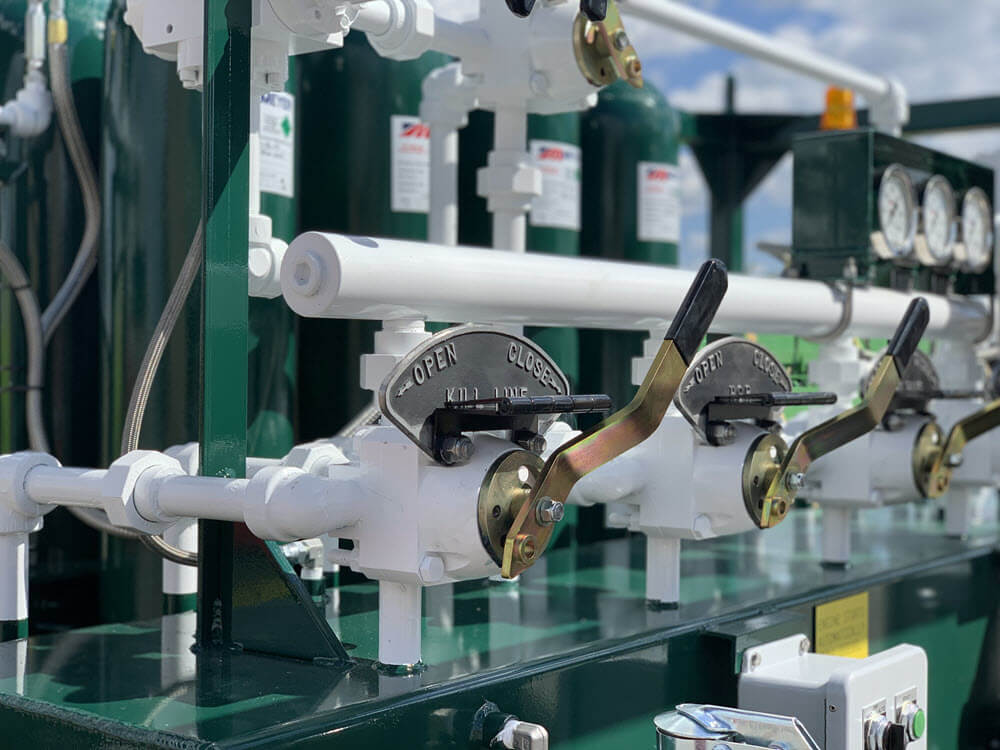
BOP Drawdown Test Procedure: What to Confirm Before Testing
BOP Drawdown Test Procedure: What to Confirm Before Testing
Understand what a BOP accumulator drawdown test verifies, what your report should include, and how to plan testing with MEYER.
A BOP accumulator drawdown test checks whether stored hydraulic energy can operate a specified set of well-control functions without assistance from the charging system. The recorded performance is assessed against the acceptance criteria governing that equipment and operation. To plan the test, confirm the approved procedure, actual system configuration, required functions, and the records the receiving team will need.
If you are preparing a closing unit for a rig move, coming out of service work, or reviewing a test report, the useful question is not simply whether pressure dropped. Pressure normally falls as stored fluid is used. What matters is whether the unit completed the required test under the specified conditions and met every applicable acceptance criterion.
At MEYER, our published equipment services include drawdown tests, function tests, and closing-unit inspection, maintenance, and calibration. We can review the equipment details and service scope with your team before the unit is scheduled to work.
Definition: A BOP accumulator drawdown test is a performance check of a control system's stored hydraulic energy under defined conditions. It evaluates the required functions and remaining pressure without charging-system assistance as specified by the approved procedure. It is distinct from a pressure-integrity test of the BOP or its piping.
Discuss Your Drawdown Test Requirements
BOP Drawdown Testing: Requirements, Reports, and Next Steps
What Your Accumulator Drawdown Test Needs to Demonstrate
Confirm the Governing Requirements Before You Book the Test
Function Test, Drawdown Test, or Pressure Test?
What a Useful Drawdown Test Report Should Contain
What to Do With a Failed, Incomplete, or Low-Margin Result
What Your Accumulator Drawdown Test Needs to Demonstrate
Usable Stored Energy, Not Just Bottle Capacity
Our BOP accumulator units store hydraulic energy in gas-charged accumulators and deliver fluid through the control circuit to operate well-control functions. The charging pumps restore that energy as required by the system design.
Bottle count and nominal volume do not independently establish the hydraulic volume available for a required function sequence. Pre-charge, operating conditions, connected equipment, and the system configuration affect performance. A drawdown result therefore needs to be tied to the actual arrangement tested, not just a model name or a list of bottles.
Keep stored-energy performance separate from pump recovery. A charging system can restore pressure after a test, but that recovery does not replace demonstrating the required accumulator performance without charging assistance.
Why the Approved Procedure Matters
The test needs defined starting conditions, a specified function sequence or approved equivalent, and applicable acceptance criteria. Those details must be established before the result can be interpreted.
Do not choose a final-pressure limit from another unit's report or assume it is always a fixed amount above pre-charge. Confirm the criterion for the system and requirements that apply to your operation. The same care applies to timing, temperature-related conditions, and any required stabilization or measurement periods.
This guide helps you prepare for and review the test. It does not supply the isolation sequence, operating settings, or function instructions for carrying it out. Qualified personnel need the complete approved procedure for the actual equipment and test setup.
Confirm the Governing Requirements Before You Book the Test
Separate API Standard 53 From API Specification 16D
API Standard 53 addresses well-control equipment systems for drilling wells. API Specification 16D addresses control systems for drilling well-control and diverter equipment. They serve related purposes, but a reference to control-system design does not independently establish the complete field test procedure.
Identify the standards and editions required by applicable regulation, the equipment documentation, and the operator's program. The newest published edition is not automatically the edition incorporated into a particular regulatory requirement. Have any conflict or uncertainty resolved through the responsible technical and compliance personnel before testing.
This matters when equipment changes assignments. Do not assume that a report accepted for one customer, jurisdiction, or configuration satisfies every requirement of the next job.
Give the Service Team the Actual Configuration
Send the unit identity, current drawings, installed accumulator arrangement, and the BOP functions covered by the proposed test. Include relevant repairs, replacement components, changes to connected equipment, and open findings.
For the planning discussion, confirm that the test procedure addresses:
- The system and functions included in the test boundary.
- Required pre-charge information and verification.
- Starting conditions and pressure measurement points.
- Charging-system exclusion, including automatic starting arrangements.
- Required function sequence and any authorized simulation method.
- Instrument suitability and calibration status.
- Applicable readings, timing, and acceptance criteria.
- How results, deficiencies, and follow-up work will be recorded.
This is a scope checklist, not a sequence of operating steps. If a required input is missing, resolve it before the team attempts to produce a result.
Account for Automatic Starting
Our AutoStart Box is part of the starting-control arrangement on applicable packages. The approved test setup must account for any automatic charging response so it does not assist a test intended to evaluate stored energy alone.
Have qualified personnel establish and verify the specified setup. Do not improvise by disconnecting controls or defeating interlocks. The procedure also needs to address restoration and verification of the normal operating configuration after the work.
Function Test, Drawdown Test, or Pressure Test?
These tests answer different questions even when they share a service window. A function test checks intended operation of the selected controls and functions. A drawdown test evaluates stored-energy performance under defined conditions, while a pressure test assesses pressure integrity within its specified scope.
| Test | Main Question | What a Passing Result Does Not Establish |
|---|---|---|
| Function test | Did the required controls and functions operate as specified? | The complete required stored-energy capacity without charging assistance |
| Accumulator drawdown test | Did the accumulator system complete the required performance test without charging assistance? | Pressure integrity of every BOP component, hose, or line |
| Hydrostatic or pressure test | Did the equipment within the test boundary meet the specified pressure-integrity criteria? | Accumulator capacity or complete control-system performance |
Start from the required test scope rather than ordering one test name as a substitute for another. If repairs affect both stored-energy performance and a pressure-containing assembly, the service plan may need more than one type of verification.
Our oilfield equipment services include drawdown and function testing as well as hydraulic and hydrostatic testing of pressure-control equipment. Confirm the work required for your unit and the records needed for each part of the scope.
What a Useful Drawdown Test Report Should Contain
Make the Result Traceable to the Equipment
A useful report lets another qualified person understand what was tested without having attended the work. It should connect the result to the equipment configuration, procedure, acceptance criteria, and measurement conditions.
Check that your record contains the information required by the governing procedure, including:
- Unit manufacturer, model, serial number, and relevant configuration.
- Connected equipment or approved simulation arrangement within the test scope.
- Governing standard references and the approved procedure revision.
- Required pre-charge verification and instrument identification.
- Starting conditions, required readings, and relevant temperature information.
- Functions completed and any required timing observations.
- Acceptance criteria and the reported result.
- Deviations, incomplete items, deficiencies, and corrective actions.
- Personnel responsible for performing, witnessing, and accepting the work where required.
Retain the underlying readings rather than keeping only a pass label. That detail is important if the unit is modified or someone later needs to compare performance across tests.
Keep Instrument Status Separate From Appearance
Pressure readings need instruments suitable for the measurement and the applicable program. A gauge that is readable and undamaged is not automatically within calibration or appropriate for the required measurement.
Record instrument identification and required calibration information. If a result conflicts with previous records, instrument status is one item for qualified review, alongside setup, configuration, and operating conditions. Do not assume that an unexpected reading proves a bottle or bladder fault.
Record Conditions That Affect Comparison
Temperature changes associated with charging and discharge can influence gas pressure. Use the measurement and stabilization provisions specified for the test, and record the conditions the procedure requires.
A reading taken at a different point in the process may not be directly comparable with an earlier report. If the results differ, first establish whether the setup, required functions, instruments, and measurement conditions were equivalent. Do not add a waiting period or reinterpret a limit simply to obtain a passing result.
What to Do With a Failed, Incomplete, or Low-Margin Result
Separate Acceptance From Investigation
A result that meets every acceptance criterion is different from a failed or incomplete test. If a passing result leaves little margin or differs from previous performance, request a qualified review of the trend without automatically relabeling it as a failure. If the required criteria were not met, the unit should not be represented as ready on the basis of that test.
The final pressure or pressure pattern does not identify the cause by itself. Review may need to address the test setup, pre-charge, effective accumulator capacity, hydraulic demand, leakage, and measurement accuracy. Those are investigation categories, not diagnoses that can be made from a single number.
An incomplete test also needs a clear record. If the required sequence was not finished or the starting conditions were not established, do not treat the result as equivalent to a completed test simply because the last reading appeared acceptable.
Correct the Cause and Document the Retest
Qualified personnel should determine the corrective work and required follow-up. Keep the original result, assessment findings, repairs or adjustments, and subsequent test records connected to the unit.
Do not change the function sequence, increase starting pressure beyond the approved condition, or alter acceptance criteria to turn an unsuccessful test into a pass. Any legitimate change to the procedure or configuration needs the appropriate authorization and documentation.
If pump recharge is slow after the test, record that observation separately. It may require assessment of the charging system. A stored-energy result and a recharge-performance result should not be treated as the same finding.
Plan Drawdown Testing Around Rig Moves and Service Work
Confirm the Trigger and Leave Time for Follow-Up
Check when the applicable program requires testing and whether repairs or configuration changes require additional verification. Do not apply a universal interval to every drilling, workover, or rental application.
When the required work is being scheduled, allow time for findings to be assessed, corrected, and retested. Booking the test immediately before shipment can leave your team without a workable response if the unit does not meet the criteria.
For a rig move or rental handoff, confirm who will review the report and whether further checks are required after installation. A yard test may provide useful evidence of the configuration tested there, but it does not automatically cover a different installed arrangement.
Our BOP accumulator inspection checklist can help organize the broader equipment review. Keep its inspection scope connected to the test plan rather than assuming an inspection replaces performance testing.
Coordinate the Location and Operating Conditions
Use our service locations resource when planning work around Corpus Christi, Odessa, Kilgore, Epping, or another operating region. Share the unit details and job requirements so our team can confirm the appropriate location, scope, and availability.
If the equipment is headed to colder conditions, review our BOP accumulator winterization guidance as part of the deployment plan. Passing a drawdown test does not independently establish that the power package, fluid, or installed protection suits every temperature the unit may encounter.
Where a repair window could affect the assignment, discuss a contingency before the move. Our accumulator rental options provide a route for reviewing temporary equipment, subject to the job requirements and actual availability.
Key Takeaways
- A drawdown test evaluates stored-energy performance without charging assistance under specified conditions.
- Use the procedure and acceptance criteria applicable to the actual equipment and operation.
- Function, drawdown, and pressure tests have different scopes.
- Keep the configuration, underlying readings, instrument information, and required conditions in the report.
- Distinguish a passing result with limited margin from a failed or incomplete test.
- Plan time for assessment, corrective work, and retesting before deployment.
Frequently Asked Questions About BOP Drawdown Testing
What Is a BOP Drawdown Test?
It is a performance test of the accumulator system's stored hydraulic energy without charging-system assistance under the approved test conditions. The required functions, readings, and remaining pressure are assessed against the applicable acceptance criteria. The result applies to the configuration and conditions recorded for that test.
How Often Should Drawdown Tests Be Performed?
Use the interval and event-triggered requirements applicable to the operation, equipment, and governing program. Repairs, configuration changes, or installation conditions may require additional verification. Confirm the actual requirements rather than using one interval for every unit or assignment.
Is a Drawdown Test the Same as a Function Test?
No. A function test checks specified controls and functions, while a drawdown test evaluates stored-energy performance without charging assistance under defined conditions. Neither independently replaces the required pressure-integrity testing of the equipment.
What Happens if a Unit Fails a Drawdown Test?
The failed test cannot support a claim that the unit is ready for its intended well-control use. Qualified personnel should assess the setup and equipment, determine corrective work, and complete the required retest. Keep the original findings, actions, and subsequent results in the equipment record.
Can MEYER Perform Field Drawdown Testing?
Drawdown and function tests are part of our published service offering. Whether your work can be completed in the field or needs a facility depends on the equipment, location, required scope, and available arrangements. Contact our team to confirm those details before scheduling the work.
Schedule Accumulator Testing With MEYER
Send us the unit's model and serial number, current configuration, relevant service history, governing program, proposed test location, and required service window. Include any open findings and the report or witness requirements for the assignment.
From our headquarters in Corpus Christi, Texas, we support accumulator equipment planning and service coordination. Use our request more information form or call 1-877-44-MEYER to discuss drawdown testing, function testing, or a broader closing-unit service scope.
Request Drawdown Test Scheduling
More BOP Testing, Inspection, and Maintenance Guides
Service planning
5-Year BOP Recertification Scope
Review the broader service scope and planning considerations for major maintenance.
Accumulator controls
AutoStart vs Manual BOP Units
Compare starting-control considerations for BOP accumulator packages.
Equipment inspection
BOP Accumulator Inspection Checklist
Organize the equipment condition and documentation review before deployment.
Stored energy
Nitrogen Backup System for BOP Accumulators
Review how backup planning fits into the complete accumulator system.