

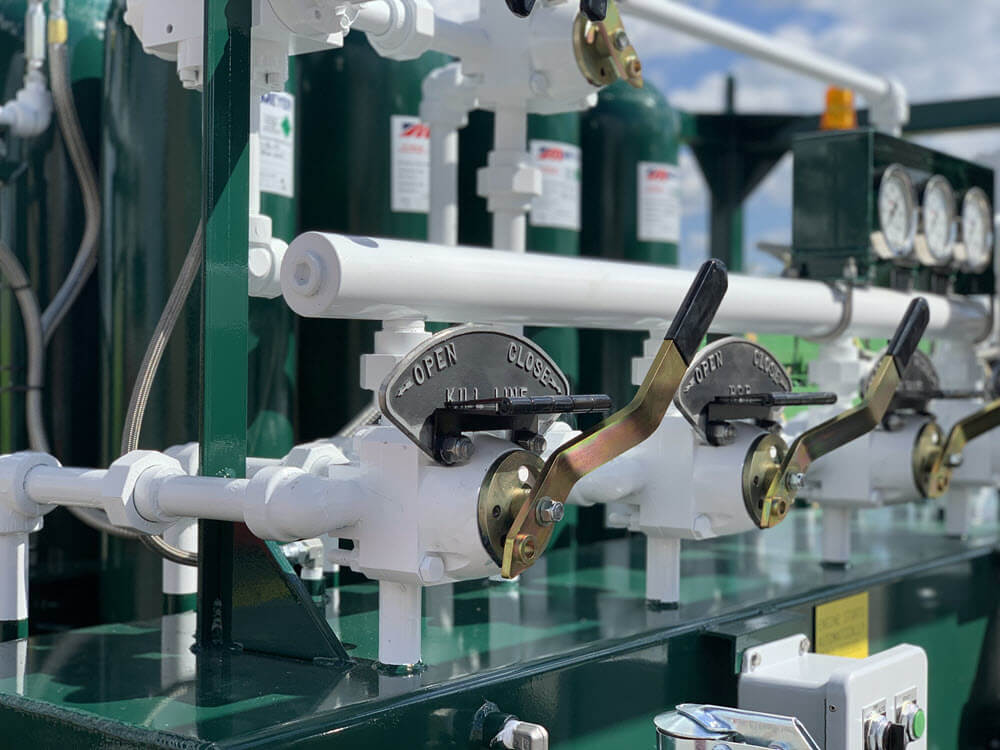
Explosion Proof Motor Options for BOP Accumulators
Compare explosion proof motor options for BOP accumulator units and request API-16D equipment guidance from MEYER.
An explosion proof motor for a BOP accumulator is used when the accumulator power package must operate in a hazardous oilfield environment where the electrical equipment classification, enclosure selection, site power, and service access must match the location risk. MEYER builds BOP accumulator units with power package options that can include explosion-proof electric motors, industrial electric motors, diesel-powered pumps, air motor configurations, remote panels, AutoStart support, and cold-weather enclosures for drilling, workover, and pressure control applications.
The right motor choice depends on more than preference. We review hazardous-location classification, available electrical service, H2S exposure, remote drilling logistics, facility requirements, cold-weather startup needs, pump redundancy, and the operator’s maintenance plan before recommending a configuration. A facility with reliable classified electrical power may favor an explosion proof electric package. A remote site with uncertain grid access may need diesel support. A site with compressed air infrastructure may justify an air motor configuration.
Our team treats power package selection as part of the complete accumulator readiness plan. The motor has to support the hydraulic system, the accumulator bottles, the control manifold, the remote panel, and the operating environment. This guide explains where explosion proof motors fit, how they compare with industrial electric and diesel power, what forgotten specs procurement teams should review, and how we help operators choose accumulator units for Permian, Gulf Coast, Houston facility, Corpus Christi manufacturing, and remote field conditions.
Definition: An explosion proof motor BOP accumulator is a BOP accumulator power package configured with a motor and enclosure approach suited for classified or hazardous oilfield environments. It is commonly used to support hydraulic pressure readiness where electrical equipment must match site requirements. For operators working across US shale basins and international markets, it helps by aligning accumulator power with well control safety and compliance planning.
Request Power Package Guidance
Table of Contents
Power Package Fundamentals for BOP Accumulator Units
Explosion Proof Electric Motor Applications
Industrial Electric, Diesel, and Air Motor Alternatives
Hazardous-Location Planning for Accumulator Units
Accumulator Power Package Comparison and Operational Value
Explosion Proof Electric vs Industrial Electric vs Diesel Accumulator Table
H2S, Remote Drilling, and Facility-Level Use Cases
Regional Power Planning for Hazardous Oilfield Environments
Forgotten Specs: Motor Classification, Enclosure Selection, and Service Access
Field Operations Insight: Matching Power Package Selection to Actual Site Infrastructure
Frequently Asked Questions About Explosion Proof Motor BOP Accumulators
Power Package Fundamentals for BOP Accumulator Units
Key Takeaway: A BOP accumulator power package should be selected around the hazardous-location requirement, hydraulic recharge demand, site infrastructure, operating environment, and service plan.

Explosion Proof Electric Motor Applications
An explosion proof electric motor may be required when the accumulator unit will operate in a classified area where ignition risk, gas exposure, or facility rules require a motor and enclosure approach designed for that environment. We do not recommend treating “explosion proof” as a generic upgrade label. The motor classification, enclosure type, wiring method, control components, and installation environment all need to match the site requirement before the accumulator is approved for service.
Our BOP accumulator units are built around hydraulic readiness first. The motor package has to support the pump system, accumulator bottle recharge, operating pressure recovery, and field service plan. MEYER BOP accumulator units are built to applicable API-16D guidelines, and our engineering team reviews explosion proof electric options as part of the complete well control package rather than as a stand-alone electrical choice.
When we evaluate an explosion proof motor request, we review several practical details:
- The site’s hazardous-location classification and operator requirements.
- Available voltage, phase, electrical service, and control wiring plan.
- Accumulator pump demand and expected recharge timing.
- Remote panel placement and operator access.
- Service access for motor inspection, troubleshooting, and replacement.
- Environmental exposure, including heat, dust, weather, and corrosive conditions.
The specification cluster is direct: explosion proof accumulator planning should connect electrical classification, motor enclosure, power availability, pump performance, API-16D accumulator context, and field service access. We recommend confirming those factors before fabrication because changing a power package after mobilization usually costs more than selecting the correct configuration during engineering review.
| Power Package Factor | What We Review | Why It Matters |
|---|---|---|
| Motor classification | Explosion proof, industrial electric, diesel, or air motor fit | Aligns accumulator power with site requirements |
| Hydraulic recharge demand | Pump sizing and recovery expectations | Supports readiness after control functions are used |
| Site power | Voltage, phase, reliability, and access | Prevents mismatched electrical assumptions |
| Operator control path | Remote panel, control station, and visibility | Supports safer, clearer operation |
| Service access | Inspection, replacement, wiring, and troubleshooting space | Reduces maintenance delays in the field |
| Environmental exposure | Weather, temperature, dust, corrosion, and gas risk | Protects long-term accumulator readiness |
Industrial Electric, Diesel, and Air Motor Alternatives
Not every accumulator needs an explosion proof electric motor. We also build accumulator units with industrial electric power, diesel-powered pumps, and air motor configurations when those options better match the site. Industrial electric can make sense when the location has reliable power but does not require the same hazardous-location classification. Diesel can make sense for remote drilling or workover sites where electrical service is limited or not dependable. Air motor packages can make sense where the operator has compressed air infrastructure and wants to avoid certain electric or diesel constraints.
Power selection should always tie back to hydraulic readiness. A motor that fits the electrical spec but does not support the recovery profile is the wrong choice. A diesel unit that works remotely but cannot be serviced efficiently may create downtime. An air motor that fits a facility but lacks reliable air supply can leave the crew with a weak recharge plan.
We recommend documenting the power source, pump configuration, backup method, operating environment, and operator start procedure before the unit leaves the shop. That keeps procurement, HSE, field operations, and service teams aligned around the same configuration.
Hazardous-Location Planning for Accumulator Units
Hazardous-location planning should happen early because the motor package affects more than the pump. It can affect the enclosure, controls, wiring approach, service spacing, remote operation, and spare parts plan. If the operator waits until the unit is already built or staged, the cost of changing the motor and controls can increase quickly.
We also review AutoStart needs when the operation requires automatic response to pressure changes or restart conditions. MEYER’s AutoStart Box is designed to respond appropriately to pressure changes, and that feature may be part of the broader power-readiness conversation for drilling programs. For cold-weather work, our arctic enclosure options can combine insulated housing, hydraulic reservoir, selector valves, accumulator bottles, diesel motor options, and cold-weather configurations.
In field deployment, the best power package is the one the crew can operate, inspect, and service under real conditions. We want the accumulator unit to fit the classification, the job, the power source, the maintenance plan, and the operator’s response procedure.
Accumulator Power Package Comparison and Operational Value
Key Takeaway: Explosion proof electric, industrial electric, diesel, and air motor accumulator packages each solve a different site problem, so selection should follow the hazard classification, infrastructure, and uptime plan.
Explosion Proof Electric vs Industrial Electric vs Diesel Accumulator Table
The safest way to compare accumulator power packages is to separate classification from convenience. Explosion proof electric may be the right choice for classified environments with proper electrical infrastructure. Industrial electric may be sufficient for non-classified facilities or shop environments. Diesel may be better for remote sites where power reliability is limited. Air motor packages may fit sites with suitable compressed air supply and specific operator preferences.
| Factor | Explosion Proof Electric | Industrial Electric | Diesel Powered | Air Motor |
|---|---|---|---|---|
| Primary Role | Classified-area electric power | Standard electric power where classification allows | Independent field power | Air-powered pump operation |
| Best For | Hazardous or classified environments | Facilities with reliable non-classified power | Remote drilling and workover sites | Sites with reliable compressed air |
| Infrastructure Need | Classified electrical supply and compatible controls | Standard electrical supply | Fuel, battery, engine service access | Air supply and air system reliability |
| Service Focus | Motor classification, wiring, enclosure, access | Motor health, controls, electrical service | Engine, fuel, start reliability, exhaust routing | Air line condition, pressure, moisture control |
| Operational Strength | Supports classified-area compliance planning | Simple where electrical power is available | Works where grid power is limited | Avoids electric motor needs where air is preferred |
| Ideal Application | H2S or hazardous facility work with classified power | Shop, yard, or facility use where allowed | Remote rigs, cold work, and mobile operations | Facilities with dependable compressed air infrastructure |
Based on MEYER product specifications.
The comparison verdict is straightforward: choose explosion proof electric when the classified environment and electrical infrastructure require that approach. Choose industrial electric when the site allows standard electrical equipment and power is reliable. Choose diesel when remote deployment or power uncertainty makes independent operation more practical. Choose air motor support when the site has reliable compressed air and the operator wants that power path built into the accumulator plan.
H2S, Remote Drilling, and Facility-Level Use Cases
Accumulator power selection should follow the operating profile. We recommend matching the power package to site hazard, infrastructure, service access, and expected field response.
- Operator + sour gas or H2S-prone Permian work + explosion proof electric review: We recommend confirming site classification, enclosure needs, and electrical service before fabrication because hazardous-location assumptions can affect the full build.
- Drilling contractor + remote site with limited power + diesel accumulator package: We recommend diesel support when independent power and field mobility are more important than facility electrical integration.
- Facility team + Houston-area shop or yard work + industrial electric review: We recommend industrial electric when the site classification allows it and the power supply is stable enough for accumulator recharge needs.
- Service company + compressed air infrastructure + air motor configuration: We recommend reviewing single or multiple air motor options when compressed air is dependable and the operator wants to avoid electric or diesel constraints.
The decision-support passage is simple: the best accumulator motor is the one that satisfies the site classification and can be serviced under actual job conditions. We advise customers to compare the hazard requirement, power source, pump recovery, control panel location, and service route before choosing electric, diesel, or air motor support.
If your team is comparing explosion proof electric, industrial electric, diesel, or air motor accumulator power packages, we can help review the full configuration before the unit is built or rented. We can discuss applicable API-16D guidance, power availability, remote panel requirements, AutoStart support, arctic enclosure needs, and rental availability based on the job location. Our engineering team can also review whether a custom BOP accumulator build, a rental unit, or a retrofit path is the better fit for the project. We support operators, drilling contractors, HSE teams, procurement leads, and rental companies across our domestic service network. Call 877-44-MEYER or use our request more information form to request a power package review.
Regional Power Planning for Hazardous Oilfield Environments
Key Takeaway: Regional power planning matters because Permian sour gas work, Houston facility projects, and Corpus Christi manufacturing support create different accumulator motor requirements.
Permian Sour Gas, Houston Facility Work, and Corpus Christi Manufacturing Support
Our West Odessa, Texas team sees power package decisions through the lens of Permian drilling, H2S planning, remote access, and fast field response. A classified location or sour gas environment may push the conversation toward explosion proof electric options, while a remote lease road with limited electrical support may push the conversation toward diesel. We recommend resolving that decision before mobilization because field conversion is rarely the cleanest path.
Houston facility work creates a different review. Some customers have stronger electrical infrastructure, shop access, and facility-level maintenance programs. That can make industrial electric or explosion proof electric practical if the site classification and power supply support the configuration. Around Corpus Christi, our manufacturing and service support can help customers evaluate motor package selection, control panel access, service layout, and Gulf Coast logistics before the equipment moves into the field or offshore-adjacent work.
For Bakken or northern operations, cold weather can shift the power package conversation toward diesel start reliability, arctic enclosure planning, battery readiness, and service access. For Eagle Ford or high-volume pressure control work, the decision may focus on fast deployment, spare unit timing, and whether a rental accumulator should be staged before the schedule tightens. Our field operations passage is direct: regional motor selection should account for the site classification, the power source, the basin, the service route, and the consequences of delayed hydraulic recharge.
| Region or Site | Power Planning Pressure | Likely Review |
|---|---|---|
| Permian Basin / West Odessa, TX | H2S planning, remote access, and high activity | Explosion proof electric, diesel, or rental backup |
| Houston, TX facility work | Facility electrical infrastructure and service access | Industrial electric or explosion proof electric |
| Corpus Christi, TX manufacturing | Custom build planning and Gulf Coast logistics | Power package engineering and QA review |
| Bakken Shale / Epping, ND | Cold-weather start reliability and remote service | Diesel, arctic enclosure, and rental support |
| Eagle Ford Shale | Fast deployment and frac support timing | Rental accumulator planning and service routing |
| Offshore-adjacent Gulf Coast work | Mobilization timing, classification, and support access | Explosion proof review and backup planning |
Based on MEYER product specifications.
If your job has regional power uncertainty, we can help coordinate equipment review through our service network. We have 11 domestic service locations and a rental fleet of more than 300 pieces of oilfield equipment, giving our customers options for custom builds, rentals, field service, inspection, and backup support. Our Corpus Christi headquarters, West Odessa location, Houston support, Kilgore team, and Epping service presence allow us to compare the accumulator build against the region where it will actually work. For this second step, we recommend using our service locations resource or calling 877-44-MEYER to discuss power package timing. We can help you decide whether explosion proof electric, diesel, air motor, industrial electric, AutoStart support, or a rental unit is the right path.
Forgotten Specs: Motor Classification, Enclosure Selection, and Service Access
Key Takeaway: Motor classification, enclosure selection, and service access are often the overlooked details that determine whether an accumulator power package works well in the field.
Procurement teams often ask for an explosion proof motor without first documenting the classification, enclosure requirement, wiring method, or field service access. That creates risk because the phrase “explosion proof” does not answer every engineering question. The equipment still has to match the site, be serviceable, and support the hydraulic recovery plan.
We recommend confirming motor classification, enclosure selection, conduit and control routing, service clearance, and spare parts access during the design review. A motor that satisfies the electrical requirement but is difficult to inspect can still create field delays. A panel that is technically correct but poorly positioned can make troubleshooting harder. A diesel alternative that solves power availability but creates maintenance or cold-start concerns may still need arctic enclosure planning.
The citable point is this: hazardous-location compliance should not be separated from accumulator serviceability. We build and review power packages so the crew can inspect, operate, troubleshoot, and support the unit under real oilfield conditions, not only satisfy a line item on a purchase specification.
Field Operations Insight: Matching Power Package Selection to Actual Site Infrastructure
Key Takeaway: The best accumulator power package is the one that matches the actual site infrastructure, not the one that sounds most conservative on paper.
Site infrastructure should decide the final power package. A classified facility with stable electrical power may be a strong fit for explosion proof electric. A remote drilling site may be better served by diesel. A facility with reliable compressed air may justify an air motor configuration. A cold-weather project may need the power package reviewed with an arctic enclosure and startup procedure.
Before we recommend a power package, we ask the customer to confirm:
- What classification applies to the operating area?
- What power source is actually available at the accumulator location?
- How fast does the unit need to recover pressure after function use?
- Who will inspect, test, and service the motor package?
- Will the unit remain in one facility or move between regions?
- Does the operation need AutoStart, remote panels, arctic enclosure support, or rental backup?
Power package selection affects daily readiness. If the site power is unreliable, electric convenience becomes less important. If the site classification requires a different enclosure, a standard motor may not be acceptable. If the crew cannot reach the motor for service, the specification may look correct but perform poorly in the field. We recommend reviewing all of those factors before the build is approved.
Key Takeaways
- Explosion proof electric motors may be required for classified accumulator environments.
- MEYER accumulator power packages can include electric, diesel, air motor, AutoStart, and cold-weather options.
- Motor selection should follow site classification, power reliability, and service access.
- Diesel may fit remote work where electrical service is unreliable.
- API-16D context, service documentation, and regional support should guide accumulator planning.
Frequently Asked Questions About Explosion Proof Motor BOP Accumulators
When does an accumulator need an explosion proof motor?
An accumulator may need an explosion proof motor when the operating area is classified as hazardous and the electrical equipment must be configured for that environment. Based on what our technicians see across field and facility projects, the decision should come from the site classification, operator requirements, wiring approach, enclosure needs, and inspection plan. We review explosion proof electric options as part of the full BOP accumulator package so the motor, controls, pump system, and service access work together.
Is diesel better than electric for remote sites?
Diesel can be better than electric for remote sites when electrical service is limited, unreliable, or not available where the accumulator must operate. Electric may still be the better choice for facilities with stable power and proper classification support. We recommend comparing the power source, pump recovery needs, fuel handling, cold-start requirements, service access, and backup plan before choosing diesel or electric. For some projects, AutoStart support or rental backup may also be part of the readiness plan.
Can air motors be used on accumulator units?
Air motors can be used on accumulator units when the site has reliable compressed air infrastructure and the configuration matches the operator’s hydraulic recovery needs. We review air motor options against air supply reliability, moisture control, service access, control requirements, and the operating environment. Air motor support can be useful in certain facility or field settings, but it should not be selected unless the air system can support the accumulator’s readiness requirements.
Does MEYER custom-build power packages?
We custom-build accumulator power packages around the BOP stack, site classification, power availability, API-16D context, remote panel needs, and service plan. Our team can review explosion proof electric, industrial electric, diesel, air motor, AutoStart, arctic enclosure, and rental options before recommending a build path.
Choosing an explosion proof motor for a BOP accumulator is an engineering decision, not a checkbox. From our headquarters in Corpus Christi, TX, we build, rent, service, and repair accumulator systems for operators, drilling contractors, HSE teams, procurement leads, and pressure control professionals. We are an API-16D licensed manufacturer, and our engineering team can help compare explosion proof electric, industrial electric, diesel, air motor, AutoStart, and arctic enclosure options. Our 300+ piece rental fleet and 11 domestic service locations also give customers a path for temporary equipment coverage or regional service support. Call 877-44-MEYER or use our request more information form to discuss the right power package for your accumulator unit.
MEYER
Manufacturing, rentals, service, and aftermarket support for well control equipment.
Need help choosing between explosion proof electric, industrial electric, diesel, air motor, or AutoStart support?
Related Articles
Keep reading more MEYER articles on BOP accumulator readiness, power packages, API-16D compliance, and rental planning.
Power Readiness
Nitrogen Backup for BOP Accumulators | MEYER
See when a nitrogen backup system supports BOP accumulator readiness and request API-16D guidance from MEYER. .
Accumulator Systems
BOP Accumulator Systems in Corpus Christi
Review how accumulator systems support hydraulic pressure, BOP response, and well control readiness for Gulf Coast drilling conditions.
Cold Weather
Arctic Enclosure for BOP Accumulator Units
See how insulated enclosures, cold-weather configurations, and diesel motor options support accumulator readiness in extreme environments.
API-16D Guidance
API 16D Certification Standards in Corpus Christi
See how API-16D compliance supports accumulator, manifold, and hydraulic control reliability for pressure control operations.