
Flushing Unit Applications for Oilfield Valves and Lines
Oilfield Valve and Line Cleanup: When a Flushing Unit Is the Right Choice
See when a flushing unit is needed for sand, sludge, or fluid contamination and ask MEYER about rental availability.
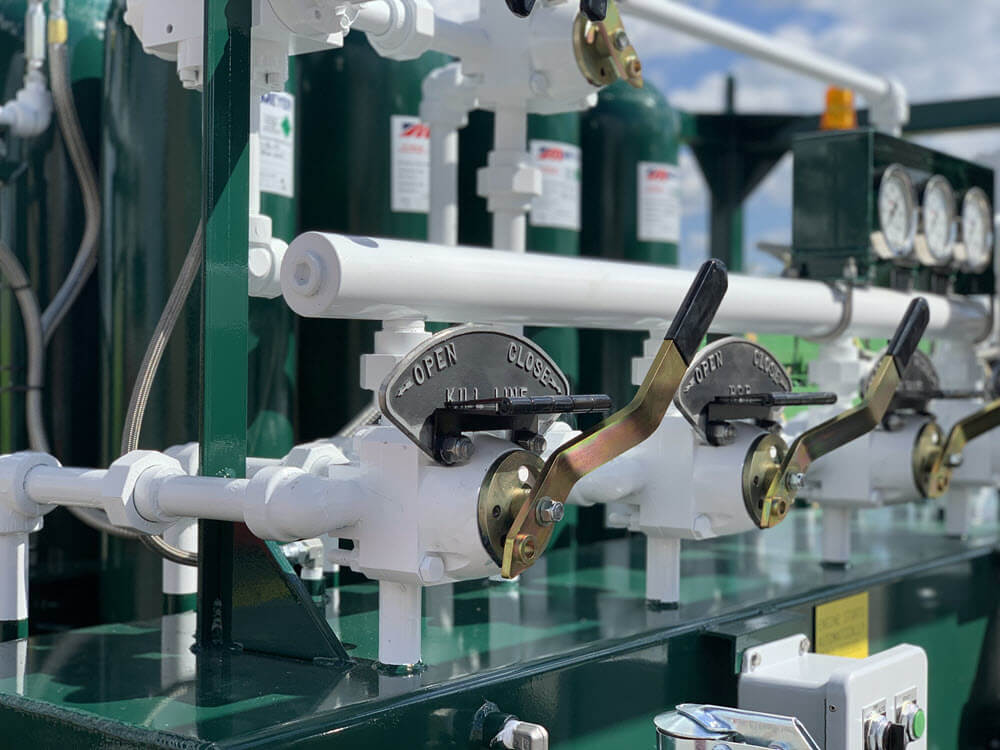
MEYER’s flushing units are used when oilfield valves and lines need more than a simple rinse or manual cleanout. We use them to remove packed sand, debris, sludge, and other contamination that can interfere with valve movement, sealing surfaces, hydraulic performance, or downstream pressure testing. Our flushing units combine high pressure, hot water, and chemical solvent, which makes them a practical fit when contamination is severe enough that manual cleanup is too slow, inconsistent, or incomplete. In field terms, a flushing unit is usually worth it when a valve has been exposed to frac residue, dirty fluids, workover debris, or heavy contamination that can shorten equipment life or compromise test readiness. Here at MEYER, we manufacture hydraulic and hydrostatic flushing units, support rentals and service nationwide, and help crews decide whether the job calls for a dedicated flushing package, field cleanup support, or a broader maintenance plan tied to testing and recertification. In this article, we explain when a flushing unit is the right answer, what specs matter most, how it compares with manual cleanout and outsourced wash services, and how we support cleanup work across Eagle Ford, the Permian, Corpus Christi, Houston, and other active oilfield regions.
A flushing unit is a pressure-cleaning system used to remove contamination from oilfield valves, lines, and hydraulic circuits before those contaminants damage equipment or interfere with performance. It is commonly used to clear sand, debris, sludge, and dirty fluids. For operators working across shale basins and high-use service environments, it helps restore cleaner flow paths and improve maintenance readiness.
Request Flushing Unit Availability
Table of Contents
Cleaning Method and Equipment Basics
High pressure, hot water, and chemical flushing
Debris removal before testing or resealing
Configuration Comparison and Operational Value
Flushing unit vs manual cleanout vs outsourced wash services
Packed-sand and contaminated-fluid use cases
Eagle Ford and Permian cleanup demands after frac and workover activity
Field Operations Insight: Flushing Before Hydrostatic Testing and Recertification
Safety Engineering Analysis: Handling Contaminated Fluids and Hot-Water Cleaning
Frequently Asked Questions About Flushing Units for Oilfield Valves
Cleaning Method and Equipment Basics
Key Takeaway: We recommend a dedicated flushing unit when contamination is heavy enough that incomplete cleanup could damage valves, delay testing, or shorten service life.
High pressure, hot water, and chemical flushing
Our flushing units are built around one core operating principle: severe contamination usually needs more than one cleaning method working alone. MEYER’s flushing-unit page states that our hydraulic and hydrostatic flushing units combine high pressure, hot water, and chemical solvent to reduce wear and extend oilfield equipment life. That combination matters because each element addresses a different part of the cleanup problem. High pressure helps dislodge material from passages and surfaces. Hot water helps break up buildup that does not move easily under ambient conditions. Chemical solvent helps cut through contamination that water alone will not remove effectively.
We usually recommend this type of unit when crews are dealing with packed sand, sludge, dirty hydraulic circuits, or residual material that can keep a valve from operating correctly. MEYER’s manufacturing overview specifically says flushing units can be used to remove packed sand and debris from valves, which is one of the clearest use cases for these systems in field service and turnaround work. That is important because a valve can appear serviceable from the outside while still carrying enough internal contamination to create poor movement, restricted flow, or unreliable sealing.
From a practical maintenance standpoint, we do not see flushing as cosmetic cleanup. We see it as a preparatory step that can change the quality of the next maintenance event. A cleaner valve or line gives technicians a better starting point for inspection, resealing, hydrostatic testing, or service diagnosis. That is one reason our service network supports flushing units alongside test units, remote control panels, grease units, and other pressure-control assets. We want the equipment package to come into service work in cleaner, more workable condition.
A good rule is simple. If the contamination is light and fully accessible, manual cleanup may be enough. If the contamination is embedded, repeated, or likely to affect downstream reliability, we recommend moving to a dedicated flushing setup before the problem turns into repeated maintenance or failed test prep.
Pump, tank, and hose specs
MEYER’s public flushing-unit page is lighter on detailed specs than some of our other product pages, so we keep the discussion grounded in the functions that are directly verified. What we can confirm is that the units are customizable and may include options such as trailer mounting and a certified lift sling. Those options matter operationally because they affect how easily the unit can be moved to the site, staged near the job, and handled safely as part of field cleanup work.
When we review flushing-unit fit with a customer, we recommend looking at three practical configuration areas first:
- how the unit will be transported and positioned near the asset
- how hose reach and routing will affect cleanup access
- how the cleaning method must match the contamination level and fluid condition
Those questions are more useful at quote stage than chasing generic spec numbers that do not reflect the real job. A valve cleanup task on a frac pad, a workover site, or a yard can require very different staging. Trailer mounting matters more when the crew needs mobility and repeated deployment. Lift-sling capability matters more when site handling and placement are constrained. Hose layout matters when the contamination sits in a location that is hard to access without reworking how the unit is positioned.
This is also where broader support matters. Because our service locations support flushing units directly, we can evaluate configuration with field service, maintenance, and logistics in mind instead of looking only at the equipment in isolation. That usually leads to better recommendations for customers who are trying to solve a cleanup problem quickly and keep the next maintenance step moving.
Debris removal before testing or resealing
One of the most overlooked uses for a flushing unit is cleanup before another maintenance step. We recommend flushing before hydrostatic testing, valve resealing, or detailed inspection when contamination is severe enough to distort the next result. If a valve or line still carries sand, sludge, or dirty fluid, the crew is not starting from a clean maintenance condition. That can slow inspection, complicate reseal work, and create extra uncertainty when the equipment moves into testing. This is an inference based on the verified role of flushing units in removing debris and contamination and the verified role of test units in pressure-testing work.
Our field view is direct. A pressure test tells you more when the valve or line has already been cleaned into workable condition. A reseal is more efficient when contamination is not still sitting in the system. A technician’s diagnosis is more credible when the evidence is not obscured by dirty fluid and residue. That is why flushing can save time even when it adds a step at the front end. The cleanup step often prevents slower work later.
This is especially relevant on mixed maintenance programs where a customer is also using our hydrostatic test units, valve-related equipment, or broader service support. We recommend thinking of flushing as part of the maintenance sequence, not as a stand-alone action that happens only after something has already gone wrong.
Configuration Comparison and Operational Value
Key Takeaway: We recommend a flushing unit when contamination is heavy, repetitive, or likely to affect uptime, while lighter cleanup jobs may still fit manual or outsourced methods.
Flushing unit vs manual cleanout vs outsourced wash services
The practical buying question is not whether flushing works. It is whether a dedicated unit is the best cleanup path for the job. We recommend comparing flushing-unit deployment against manual cleanout and outsourced wash services using the contamination level, job urgency, and downstream maintenance needs. MEYER’s flushing-unit materials clearly support the case for dedicated flushing when the cleanup problem involves packed sand, debris, dirty hydraulic circuits, or contamination severe enough to affect equipment life and function.
| Factor | Flushing Unit | Manual Cleanout | Outsourced Wash Service |
|---|---|---|---|
| Best contamination level | Heavy or embedded contamination | Light and accessible contamination | Moderate to heavy when in-house equipment is unavailable |
| Speed at active site | High once unit is staged | Slower and labor dependent | Depends on vendor timing and transport |
| Control over cleanup process | High | Moderate | Lower day-to-day control |
| Fit before testing or resealing | Strong | Limited if contamination remains | Can work, but adds handoff steps |
| Mobility | Strong with field-capable setup | High, but limited by manual method | Usually tied to outside schedule |
| Best For | Packed sand, sludge, dirty lines, repeat cleanup work | Small accessible cleanout jobs | Overflow or occasional specialized cleanup |
Based on MEYER product specifications.
Here is our operating verdict. If the contamination is serious enough that incomplete cleanup could compromise valve performance, test preparation, or service efficiency, we recommend a flushing unit first. If the contamination is small, visible, and easy to remove, manual cleanup may still be the most efficient answer. Outsourced wash services can make sense when the customer does not want to stage equipment or when the cleanup need is occasional, but they usually reduce direct control over timing and job sequence. In fast-moving field work, that loss of timing control often matters more than buyers expect.
Packed-sand and contaminated-fluid use cases
The decision gets clearer when we apply it to real operating scenarios. We recommend choosing the cleanup path by matching the contamination type, the operating environment, and the next maintenance step.
| Operator Profile | Specific Scenario | Recommendation | Because |
|---|---|---|---|
| Frac crew | Valve contaminated with packed sand after active pumping | Flushing unit | Packed sand and debris are a verified flushing-unit use case |
| Workover team | Dirty fluid and sludge in lines before valve service | Flushing unit | Cleanup quality affects the next maintenance step |
| Yard mechanic | Small visible debris in an accessible component | Manual cleanout | A dedicated unit may be unnecessary for a minor job |
| Multi-crew operation | Repeated contamination across several assets | Flushing unit or rental | Repetition increases the value of dedicated equipment |
| Operator with no in-house cleanup gear | Intermittent heavy cleanup need | Outsourced or rental review | The job may not justify immediate ownership |
| Maintenance manager | Valve prep before hydrostatic testing | Flushing unit | Cleaner starting condition supports more reliable next-step work |
Based on MEYER product specifications and service support.
We generally advise these use cases:
- Frac crew + packed sand + repeated valve cleanup = flushing unit, because the contamination is severe and recurring.
- Maintenance shop + one minor accessible blockage = manual cleanout, because staging a dedicated unit may add complexity without enough benefit.
- Operator + seasonal or intermittent heavy cleanup = rental or service review, because the need may justify access without immediate capital purchase.
That is where commercial value becomes real. A flushing unit makes sense when the cost of dirty equipment, repeated downtime, or poor test prep is higher than the cost of deploying the right cleanup package. When the cleanup demand is light and infrequent, ownership may be unnecessary. That is why we recommend reviewing the duty cycle before deciding between rental, purchase, or service support.
When customers contact us about flushing work, we usually start with the contamination type, number of assets, and timing of the next maintenance step. Our team can review whether the job fits a flushing-unit rental, a purchased unit, or service support through one of our regional centers. Because we manufacture, rent, service, and repair well control and testing equipment, we can usually keep the conversation tied to the whole maintenance sequence instead of only the cleanup step. If the valves also need pressure testing, service evaluation, or broader support, we can help plan those steps at the same time. To check availability or get the job reviewed, send us the scope through meyernow.com/request-more-information.html or call 877-44-MEYER and we will help line up the right path.
Check Rental and Service Options
Regional Field Authority
Key Takeaway: We see the strongest demand for flushing units in regions where frac residue, workover contamination, and heavy field use make valve cleanup a recurring maintenance issue.
Eagle Ford and Permian cleanup demands after frac and workover activity
Regional contamination patterns matter. In South Texas and West Texas, crews often deal with high-use field conditions, frac residue, dirty fluids, and debris that can make valve cleanup a recurring need instead of a rare one. MEYER’s regional service content emphasizes that our service model is built around being close to major basins, and our location network spans Texas, North Dakota, Pennsylvania, Colorado, and Oklahoma. That regional structure matters because cleanup work is often time-sensitive and best supported near the basin where the equipment is actually running.
For Eagle Ford and Permian work, our recommendation is usually straightforward. If the operation sees repeated contamination from frac or workover conditions, it often makes more sense to plan flushing capability into the maintenance cycle instead of treating every dirty valve as a one-off cleanup event. Our service locations page confirms that our factory-trained technicians support flushing units directly, and our Houston location specifically references support for flushing systems and hydraulic test equipment for local and regional high-pressure work.
The regional view also affects the rental-versus-ownership conversation. A customer with constant cleanup demand across Permian or Eagle Ford jobs may justify a dedicated unit more easily than a customer with occasional contamination events. A customer with narrower seasonal demand may be better served by rental access or service support. Because our rental and service network already supports equipment movement and setup, we can usually help align that decision with the real operating pattern rather than a generic fleet assumption.
When crews need cleanup support in Corpus Christi, Houston, Odessa, or another active service area, we can help coordinate the work around the job schedule instead of forcing a long delay between contamination discovery and corrective action. Our domestic service footprint includes 11 locations, and our broader equipment network supports flushing units, test units, grease units, remote control panels, and related pressure-control assets. If the goal is to keep valve cleanup tied to uptime, preventive maintenance, and the next testing step, we can help stage that plan through the right service point. Call 877-44-MEYER or use meyernow.com/request-more-information.html so we can line up the support around your basin and timeline.
Field Operations Insight: Flushing Before Hydrostatic Testing and Recertification
Key Takeaway: We often recommend flushing before testing or recertification because a cleaner valve gives the next service step a better chance of producing a useful result.
This is one of the most practical gaps in the market conversation. A lot of equipment content talks about cleaning and testing as separate ideas, but field work rarely treats them that way. We recommend flushing first when contamination is serious enough that it could distort inspection, slow down resealing, or undermine the value of a pressure test. MEYER’s verified product language supports flushing as a way to remove packed sand, debris, and contamination, while our service network supports both flushing units and test units. Putting those facts together, the operational logic is clear: cleanup often improves the quality of the next maintenance event. This is an inference grounded in MEYER’s published product and service roles.
| Pre-Test Cleanup Item | Why We Check It | Common Result if Ignored |
|---|---|---|
| Sand and debris in valve passages | Restricts movement and masks wear | Slower diagnosis and poorer prep |
| Dirty fluid in lines | Carries contamination into the next step | Inconsistent maintenance condition |
| Sludge or residue on sealing areas | Complicates reseal work | More rework during service |
| Unknown contamination level | Makes scope harder to define | Extra troubleshooting time |
| Related line cleanliness | Affects system-wide readiness | Cleanup repeated later |
| Test timing window | Determines whether flushing should happen first | Compressed maintenance sequence |
We recommend thinking of flushing as preparation, not only correction. A cleaner asset gives the technician a clearer picture, the shop a better starting point, and the operator a stronger chance of keeping the next step on schedule. That is often where flushing creates its real value.
Safety Engineering Analysis: Handling Contaminated Fluids and Hot-Water Cleaning
Key Takeaway: We recommend treating contaminated-fluid handling and heated cleanup as part of the safety plan, not as minor details of the wash process.
Hot water and chemical solvent increase cleaning effectiveness, but they also require more deliberate handling. MEYER’s flushing-unit page explicitly confirms that our units combine high pressure, hot water, and chemical solvent. That means crews should not treat flushing like a simple rinse job. The safety review needs to cover how the fluid is handled, where the discharge goes, how hoses are routed, and how personnel exposure will be managed during active cleaning.
From an operations perspective, contaminated-fluid handling matters because the cleanup stream can carry the very materials that caused the valve problem in the first place. We recommend setting cleanup boundaries before the work starts, especially on busy frac and workover sites where congestion can turn a manageable operation into a messy one. Our service model emphasizes factory-trained technicians and safety training, which reinforces the importance of trained handling on these jobs.
We usually want the team to review these factors before the flushing work begins:
- where contaminated fluid will be directed and contained
- how hot-water cleaning changes crew exposure and hose handling
- whether the site has enough room for safe unit positioning
- whether related maintenance should happen immediately after cleanup
We do not recommend assuming a more aggressive cleaning method is always better. The right method is the one that removes the contamination effectively while keeping fluid handling, crew position, and next-step maintenance under control. That balance is what makes flushing productive instead of disruptive.
Key Takeaways
- We use flushing units when contamination is too severe for quick manual cleanup.
- Packed sand, sludge, dirty fluids, and debris are strong triggers for dedicated flushing.
- Flushing often makes pressure testing, resealing, and inspection more efficient.
- Rental, service, and ownership each make sense under different duty cycles.
- MEYER supports flushing units through manufacturing, service, and a 300+ unit rental fleet.
Frequently Asked Questions About Flushing Units for Oilfield Valves
What problems justify flushing?
We usually recommend flushing when the valve or line has packed sand, sludge, debris, or dirty fluid severe enough to interfere with movement, cleanup quality, or the next maintenance step. MEYER’s published materials specifically tie flushing units to removing packed sand and debris from valves and to cleansing hydraulic circuits. If the contamination is light and easy to access, manual cleanup may still be enough. If the contamination is embedded or recurring, a flushing unit is usually the better answer.
Can flushing extend valve life?
Based on MEYER’s product language, yes, that is part of the intended value. Our flushing-unit page states that the combination of high pressure, hot water, and chemical solvent helps reduce wear and greatly extend oilfield equipment life. In practical terms, that benefit is strongest when the contamination would otherwise stay in the system long enough to keep abrading components or interfering with normal operation.
Is hot-water capability necessary?
Not on every job, but it becomes important when contamination will not move effectively with pressure alone. Because MEYER’s flushing units combine high pressure, hot water, and chemical solvent, we treat hot-water capability as part of the overall cleaning toolkit rather than a universal requirement for every cleanup task. The right question is whether the contamination type justifies it. For heavy buildup, it often does.
Are rentals available?
Yes. MEYER’s broader rental materials confirm nationwide rental support, a fleet of more than 300 pieces of equipment, and recent content that explicitly includes flushing units in the rental lineup. For customers with seasonal cleanup demand, occasional heavy contamination, or a short maintenance window, rental can be the most cost-effective path.
We build flushing units for the jobs where contamination is serious enough to affect valve performance, maintenance timing, or the quality of the next test. From our headquarters in Corpus Christi, TX, we support customers through an API-certified manufacturing and service organization with 11 domestic service locations and a 300+ piece rental fleet that helps cover short-term and long-term cleanup demand. If your team is deciding whether a valve cleanup issue calls for a dedicated flushing unit, rental support, or a broader maintenance review, we recommend looking at the contamination level, the duty cycle, and the next service step before committing to the path. We can help you review the job, check availability, and coordinate service around your schedule. To request support, call 877-44-MEYER.
MEYER
Manufacturing, rentals, service, and aftermarket support for oilfield equipment.
Need help deciding between flushing unit rental, service support, or ownership?