

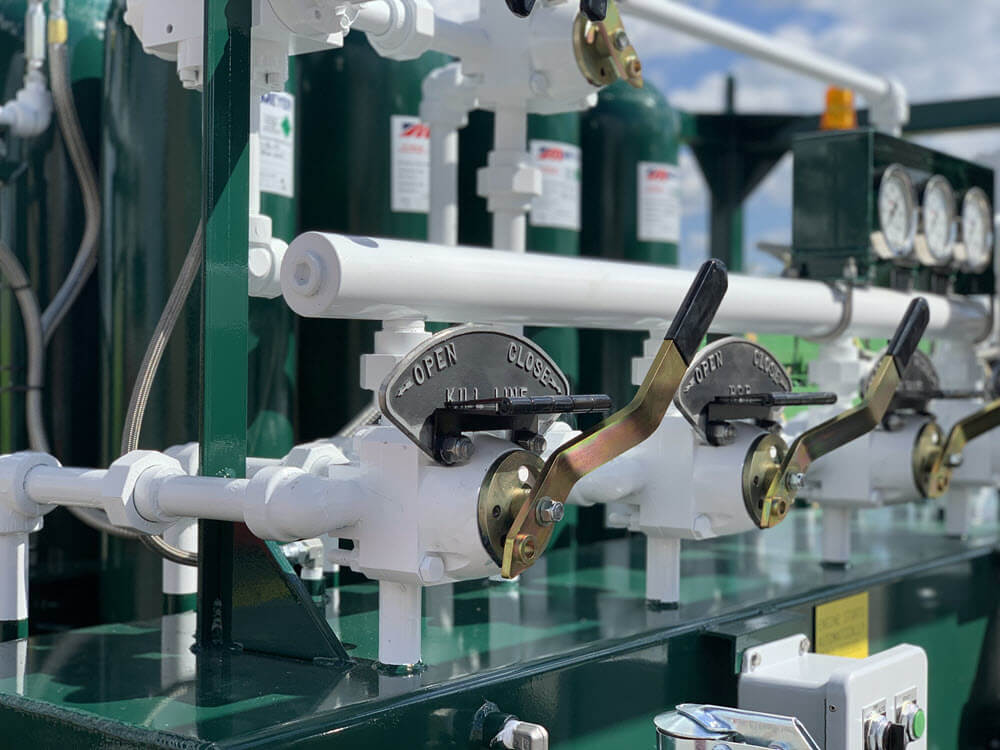
MEYER's Guide to Oilfield Tools and Equipment

Oilfield tools and drilling equipment are specialized systems used to explore, extract, and manage oil and gas resources safely and efficiently. These tools range from drilling rigs and blowout preventers (BOPs) to lubrication systems and pressure testing units, each playing a critical role in maintaining well control, optimizing performance, and reducing operational risk.
In modern oil and gas operations, selecting the right equipment is essential not only for productivity but also for safety, compliance, and cost efficiency. This guide provides an overview of the most important oilfield tools, their applications, and how they are used across drilling environments.
What Are Oilfield Tools and Equipment?
Oilfield tools and equipment refer to the machinery and systems used throughout the lifecycle of oil and gas extraction, including drilling, well control, maintenance, and production.
These tools can be grouped into several core categories:
- Drilling equipment: rigs, drill strings, and bits used to penetrate the earth
- Pressure control systems: including blowout preventers (BOPs)
- Lubrication systems: grease manifolds and greasing units
- Testing equipment: hydrostatic test units
- Maintenance systems: flushing units and cleaning tools
Each category plays a role in ensuring safe, efficient, and continuous operations in demanding field conditions.
Essential Oilfield Tools Used in Drilling Operations
BOP Accumulator Units
Blowout Preventer (BOP) accumulator units are critical for well control operations. These systems store hydraulic energy and activate the BOP in high-pressure scenarios to seal the wellbore and prevent uncontrolled releases.
Applications:
- Emergency well shut-in
- Pressure control during drilling
- Compliance with safety regulations
MEYER’s BOP accumulator units are designed for reliability and rapid response, meeting API-16D standards for performance and safety.
Grease Manifolds (SPYDER® Systems)
Grease manifolds are used to deliver consistent lubrication to wellhead components, reducing friction and wear during operations.
Applications:
- Continuous lubrication of valves and seals
- Protection of high-pressure equipment
- Extension of equipment lifespan
SPYDER® Grease Manifolds offer multiple configurations and semi-automated control systems to streamline maintenance processes.
Greasing Units
Greasing units support both standard and high-flow lubrication needs across oilfield equipment.
Applications:
- Routine equipment maintenance
- High-pressure lubrication systems
- Reducing downtime and mechanical failure
These units help maintain smooth operation and extend service intervals in demanding environments.
Hydrostatic Test Units
Hydrostatic test units are used to verify the integrity and pressure resistance of equipment such as BOPs and wellhead assemblies.
Applications:
- Pressure testing before deployment
- Leak detection
- Regulatory compliance verification
Mobile hydrostatic units allow testing in various field conditions, ensuring equipment reliability before use.
Flushing Units
Flushing units are essential for maintaining clean hydraulic systems by removing debris and contaminants.
Applications:
- Cleaning hydraulic circuits
- Preventing system contamination
- Improving equipment performance and longevity
Regular flushing reduces malfunctions and supports consistent system efficiency.
Main Components of a Drilling Rig
A drilling rig consists of multiple integrated systems that work together to extract oil and gas resources.
Key components include:
- Derrick: the structure that supports drilling operations
- Drill string: a series of connected pipes that transmit drilling force
- Drill bit: the cutting tool that penetrates rock formations
- Mud pumps: circulate drilling fluid to cool and stabilize the well
- Rotary system: provides rotational force to the drill string
- Blowout preventer (BOP): controls pressure and prevents blowouts
Understanding these components is essential for evaluating equipment needs and operational efficiency.
Typical Drilling Equipment Costs
The cost of oilfield equipment can vary significantly depending on specifications, scale, and operational requirements.
Typical ranges include:
- Drilling rigs: high capital investment, often in the millions
- BOP systems: high-cost safety equipment with critical importance
- Hydrostatic test units: mid-to-high range depending on capacity
- Grease systems and manifolds: moderate investment with high ROI
- Flushing units: relatively lower cost but essential for maintenance
While upfront costs can be substantial, the right equipment reduces downtime, improves safety, and lowers long-term operational expenses.
Tools Used by Oilfield Workers
Different roles in oilfield operations rely on specialized tools:
- Drilling engineers: monitor systems, pressure, and performance
- Roughnecks: handle drilling equipment and manual operations
- Maintenance crews: use lubrication and flushing tools to maintain systems
- Supervisors and operators: oversee safety systems and equipment performance
Each role depends on reliable equipment to ensure safe and efficient operations.
Applications of Oilfield Equipment
Oilfield tools are used across multiple critical applications:
- Well control: managing pressure and preventing blowouts
- Pressure testing: verifying equipment integrity
- Preventive maintenance: reducing wear and avoiding failure
- Production optimization: improving efficiency and output
Proper application of equipment directly impacts safety, productivity, and operational success.
Why Choosing the Right Equipment Matters
Selecting the appropriate oilfield tools is essential for maintaining safety in high-risk environments, ensuring regulatory compliance, reducing downtime, extending equipment lifespan, and maximizing return on investment.
Operators must consider performance, durability, and serviceability when choosing equipment for their projects.
MEYER Oilfield Equipment Solutions
MEYER provides a comprehensive range of oilfield tools and equipment designed to meet the demands of modern drilling operations. From BOP accumulator units to advanced lubrication and testing systems, MEYER focuses on delivering reliable, high-performance solutions that support safety and efficiency in the field.
With a commitment to quality and innovation, MEYER continues to support operators worldwide with equipment that meets rigorous industry standards.
Frequently Asked Questions
What are the most important oilfield tools?
Some of the most critical tools include drilling rigs, blowout preventers (BOPs), grease systems, and hydrostatic test units, all of which support safe and efficient operations.
What is a BOP used for?
A blowout preventer is used to control pressure and prevent uncontrolled releases of oil or gas during drilling operations.
How much does drilling equipment cost?
Costs vary widely, from moderate investments in lubrication systems to multi-million-dollar drilling rigs, depending on scale and complexity.
What equipment is used in oil drilling?
Oil drilling uses a combination of rigs, drill strings, bits, mud systems, pressure control equipment, and maintenance tools to ensure efficient extraction.