

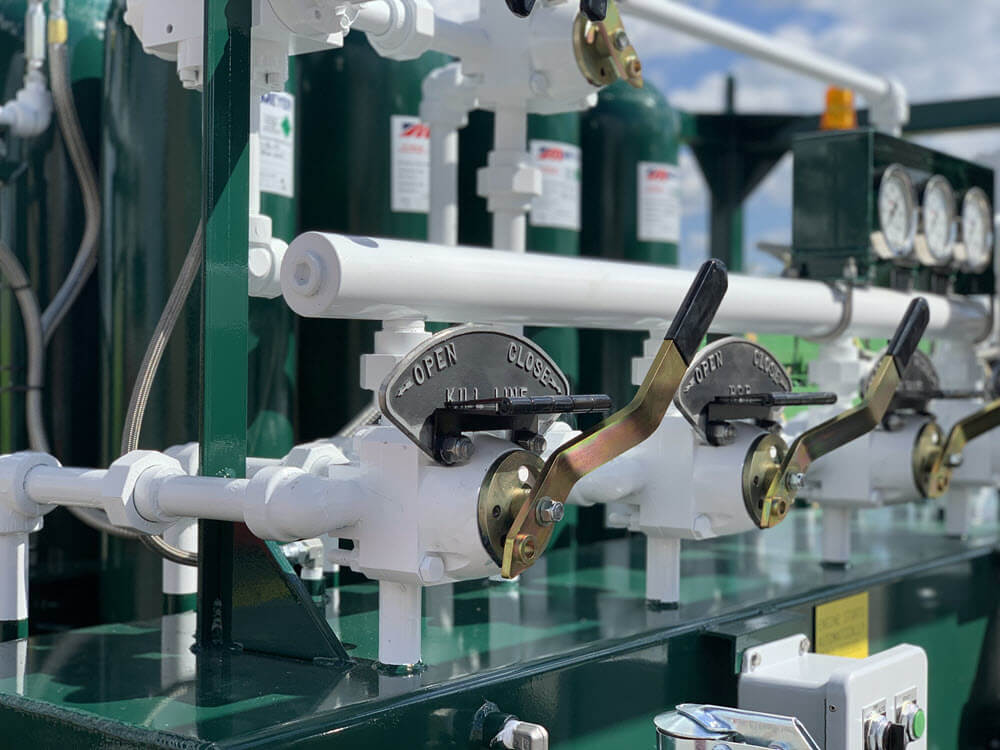
H2S Well Control Equipment Requirements
H2S Well Control Equipment Requirements
Review H2S well control equipment planning considerations and request MEYER support for pressure-control systems.
H2S well control equipment requirements are planning considerations for pressure-control systems used in sour-service or hydrogen sulfide environments. For operators, HSE teams, drilling contractors, and pressure control professionals, H2S exposure changes how equipment should be selected, inspected, maintained, staged, and supported in the field. The issue is not only whether equipment can function. The issue is whether the equipment, service plan, inspection discipline, and field response plan all fit the sour-service environment.
MEYER supports pressure-control and well control operations with BOP accumulator units, hydrostatic test units, grease systems, flushing units, service support, rentals, and aftermarket repair. In H2S-aware field planning, those equipment categories may need closer attention to sealing performance, hydraulic reliability, hazardous-location power choices, control placement, inspection frequency, documentation, and service response. A sour-service job can make small weaknesses more expensive because exposure, access, and timing become harder to manage once operations begin.
This article explains H2S environment fundamentals, sour-service risk, sealing and maintenance considerations, hazardous-location power and control options, accumulator and test unit planning, regional support across the Permian, Eagle Ford, and Houston service network, and the field operations steps that should happen before sour-service exposure begins.
Definition: H2S well control equipment requirements are the planning, inspection, maintenance, and equipment-selection considerations used when pressure-control systems may operate in hydrogen sulfide or sour-service environments. They commonly affect accumulators, test units, grease systems, seals, controls, power packages, and field service planning. For operators working across US shale basins and international markets, they help by improving readiness, documentation, and response planning before sour-service exposure begins.
Table of Contents
Sour-Service Risk and Pressure-Control Readiness
Sealing, Inspection, and Maintenance Considerations
Hazardous-Location Power and Control Options
Configuration Comparison and Operational Value
Standard Field Package vs H2S-Aware Equipment Package vs Facility-Level Support Table
BOP Accumulators, Test Units, and Grease Systems in Sour-Service Operations
Regional Field Authority for H2S Service Planning
Safety Engineering Analysis: Why H2S Changes Inspection Discipline and Equipment Selection
Field Operations Insight: Planning Service Response Before Sour-Service Exposure Begins
H2S Environment Fundamentals
Key Takeaway: H2S environments require earlier equipment planning because sour-service exposure can affect inspection discipline, sealing confidence, hazardous-location decisions, and field response timing.
Sour-Service Risk and Pressure-Control Readiness
Sour-service operations create a different planning environment for well control equipment. Crews need to think about equipment readiness before exposure begins because access, inspection, repair, and service timing can become harder once H2S conditions are active. A pressure-control system may include BOP accumulators, test units, grease units, remote controls, flushing support, and service equipment that all need to be reviewed as part of the larger field plan.
Pressure-control readiness means more than having equipment on location. It means confirming that the equipment is configured for the job, inspected on the right schedule, supported by usable documentation, and backed by a service response plan. In H2S environments, the cost of uncertainty is higher because field exposure can limit the crew’s ability to inspect, troubleshoot, or swap components quickly.
When we review H2S well control equipment planning, we focus on practical questions:
- Which pressure-control systems may be exposed to sour-service conditions?
- Are accumulators, test units, grease systems, and controls inspected before exposure begins?
- Are sealing components, fittings, hoses, gauges, and hydraulic systems in documented condition?
- Does the job require hazardous-location power or control options?
- Is rental backup available if owned equipment needs service?
- Who supports field service response if equipment condition changes during the job?
The specification cluster is straightforward: H2S equipment planning should connect pressure-control readiness, sealing review, hazardous-location power, inspection discipline, documentation, rental backup, and service response. We recommend making those decisions before equipment is exposed to sour-service conditions.
| Planning Area | What We Review | Why It Matters |
|---|---|---|
| Pressure-control readiness | Accumulator, test unit, grease system, and service equipment condition | Reduces uncertainty before sour-service exposure |
| Sealing review | Seals, hoses, fittings, valves, and pressure-control components | Supports confidence in pressure integrity |
| Power and control options | Hazardous-location power, remote control, and panel placement | Matches equipment to field risk and operating procedure |
| Inspection discipline | Pre-job checks, exposure review, and post-service documentation | Helps crews catch issues before downtime grows |
| Service response | Rental backup, field support, repair path, and regional availability | Keeps operations from relying on last-minute decisions |
Sealing, Inspection, and Maintenance Considerations
Sealing performance deserves close review before sour-service exposure. Seals, hoses, valves, fittings, grease systems, test connections, and accumulator components should be inspected before the job begins. If a unit already shows signs of wear, contamination, leakage, damaged labels, inaccurate gauges, or poor documentation, the H2S environment can make the service decision more urgent.
Inspection discipline should also change. A sour-service job benefits from more deliberate pre-job checks, clearer service records, and a plan for post-exposure review. The goal is not to slow the job down with paperwork. The goal is to avoid guessing about equipment condition when the site is already active.
Maintenance planning should include owned equipment and rental options. If a unit needs repair, reconditioning, or replacement, rental backup may help the crew stay active while the original equipment is serviced. We recommend reviewing this before exposure begins because once equipment is committed to a sour-service job, options can narrow quickly.
Hazardous-Location Power and Control Options
H2S-aware planning may involve hazardous-location power and control decisions. For BOP accumulator units, customers may need to compare explosion-proof electric motor options, diesel power, air motor configurations, remote panels, AutoStart support, or command center controls. The right choice depends on site classification, power availability, operating procedure, and service access.
Remote controls and command center options can also support response planning. In some sour-service environments, keeping operators farther from higher-risk areas is part of the site plan. Remote operation, clear control labels, emergency shutdown access, and command center placement should be reviewed with the equipment package, not treated as separate decisions.
We recommend reviewing hazardous-location and control-system needs early, especially when the job involves accumulators, command centers, emergency shutdown panels, or support equipment that may be staged near active pressure-control operations.
Configuration Comparison and Operational Value
Key Takeaway: H2S-aware equipment planning adds inspection, documentation, sealing, control, and service-response discipline to a standard field equipment package.
Standard Field Package vs H2S-Aware Equipment Package vs Facility-Level Support Table
A standard field package may be enough for work that does not involve sour-service exposure or special site requirements. An H2S-aware equipment package adds deeper planning around sealing, inspection, hazardous-location power, controls, and service response. Facility-level support may be needed when equipment requires more formal inspection, repair, reconditioning, testing, or documentation before it returns to the field.
| Factor | Standard Field Package | H2S-Aware Equipment Package | Facility-Level Support |
|---|---|---|---|
| Primary Role | Support routine field operations | Prepare for sour-service exposure | Inspect, repair, test, or document equipment before return to service |
| Best For | Known conditions with normal service timing | H2S or sour-service jobs with higher inspection needs | Equipment needing deeper review or documented restoration |
| Planning Focus | Availability and function | Sealing, inspection, power, controls, rental backup, service response | Testing, documentation, repair, reconditioning, or certification support |
| Operational Strength | Fast deployment for routine work | Stronger readiness before sour-service exposure | Deeper confidence before equipment returns to field use |
| Planning Watchout | May not address sour-service exposure risks | Needs earlier planning and tighter documentation | Requires service time, shop access, and clear scope |
Based on MEYER product specifications.
The comparison verdict is practical: use a standard field package only when the operating conditions support it. Use H2S-aware planning when sour-service exposure is possible or confirmed. Use facility-level support when equipment condition, documentation, repair, or testing needs deeper review before the asset is returned to service.
BOP Accumulators, Test Units, and Grease Systems in Sour-Service Operations
Different equipment categories create different H2S planning needs. BOP accumulators should be reviewed for hydraulic readiness, power package selection, remote controls, bottles, gauges, valves, hoses, and inspection status. Hydrostatic test units should be reviewed for pressure output, hoses, fittings, gauges, and test documentation. Grease systems should be reviewed for sealing support, pump condition, manifold layout, fluid path, and field service needs.
- Operator + H2S well control planning + BOP accumulator review: We recommend checking hydraulic readiness, power options, remote control needs, and service records before the job begins.
- HSE team + sour-service exposure + inspection discipline: We recommend pre-job inspection, post-exposure review, documentation, and service-response planning.
- Drilling contractor + hazardous-location planning + accumulator power package selection: We recommend comparing explosion-proof electric, diesel, air motor, and remote control options around the site plan.
- Pressure control team + grease system support + sour-service activity: We recommend reviewing sealing support, pump condition, manifold layout, and field service timing before exposure begins.
The decision-support passage is simple: H2S planning should happen before the equipment is on the critical path. If the unit needs inspection, repair, rental backup, or documentation, the best time to discover that is before sour-service exposure begins.
If your team is planning well control equipment for H2S or sour-service operations, we can help review the equipment package before the job starts. We can discuss BOP accumulators, hydrostatic test units, grease systems, hazardous-location power, remote controls, emergency shutdown panels, inspection timing, service documentation, and rental backup. Our team supports operators, HSE teams, drilling contractors, pressure control professionals, rental companies, and maintenance teams across our manufacturing and service network. Call 877-44-MEYER or use our request more information form to request H2S equipment planning support.
Regional Field Authority for H2S Service Planning
Key Takeaway: Permian sour gas, Eagle Ford activity, and Houston service coordination each create different H2S equipment planning and response needs.
Permian Sour Gas, Eagle Ford, and Houston Service Coordination
The Permian Basin can require H2S-aware equipment planning because remote sites, sour gas concerns, high activity, and fast equipment movement all compress response time. Our West Odessa support can help customers think through accumulator readiness, rental backup, service timing, and equipment condition before the job reaches a critical stage.
In the Eagle Ford, sour-service planning may overlap with frac support, workover operations, and pressure-control coordination. Equipment may need inspection before use, field service during the job, and post-exposure review after the job ends. The stronger the planning, the easier it is to avoid last-minute decisions when equipment needs attention.
Houston service coordination can support documentation, facility-level inspection, repair, reconditioning, and testing before equipment returns to the field. Corpus Christi manufacturing and Gulf Coast support can also help when custom equipment, accumulator units, or pressure-control systems need deeper review.
| Region or Site | H2S Planning Pressure | Equipment Planning Priority |
|---|---|---|
| Permian Basin / West Odessa, TX | Sour gas concerns, remote sites, and fast activity | Accumulator readiness, rental backup, and service response |
| Eagle Ford Shale | Frac support, workover activity, and sour-service planning | Inspection timing and post-exposure review |
| Houston, TX | Facility support, repair coordination, and documentation | Testing, reconditioning, and service records |
| Corpus Christi, TX | Manufacturing, Gulf Coast logistics, and pressure-control support | Custom equipment review and API-16D context |
Based on MEYER product specifications.
If your H2S equipment requirements vary by basin, we can help review the service path, rental plan, and inspection schedule before the job starts. We have 11 domestic service locations and a rental fleet of more than 300 pieces of oilfield equipment, which gives our customers support across manufacturing, rental, service, repair, aftermarket, and documentation programs. Our Corpus Christi headquarters, West Odessa location, Houston support, Kilgore team, Epping service presence, and Hytec Division help us keep field needs connected to pressure-control equipment requirements. For this second step, we recommend using our service locations resource or calling 877-44-MEYER to discuss H2S service planning.
Safety Engineering Analysis: Why H2S Changes Inspection Discipline and Equipment Selection
Key Takeaway: H2S changes equipment planning because inspection, sealing, controls, service access, and documentation need to be more deliberate before sour-service exposure begins.
H2S changes inspection discipline because field crews should not be discovering avoidable equipment issues after exposure begins. Seals, hoses, fittings, gauges, valves, controls, and hydraulic systems should be reviewed before the job starts. If the equipment has a known issue, weak documentation, or uncertain condition, sour-service exposure can make the service path harder to manage.
Equipment selection also changes because the operating environment may require hazardous-location power choices, remote operation, command center placement, emergency shutdown access, and service backup. For example, an accumulator power package that works well in one location may need a different review when it is staged near sour-service pressure-control operations.
The safety engineering point is practical: H2S does not only affect the well. It affects the support plan around the well. Equipment selection, inspection timing, rental availability, control placement, and documentation should all be coordinated before the job begins.
Field Operations Insight: Planning Service Response Before Sour-Service Exposure Begins
Key Takeaway: Service response should be planned before sour-service exposure begins, including rental backup, inspection windows, repair routing, and post-exposure documentation.
The field operations lesson is simple: do not wait until equipment is exposed to sour-service conditions to decide who will inspect it, repair it, replace it, or back it up with rental equipment. H2S-aware jobs benefit from a service plan that includes equipment condition, rental availability, location support, post-exposure review, and documentation needs.
Before sour-service exposure begins, we recommend confirming:
- Which equipment may be exposed to H2S or sour-service conditions.
- What inspection has been completed before the job.
- Whether seals, hoses, fittings, gauges, valves, and controls are documented.
- What rental backup is available if owned equipment needs service.
- Which service location can support repair, reconditioning, testing, or documentation.
- How equipment will be reviewed after exposure.
This planning gives crews more options. If equipment needs attention, the team already knows the service path. If backup is needed, the rental conversation has already started. If documentation is required, the records plan is not being built after the fact.
Key Takeaways
- H2S well control equipment planning should begin before sour-service exposure.
- Accumulators, test units, grease systems, controls, seals, and hoses may all need closer inspection.
- Hazardous-location power and control options should be reviewed around the site plan.
- Rental backup can reduce downtime if owned equipment needs service.
- MEYER can support H2S-aware equipment planning, service response, rentals, and documentation.
Frequently Asked Questions About H2S Well Control Equipment
What equipment is needed for H2S well control?
H2S well control planning may include BOP accumulators, hydrostatic test units, grease systems, remote controls, emergency shutdown panels, hazardous-location power options, flushing support, rental backup, and service documentation. The exact equipment depends on the well, field layout, pressure-control requirements, HSE plan, and service response needs.
Do H2S environments affect accumulator selection?
H2S environments can affect accumulator planning because the equipment may need closer inspection, sealing review, hydraulic readiness checks, hazardous-location power choices, remote control options, and service backup. The accumulator should be reviewed with the site plan, exposure risk, and field response procedure before the job begins.
How should equipment be inspected after sour-service exposure?
Equipment exposed to sour-service conditions should be reviewed according to the operator’s service plan, equipment condition, exposure history, and documentation requirements. The review may include seals, hoses, fittings, valves, gauges, hydraulic systems, controls, contamination, repair needs, and return-to-service testing. MEYER can help discuss inspection and service support based on the equipment involved.
Can MEYER support H2S field operations?
MEYER can support H2S-aware field operations through equipment planning, rentals, service, repair, reconditioning, pressure-control equipment review, accumulator support, test unit support, grease system support, and documentation assistance. Our team can help review the right service path before sour-service exposure begins.
H2S well control equipment requirements should be reviewed before sour-service exposure begins. From our headquarters in Corpus Christi, TX, we build, rent, service, repair, inspect, and support pressure-control equipment for operators, HSE teams, drilling contractors, rental companies, maintenance teams, and pressure control professionals. We can help review BOP accumulators, hydrostatic test units, grease systems, hazardous-location power choices, remote controls, emergency shutdown panels, inspection discipline, rental backup, and service response. Call 877-44-MEYER or use our request more information form to discuss H2S well control equipment support.
MEYER
Manufacturing, rentals, service, and aftermarket support for well control and pressure-control equipment.
Need help reviewing accumulators, test units, grease systems, hazardous-location power, or rental backup for sour-service work?
Related Articles
Keep reading more MEYER articles on well control readiness, accumulator systems, hazardous-location power, and service planning.
Accumulator Systems
BOP Accumulator Systems in Corpus Christi
Review how accumulator systems support hydraulic pressure, BOP response, and well control readiness for Gulf Coast drilling conditions.
Power Package Planning
Explosion Proof Motor Options for BOP Accumulators
Compare explosion-proof motor options, diesel power, air motor support, and field power planning for accumulator units.
Inspection Guide
BOP Accumulator Inspection Checklist
Use a practical accumulator inspection framework for pressure, fluid volume, mechanical integrity, and field readiness.
Service Planning
Oilfield Equipment Reconditioning for Longer Service Life
Plan repair, reconditioning, replacement, and rental backup decisions for critical oilfield equipment.