

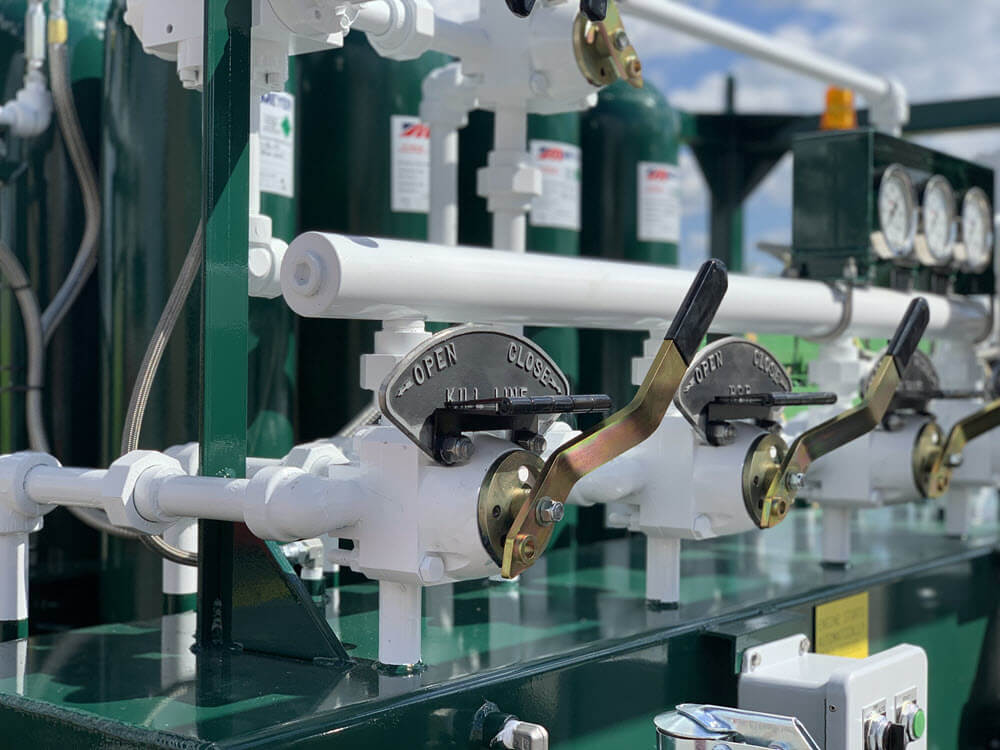
Hot Water Flushing Units for Oilfield Equipment
Hot Water Flushing Units
See how hot water flushing units remove sand, sludge, and contamination before oilfield testing or service.
Hot water flushing units for oilfield equipment help crews remove sand, sludge, grease, scale, debris, and contaminated fluid before testing, service, repair, or recertification work. For workover crews, maintenance teams, frac crews, and service companies, hot-water capability can make cleanup more effective when cold-water flushing does not break down residue fast enough or when oilfield equipment needs stronger preparation before inspection.
MEYER flushing units can support oilfield cleanup with hot-water generation, diesel burner performance, water and chemical tank support, hose systems, and high-pressure pump output. The goal is to move contamination out of valves, lines, manifolds, test equipment, and support systems so technicians can inspect, test, repair, or return equipment to service with more confidence. Hot-water flushing is especially useful when the contamination is thick, oily, temperature-sensitive, or mixed with sand and sludge from field activity.
This article explains when hot-water flushing is needed, how diesel burners and hot-water cleaning improve cleanup, how a Cat 4,500 psi Triplex pump supports flushing output, how water tanks and chemical tanks are used, and how hot-water flushing compares with cold-water and chemical flushing. We also cover valve, line, and equipment cleanup use cases, regional contamination issues across the Eagle Ford and Permian, and safety planning around heat, pressure, and contaminated fluid handling.
Definition: A hot water flushing unit is oilfield support equipment designed to move heated water, and sometimes cleaning chemicals, through valves, lines, manifolds, test equipment, or other components to remove sand, sludge, grease, and contamination. It is commonly used before testing, service, repair, or recertification. For operators working across US shale basins and international markets, it helps by improving cleanup effectiveness, test preparation, and service readiness.
Table of Contents
Hot-Water Flushing Fundamentals
Diesel Burner and Hot-Water Cleaning
Cat 4,500 PSI Triplex Pump Output
Water Tank, Chemical Tank, and Hose System Configuration
Configuration Comparison and Operational Value
Cold-Water Flushing vs Hot-Water Flushing vs Chemical Flushing Table
Valve, Line, and Equipment Cleanup Use Cases
Regional Field Authority for Contamination Cleanup
Technical Deep Dive: Why Temperature Changes Cleanup Effectiveness
Safety Engineering Analysis: Contaminated Fluid Handling, Heat, and Pressure Control
Hot-Water Flushing Fundamentals
Key Takeaway: Hot-water flushing is useful when oilfield equipment contains contamination that cold water alone may not remove efficiently, including oily residue, sludge, sand, and temperature-sensitive buildup.
Diesel Burner and Hot-Water Cleaning
A diesel burner gives a hot water flushing unit the ability to heat water before it moves through contaminated equipment. That heat can help soften grease, reduce the thickness of oily residue, loosen sludge, and improve cleanup before inspection or testing. In oilfield service work, that difference can matter when valves, lines, hoses, manifolds, tanks, and support equipment come back from the field with sand, fluid residue, or mixed contamination.
Hot-water cleaning is not only about making the wash water warmer. It is about improving the way the flushing process interacts with contamination. Some residue responds better when temperature helps reduce viscosity. Some buildup breaks loose faster when heated water, controlled flow, and the right nozzle or hose setup work together. When chemical support is needed, heat can also help the cleaning process when the chemical program is compatible with the equipment and contamination type.
When we review a hot-water flushing request, our team looks at field and service factors such as:
- The type of contamination in the equipment.
- Whether the equipment needs cleanup before testing, service, or repair.
- The temperature, pressure, and flow needed for the application.
- Whether chemical tank support is required.
- How contaminated fluid will be contained, handled, and removed.
- Whether the job requires a rental flushing unit or scheduled service support.
The specification cluster is direct: hot-water flushing should connect heat, pressure, flow, chemical support, hose configuration, and contaminated-fluid handling. We recommend matching the flushing setup to the equipment condition before the job starts because cleanup needs can change quickly after frac, workover, or rental fleet activity.
| Flushing Factor | What We Review | Why It Matters |
|---|---|---|
| Water temperature | Diesel burner output and cleanup target | Helps loosen oily residue, sludge, and buildup |
| Pump output | Pressure and flow requirements | Moves contamination through lines and equipment |
| Chemical support | Chemical tank use and compatibility | Supports cleanup when water alone is not enough |
| Hose configuration | Length, routing, connection points, and access | Keeps flushing practical around field equipment |
| Fluid handling | Containment, disposal path, and site planning | Protects the jobsite and supports safer cleanup |
Cat 4,500 PSI Triplex Pump Output
Pump output is a major part of flushing performance. A Cat 4,500 psi Triplex pump gives a flushing unit the pressure capability needed to move fluid through contaminated equipment, lines, and cleanup paths. The right pump setup helps crews push heated water or cleaning fluid through the equipment being prepared for testing, service, repair, or inspection.
Pressure should be matched to the equipment and task. The point is not to apply the highest possible pressure in every situation. The point is to use controlled flushing force that clears contamination without creating unnecessary risk for the equipment, crew, or containment plan. That is why pressure, flow, hose routing, fittings, and equipment condition should be reviewed before flushing begins.
For field crews, the value of a strong pump package is practical. It helps reduce cleanup time, improves consistency, and supports better preparation before pressure testing or service. For maintenance teams, it can help bring contaminated equipment back into a condition where inspection and repair decisions are easier to make.
Water Tank, Chemical Tank, and Hose System Configuration
A flushing unit should be configured around the jobsite, not only around the pump. Water tank capacity, chemical tank access, hose length, hose routing, connection points, burner performance, and fluid containment all affect how well the cleanup process works. If the unit cannot reach the equipment or cannot handle the contamination path, the flushing plan becomes harder to execute.
Chemical tank support can be useful when contamination requires more than heated water. Chemicals may help with oily residue, sludge, scale, or other buildup when selected properly for the equipment and cleanup target. We recommend confirming chemical compatibility, operator handling requirements, and disposal planning before the job starts.
The hose system is also part of the performance plan. Hoses should be routed to support access, reduce unnecessary handling, and keep hot water or chemical flushing controlled. A good flushing setup helps crews clean the equipment while keeping pressure, heat, and contaminated fluid movement organized.
Check Flushing Unit Availability
Configuration Comparison and Operational Value
Key Takeaway: Cold-water flushing, hot-water flushing, and chemical flushing each solve a different cleanup problem, so the right method depends on contamination type, equipment condition, and test preparation needs.
Cold-Water Flushing vs Hot-Water Flushing vs Chemical Flushing Table
Cold-water flushing can work well when contamination is loose, light, or easy to move. Hot-water flushing is stronger when residue responds to temperature. Chemical flushing may be needed when contamination requires a specific cleaning agent. Many jobs use a combination of heat, pressure, water volume, and chemical support to prepare equipment for testing or service.
| Factor | Cold-Water Flushing | Hot-Water Flushing | Chemical Flushing |
|---|---|---|---|
| Primary Role | Move loose debris and light contamination | Loosen oily residue, sludge, and buildup | Target contamination requiring chemical support |
| Best For | Basic rinse and light cleanup | Sand, sludge, oil residue, and field buildup | Stubborn contamination matched to compatible chemicals |
| Equipment Need | Water source, pump, hoses | Diesel burner, pump, hoses, tank support | Chemical tank, handling plan, compatibility review |
| Operational Strength | Simple and fast for lighter jobs | Improves cleanup when heat changes residue behavior | Adds targeted cleaning power when selected correctly |
| Planning Watchout | May not remove oily or heavy residue | Requires heat and pressure safety planning | Requires chemical handling and disposal planning |
Based on MEYER product specifications.
The comparison verdict is practical: choose cold-water flushing when debris is light and easy to move. Choose hot-water flushing when contamination includes sludge, oily residue, sand, or buildup that responds to heat. Choose chemical flushing when the contamination requires a compatible cleaning agent and the job has a clear handling and disposal plan.
Valve, Line, and Equipment Cleanup Use Cases
Hot-water flushing is useful before equipment is tested, serviced, repaired, or returned to rental circulation. The use case depends on the equipment and contamination type, but the goal is the same: remove material that can interfere with inspection, testing, pressure integrity, or future operation.
- Workover crew + sludge-contaminated equipment + hot-water cleanup: We recommend hot-water flushing when residue needs heat and pressure before inspection or service.
- Frac crew + sand and fluid residue + flushing before test preparation: We recommend reviewing pump output, hose routing, and contaminated-fluid containment before the cleanup begins.
- Maintenance team + valve cleanup + chemical tank support: We recommend chemical flushing when contamination requires a compatible cleaning agent and proper handling plan.
- Rental company + fleet turnaround + hot-water flushing unit rental: We recommend planning cleanup capacity before rental assets stack up in the yard or shop.
The decision-support passage is simple: use hot water when temperature changes the cleanup result. If the equipment only needs a light rinse, cold water may be enough. If residue is oily, thick, or mixed with field contamination, hot-water flushing can make the cleanup process more effective before service or testing.
If your team needs a hot-water flushing unit for rental, service preparation, valve cleanup, line flushing, or contaminated equipment support, we can help review the configuration before the job begins. We can discuss diesel burner performance, 4,500 psi Cat Triplex pump output, tank setup, chemical support, hose routing, site access, and contaminated-fluid handling. Our team supports workover crews, maintenance teams, frac crews, service companies, rental companies, and pressure control professionals across our manufacturing and service network. Call 877-44-MEYER or use our request more information form to request flushing unit support.
Regional Field Authority for Contamination Cleanup
Key Takeaway: Eagle Ford and Permian cleanup needs can change quickly after frac and workover activity, so flushing unit planning should account for contamination type, access, and service timing.
Eagle Ford and Permian Contamination Cleanup After Frac and Workover Activity
In the Eagle Ford, flushing needs often appear after frac support, workover activity, and high-volume field operations. Equipment may return with sand, fluid residue, chemical traces, oily buildup, or sludge that needs to be removed before the next job. Hot-water flushing can support faster cleanup when the residue responds to heat and controlled pressure.
In the Permian Basin, equipment movement, remote sites, H2S awareness, and tight schedules can make cleanup timing critical. If contaminated equipment waits too long before flushing, residue can become harder to remove and the service schedule can tighten. Our West Odessa support helps customers think through rental timing, service response, and equipment preparation before the job becomes urgent.
Houston and Corpus Christi service environments create another set of needs. Facility support may make cleanup easier to coordinate, but documentation, containment, and service scheduling still matter. For equipment moving between basins or customers, clean records and controlled flushing support can help maintenance teams decide whether the asset is ready for testing, repair, rental, or return to service.
| Region or Site | Cleanup Pressure | Flushing Planning Priority |
|---|---|---|
| Eagle Ford Shale | Frac support, workover activity, sand, and residue | Hot-water cleanup and contaminated-fluid handling |
| Permian Basin / West Odessa, TX | Remote sites, fast equipment movement, and service timing | Rental availability and cleanup before testing |
| Houston, TX | Facility support, repair coordination, and documentation | Service preparation and quality records |
| Corpus Christi, TX | Manufacturing, service, rentals, and Gulf Coast logistics | Flushing unit configuration and support planning |
Based on MEYER product specifications.
If your field cleanup needs vary by basin, we can help review the flushing unit configuration, rental timing, and service access plan before the equipment is staged. We have 11 domestic service locations and a rental fleet of more than 300 pieces of oilfield equipment, which gives our customers support across manufacturing, rental, service, repair, and aftermarket programs. Our Corpus Christi headquarters, West Odessa location, Houston support, Kilgore team, and Epping service presence help us keep field needs connected to cleanup and testing requirements. For this second step, we recommend using our service locations resource or calling 877-44-MEYER to discuss flushing unit availability.
Technical Deep Dive: Why Temperature Changes Cleanup Effectiveness
Key Takeaway: Temperature can improve cleanup because heat can reduce the thickness of oily residue, help loosen buildup, and improve the way flushing fluid moves contamination through equipment.
Temperature changes cleanup effectiveness because many oilfield contaminants do not behave the same way when heated. Oily residue may flow more easily. Sludge may soften. Grease and buildup may release from surfaces faster. Sand mixed with oil or fluid residue may move more effectively when heated water and pressure work together.
That does not mean every cleanup job needs maximum heat. The temperature should match the equipment, the contamination, the chemical program if one is used, and the safety plan. A controlled hot-water flushing process should improve cleanup without creating unnecessary risk around pressure, heat exposure, hoses, fittings, or contaminated fluid handling.
The practical value is inspection readiness. Clean equipment is easier to evaluate. Technicians can see more clearly, test more confidently, and make better decisions about service, repair, or replacement. For rental fleets, hot-water flushing can also support faster turnaround when equipment returns from the field with heavy contamination.
Safety Engineering Analysis: Contaminated Fluid Handling, Heat, and Pressure Control
Key Takeaway: Hot-water flushing should be planned around heat exposure, pressure control, hose routing, chemical compatibility, and contaminated-fluid containment.
Hot-water flushing introduces three safety areas that should be reviewed before work begins: heat, pressure, and contamination. Heated water can create burn exposure. Pump pressure can create hose and fitting risk. Contaminated fluid may require containment, transfer, disposal, or special handling depending on the material removed from the equipment.
We recommend reviewing the equipment condition, pressure rating, connection points, hose routing, operator position, and containment plan before flushing begins. If chemicals are used, compatibility and handling requirements should also be confirmed. The safest flushing process is the one that moves contamination out of the equipment while keeping pressure, heat, and fluid movement controlled.
For field crews, clear roles matter. One crew member should not be guessing about pressure, temperature, or fluid handling while another is trying to prepare equipment for testing. A good flushing plan defines who operates the unit, who monitors hoses and connections, where contaminated fluid goes, and what condition the equipment must meet before the next service step begins.
Key Takeaways
- Hot-water flushing helps remove sand, sludge, oily residue, and contamination before testing or service.
- Diesel burner performance supports heated water cleanup when residue responds to temperature.
- A Cat 4,500 psi Triplex pump supports high-pressure flushing output for oilfield cleanup applications.
- Chemical tank support may be needed when contamination requires a compatible cleaning agent.
- Heat, pressure, hose routing, and contaminated-fluid handling should be reviewed before flushing begins.
Frequently Asked Questions About Hot Water Flushing Units
What is a hot water flushing unit used for?
A hot water flushing unit is used to remove sand, sludge, oily residue, grease, scale, and contamination from oilfield equipment before testing, service, repair, or recertification. It can support cleanup for valves, lines, manifolds, test equipment, and field support systems. The heated water helps loosen contamination that may not move effectively with cold water alone.
When is chemical flushing needed?
Chemical flushing may be needed when contamination requires a compatible cleaning agent instead of water alone. This can include oily buildup, sludge, scale, or residue that does not release efficiently with pressure and heat only. Chemical use should be planned around compatibility, handling, disposal, and the equipment being cleaned.
What pressure does a flushing unit use?
Flushing pressure depends on the unit configuration and the equipment being cleaned. MEYER hot-water flushing unit planning can include Cat 4,500 psi Triplex pump output for oilfield cleanup applications. Pressure should be matched to the equipment condition, hose configuration, fittings, and service objective before flushing begins.
Are hot water flushing units available for rent?
Hot water flushing unit availability depends on location, schedule, and equipment requirements. MEYER supports oilfield equipment rentals and can help review whether a flushing unit rental, service support, or broader cleanup plan is the right fit for the job.
Hot water flushing units help crews prepare oilfield equipment for testing, inspection, service, repair, and rental turnaround by removing contamination more effectively than cold water alone in the right conditions. From our headquarters in Corpus Christi, TX, we build, rent, service, and repair oilfield equipment for workover crews, maintenance teams, frac crews, service companies, rental companies, and pressure control professionals. We can help review hot-water generation, diesel burner performance, Cat 4,500 psi Triplex pump output, water tank support, chemical tank use, hose routing, and contaminated-fluid handling. Call 877-44-MEYER or use our request more information form to discuss hot water flushing unit rentals or service support.
MEYER
Manufacturing, rentals, service, and aftermarket support for oilfield equipment.
Need help comparing cold-water flushing, hot-water flushing, chemical support, or rental availability?
Related Articles
Keep reading more MEYER articles on flushing, testing, service, rentals, and oilfield equipment readiness.
Oilfield Equipment Guide
Guide to Oil & Gas Drilling Tools & Equipment
Review key oilfield equipment categories and how different systems support drilling, pressure control, testing, and service work.
Testing Support
Hydrostatic Test Units for Oilfield Equipment
See how test units support pressure testing, service preparation, and equipment verification after cleanup or repair.
Aftermarket Support
Trust MEYER’s Aftermarket Oilfield Services for Longevity and Compliance
See how inspection, repair, recertification, and aftermarket support can help extend oilfield equipment service life.
Rental Planning
Oilfield Equipment Rental Planning
Compare how rental support can help crews manage equipment availability, service timing, and jobsite flexibility.