

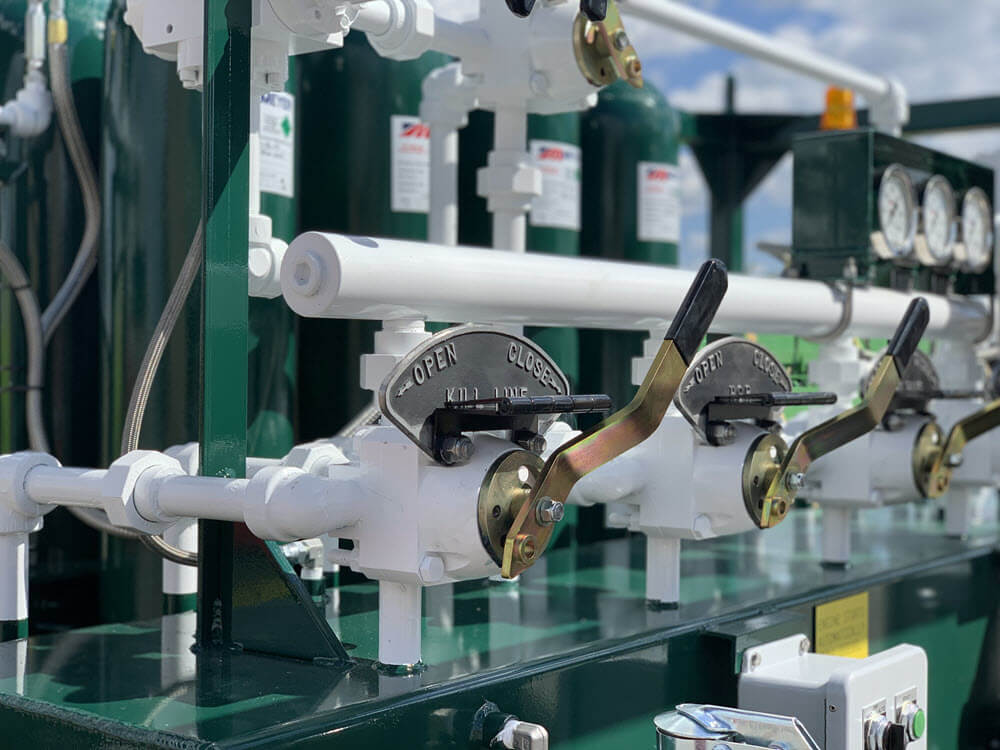
How to Winterize BOP Accumulator Units for Cold-Weather Operations
How to Winterize BOP Accumulator Units for Cold-Weather Operations
Prepare your BOP accumulator for cold weather. Review fluids, seals, power, enclosures, and readiness checks, and discuss service options with MEYER.
To winterize a BOP accumulator unit, check that its hydraulic fluid, components, power package, and installed protection are suitable for the conditions at your next location. Have qualified personnel correct inspection findings and complete the startup and function checks required for that unit. Include standby, transport, and storage in the review, because protection available while the equipment is running may not be available after shutdown.
If your closing unit has been working reliably in mild weather, it is tempting to send it to the next assignment with the same setup. Before you do, check what will change: colder starts, longer unattended periods, a different power supply, or outdoor staging between jobs. Those details determine whether the unit needs routine service, additional protection, or a different configuration.
At MEYER, we manufacture, rent, service, and repair BOP accumulator equipment. We can help you review the unit you have and the conditions it needs to handle, so preparation starts with the equipment rather than a generic winter package.
Definition: BOP accumulator winterization is the preparation of a hydraulic closing unit for expected cold-weather operation, standby, transport, or storage. It covers fluid suitability, component condition, power and controls, installed protection, and the checks required before the unit is relied on for well control.
Discuss Your Accumulator Winter Preparation
BOP Accumulator Winterization: What to Check Before Deployment
What Cold Weather Changes on Your Accumulator Unit
Inspect These Items Before You Choose Winter Protection
Does Your Unit Need Service, an Enclosure, or a Replacement?
Confirm Readiness Before the Unit Goes Back to Work
Match Preparation to Your Destination
Frequently Asked Questions About Winterizing BOP Accumulators
What Cold Weather Changes on Your Accumulator Unit
Hydraulic Flow and Pump Recharge
Our BOP accumulator units store hydraulic energy for operating BOP functions. When an accumulator discharges, fluid moves from the bottles through the control circuit to the selected function. The pump supplies fluid to charge or recharge the system. Both paths need to work correctly, but they should be assessed separately.
Cold hydraulic fluid can become too viscous for the equipment's specified startup or operating conditions. Check the fluid's viscosity-temperature information against the limits for the actual pump and hydraulic components. A fluid that remains liquid is not necessarily suitable for starting or operating the unit at that temperature.
That distinction matters when you compare fluids. A product described as winter grade still needs approval for your accumulator, its seals, and the expected temperature range. Do not select a replacement by product description alone.
Bottle Pre-Charge and Temperature
Gas pressure changes with temperature, which is relevant when checking nitrogen pre-charge. A reading taken under one set of conditions should not be compared with another without following the manufacturer's method for temperature and pressure interpretation.
Have qualified personnel use the specified checking procedure and record the conditions it requires. A normal hydraulic gauge reading does not independently confirm the pre-charge or usable fluid volume of every bottle. Avoid adjusting gas pressure to a general value found in an online checklist.
Hoses, Seals, and Air Supply
Check the temperature ratings and condition of hoses and sealing components. Cold-weather suitability depends on the actual materials and configuration. Existing cracks, damaged connections, leakage, or deteriorated seals need attention before the unit is assigned to colder conditions.
If the package uses air-driven pumps or pneumatic controls, include the air supply in the review. Moisture can create freezing problems in exposed air-system components. Confirm the specified air treatment and maintenance requirements rather than assuming that an available compressed-air connection is suitable.
Inspect These Items Before You Choose Winter Protection
It is easier to choose the right protection once you know the unit's condition. An enclosure can help manage exposure, but it does not repair a leaking connection or establish that an unidentified fluid is appropriate.
Identify the Fluid Actually in the Reservoir
Start with the fluid in service, not just the product named on the original build sheet. Check service and top-up records, particularly for rented equipment or units that have moved between crews.
Confirm:
- The fluid product and any known mixing or replacement history.
- Approval for the unit and its installed components.
- Startup and operating viscosity limits at the expected fluid temperatures.
- Fluid condition and any required cleanliness or water-content checks.
- Whether sampling, analysis, or corrective service is due under the maintenance program.
A visually clean sample does not establish a laboratory cleanliness or water-content result. If the fluid cannot be identified, resolve that uncertainty before deployment. Changing products also requires a compatibility review, including what remains in the circuit and how the change is to be performed.
Follow the Hydraulic Circuit and Control Connections
Review the reservoir, pump and drive, bottle connections, manifold, selector valves, regulators, gauges, and hose runs. Include connections to the BOP and remote panels within the applicable inspection scope.
Record leakage, cracked hose covers, damaged supports or guards, and unclear labels or unreadable gauges. Our cold-weather hydraulic hose inspection guide covers hose-specific issues in more detail.
Keep the walkaround separate from corrective work. Do not open pressure-containing components, remove guards, or change settings as part of an informal inspection. Maintenance requires the unit's approved isolation and stored-energy controls, including protection against unexpected starting.
Check the Power Package and Starting Arrangements
For a diesel-powered unit, review the engine manufacturer's cold-weather requirements for fuel, battery condition, lubricants, and any installed starting aids. For an electric package, confirm the available supply and suitability of the motor, controls, and connections for the assignment. Air-powered equipment needs the specified air supply and treatment.
If your unit uses our AutoStart Box, automatic response to a pressure change still depends on a serviceable power package. Verify the installed starting logic and required checks from the unit documentation. AutoStart is not a substitute for confirming that the engine or motor can start under the expected conditions.
Inspect Existing Heaters and Enclosures
Check accessible insulation, doors, seals, hinges, and latches, then arrange the specified heater and electrical inspections. Confirm that the enclosure can close properly and that the required power supply will be available during standby.
Include the installation environment. Electrical equipment must be suitable for the site's hazardous-area classification where applicable. A heater already mounted on the unit should not be assumed acceptable for a new location without reviewing its approvals and installation requirements.
Does Your Unit Need Service, an Enclosure, or a Replacement?
Choose the preparation path after you have reviewed the unit's condition and expected exposure. Service can resolve maintenance defects, while an enclosure or heating arrangement addresses a different need. If your current package cannot be prepared for the assignment within the available time, review an appropriately configured replacement or rental before committing to deployment.
| Preparation Path | When to Review It | What to Confirm Before Deployment |
|---|---|---|
| Inspection and service | Existing protection may already suit the assignment, but maintenance or verification is needed | Defects are resolved and the complete unit is suitable for the expected exposure |
| Enclosure or heating upgrade | The unit is otherwise suitable but needs additional environmental protection | Approved integration, heat requirements, power availability, access, and site classification |
| Replacement or rental | Configuration limits, condition, or the schedule prevent preparation of the current unit | The alternative package meets the job requirements and is available with the required records |
These paths can overlap. An enclosure upgrade may still require fluid service, hose replacement, or control-system work. A rental also needs a review against the intended application; the words winter ready do not establish compatibility with your BOP stack or site requirements.
What Our Arctic Enclosure Information Confirms
Our Arctic Enclosure product page describes insulated diamond-plate aluminum construction, dual double doors, and a listed 5 kW electric heater. It also lists cold-weather and alternative heater options. Those features are useful starting points for a configuration discussion, not a minimum-temperature guarantee for every installation.
When you contact us, explain where the unit will work, how long it will stand by, and what power is available. We can review the proposed configuration against those requirements. Heating capacity, environmental exposure, and the installed equipment need to be considered together.
Plan for the Hours When the Unit Is Not Running
Include overnight standby, transport, loading, and outdoor staging. If protection depends on electrical power, confirm what happens when the unit is disconnected or the supply is interrupted.
For example, a package that is protected in a powered enclosure on location may wait on a trailer without that supply. The transport interval belongs in the preparation plan. Identify who is responsible for maintaining the approved protection and what should happen if those conditions cannot be maintained.
Confirm Readiness Before the Unit Goes Back to Work
Complete the Required Startup and Function Checks
After inspection and corrective work, have qualified personnel complete the checks specified for the unit and the applicable maintenance program. Depending on the configuration, the scope may include pre-charge verification, controls and remote panels, alarms, power systems, and hydraulic function checks.
The exact sequence, settings, and acceptance criteria belong in the approved procedure. A unit starting successfully does not prove that every control function or the required stored-energy performance has been verified. Record the results and address any deficiency affecting the intended well-control use.
Arrange Drawdown Testing When Required
A drawdown test addresses accumulator performance under defined conditions. It is different from checking that the power package starts in cold weather. Our oilfield equipment services include drawdown and function tests, alongside closing-unit inspection, maintenance, and calibration.
Confirm whether testing is required by the unit's maintenance program, operator requirements, or another applicable requirement. Arrange the work early enough for results and any corrective action to be reviewed before mobilization. A general winterization article should not replace the actual test procedure.
Give the Receiving Crew a Useful Record
The next crew should be able to tell what was checked and what conditions the preparation covers. Keep the unit's asset or serial number connected to:
- Fluid identification and the approved operating information.
- Inspection findings and completed corrective work.
- Installed protection and the utilities it depends on.
- Required test results and relevant temperature information.
- Outstanding restrictions and the person responsible for follow-up.
- Storage, transport, and pre-use instructions needed at handoff.
Describe incomplete work clearly. A winterized label is not enough if the receiving crew cannot see what supports it or whether it applies to the destination. If a defect affects well-control readiness, do not represent the unit as ready until it has been addressed under the applicable process.
Match Preparation to Your Destination
The same unit can face very different exposure after a move. Use the expected conditions for the actual location, including the length of standby and the availability of power, instead of choosing protection solely by region name.
Equipment Heading to the Bakken
For a Bakken assignment, include the possibility of extended freezing exposure and outdoor standby in the review. Pay particular attention to whether the approved fluid and protection remain suitable through the entire assignment, including the journey to the site.
Our Epping, North Dakota, team supports operations in the region. Share the unit's configuration and known condition when coordinating equipment or service support.
Equipment Working in Texas
For an Odessa, Kilgore, Houston, or Corpus Christi assignment, plan for freezing exposure even if the equipment spends much of its time in mild conditions. Identify outdoor assets and unresolved protection questions before a forecast change compresses the preparation window.
Review the plan again when the unit moves between a heated facility, an outdoor yard, and the field. Storage protection and operational suitability are different questions, and both need to be addressed.
Use our service locations resource to coordinate the appropriate support. Confirm the scope and timing with the selected team rather than assuming every location offers the same work or immediate availability.
For other equipment on the same assignment, our oilfield equipment winterizing checklist provides the broader fleet-planning view.
Key Takeaways
- Review the complete accumulator unit for its destination, including standby, transport, and storage.
- Confirm the actual fluid against the unit's approvals and component startup and operating limits.
- Correct leaks, wear, and power-package issues before relying on added environmental protection.
- Confirm the enclosure, heater, power supply, and installation requirements together.
- Complete and document the required checks; successful engine starting alone does not establish well-control readiness.
- Reassess the preparation when the configuration, location, exposure, or available utilities change.
Frequently Asked Questions About Winterizing BOP Accumulators
Which BOP Accumulators Need Winterization?
Any BOP accumulator that could face freezing exposure during operation, standby, transport, or storage needs a cold-weather preparation review. The work required depends on the unit's condition, approved operating limits, and installed protection. Prioritize exposed equipment, units with unresolved defects, and packages moving to colder locations.
Can the Same Hydraulic Fluid Be Used Year-Round?
Yes, if it is approved for the unit and remains within the applicable startup and operating limits across the expected temperatures. Confirm this using the actual fluid data and component requirements. Do not change or mix products solely because another fluid is marketed for winter use.
When Should Enclosure or Heating Options Be Reviewed?
Review them before assigning a unit to conditions its existing protection has not been shown to cover. Include standby time, available power, transport exposure, maintenance access, and any hazardous-area requirements. Our team can discuss the Arctic Enclosure configuration against your equipment and site needs.
Does an Enclosure Give the Whole Unit a Minimum Temperature Rating?
Not by itself. The complete arrangement must be suitable for the exposure, including its heating capacity, power supply, hydraulic fluid, components, and installation. Our published Arctic Enclosure features should not be treated as a universal minimum operating temperature for every package.
What Should Be Checked Before Cold-Weather Startup?
Review the fluid, component condition, power package, installed protection, and any unresolved findings. Then have qualified personnel complete the manufacturer-specified startup and function checks, plus any testing required by the applicable program. Keep the results with the unit and resolve deficiencies affecting its intended well-control use.
Plan Your Accumulator's Cold-Weather Preparation
To discuss your unit, send us its model and serial number, current fluid information, known deficiencies, destination, expected exposure, and required ready date. Those details help us review whether inspection and service are sufficient or whether an enclosure, configuration change, or alternative unit should be considered.
From our headquarters in Corpus Christi, Texas, we support accumulator equipment planning and service coordination. Use our request more information form or call 1-877-44-MEYER to discuss the appropriate next step. If temporary equipment is needed, we can also review BOP accumulator rental options for the assignment.
Request Accumulator Inspection Support
More BOP Maintenance and Winter Preparation Guides
Winter preparation
Oilfield Equipment Winterizing Checklist
Plan cold-weather preparation across your equipment fleet.
Hydraulic maintenance
Cold Weather Hydraulic Hose Inspection
Review hose condition and the warning signs that need attention.
Stored energy
Nitrogen Backup System for BOP Accumulators
Understand how backup planning fits into the complete accumulator system.
Inspection planning
BOP Accumulator Inspection Checklist
Review equipment inspection, maintenance, and documentation priorities.