

How to Winterize Hydrostatic Test Units | MEYER
How to Winterize Hydrostatic Test Units Before Freezing Weather
Protect your hydrostatic test unit between winter jobs. Review retained fluids, pumps, hoses, storage, and restart checks with MEYER.
To winterize a hydrostatic test unit, identify where water or test fluid can remain and follow the approved shutdown and storage instructions for the actual package. Include the pump, connected valves, filters, hoses, and pressure-sensing lines where fitted. Record the protection used and the conditions it depends on, so the next crew can confirm readiness before a test.
An empty supply tank does not tell you whether the rest of the unit is protected. The last test may be finished while liquid remains inside a pump fluid end, a filter housing, or a coiled hose. Those less visible areas need attention before the unit waits outdoors or leaves for another location.
At MEYER, we manufacture, rent, and service hydrostatic mobile and shop test units. We can help you review your equipment and storage plans without treating every pump or test package as if it needs the same winter preparation.
Definition: Hydrostatic test unit winterization is the equipment-specific preparation of a pressure testing package for cold-weather shutdown, transport, or storage. It addresses retained liquid, component condition, approved protection methods, and the checks needed before returning the unit to use.
Discuss Your Test Unit Winter Preparation
Hydrostatic Test Unit Winterization: Protection Between Jobs
Where Liquid Can Remain After a Hydrostatic Test
What to Inspect Before You Park the Unit
Choose Protection That Fits the Unit and the Next Test
Keep Protection in Place Through Storage and Transport
Check Readiness Before the First Test After Storage
Mobile and Shop Units Need Different Exposure Plans
Frequently Asked Questions About Winterizing Hydrostatic Test Units
Where Liquid Can Remain After a Hydrostatic Test
Look Beyond the Supply Tank
Retained water can freeze inside a pump or connected components when protection is inadequate. Draining a supply tank does not establish that the pump, valves, filters, and instrument connections are empty. Identify those fluid paths from the installed equipment documentation rather than assuming that the visible drain covers the complete package.
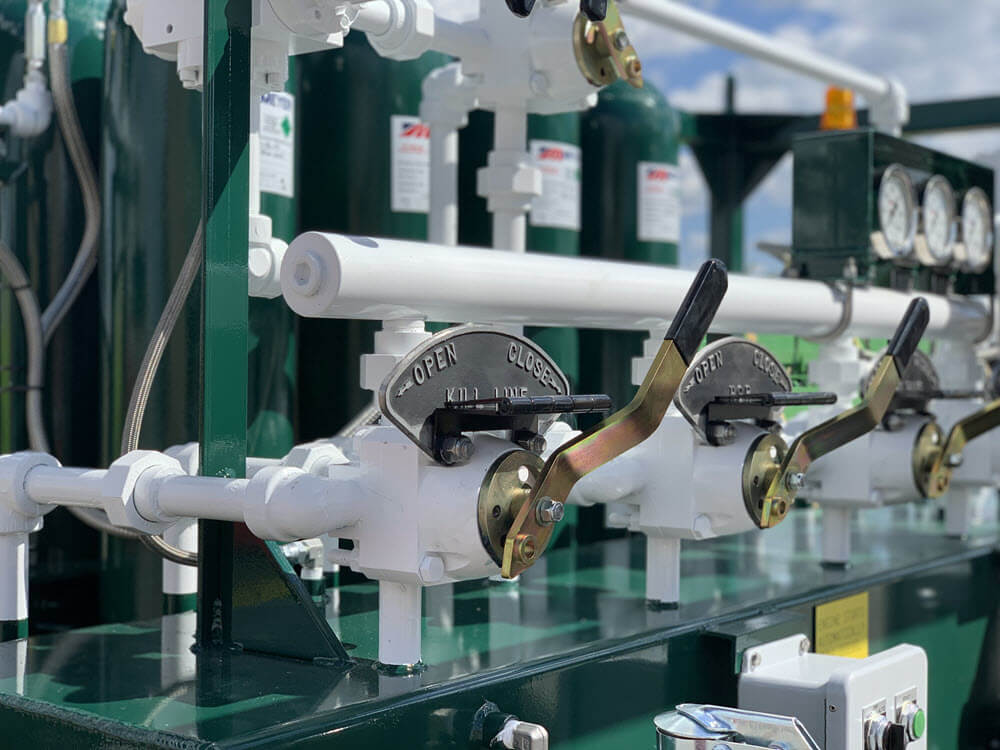
Our hydrostatic mobile test units list a triplex pump, poly tanks, a Pressure-Trol valve, filtration, and relief protection with a redundant rupture disc assembly. The winter review needs to cover the liquid-containing parts of the installed configuration. The engine, drive, and clutch have separate maintenance requirements; they are not all wetted by test fluid.
Use the following table to organize questions for the actual unit. It is a documentation review aid, not a draining sequence.
| Area to Review | What May Need Attention | What to Confirm |
|---|---|---|
| Tanks and connected piping | Residual liquid in tanks, outlets, and low points | Approved emptying or protection method and storage requirements |
| Pump fluid end | Liquid in passages, valves, and manifolds | Instructions for the installed pump model |
| Filter housings, where fitted | Liquid remaining in the housing and wet elements | Approved housing and element treatment before storage |
| Control and protective devices | Wetted passages in installed valves and assemblies | Component-specific protection and inspection requirements |
| Hoses and reels | Retained fluid in low spots and coiled sections | Approved preparation, support, and storage method |
| Pressure instruments and sensing lines | Liquid in wetted connections and sensing arrangements | Instrument-specific storage and return-to-use requirements |
Check the Instrument Arrangement, Too
Pressure measurement and recording equipment can have small fluid connections that are easy to overlook. Check the actual arrangement: not every gauge, transducer, or recorder is connected in the same way, and some instruments may use isolation components or other fluids.
Record what is installed and which instructions apply. A readable gauge face does not establish calibration status, and a gauge's full-scale range is not the working-pressure rating of the complete test package. Keep instrument condition and suitability separate from the pump's advertised output.
What to Inspect Before You Park the Unit
Check Condition Before Applying Protection
Use the unit's maintenance requirements to review its condition after the job. Include reported problems from the last test, even if they are no longer visible while the unit is idle.
The review should address:
- Pump leakage and any reported abnormal operation.
- Hose abrasion, kinks, damaged ends, and reel condition.
- Tank damage, leakage, and connected fittings.
- Filter condition and service status where applicable.
- Gauges, sensing lines, and recording equipment.
- Installed relief devices and protective assemblies within the approved inspection scope.
- Guards, supports, and the condition of the power package.
Keep each finding tied to the unit's asset or serial number. If a gauge needs calibration or a hose needs replacement, record that work clearly rather than allowing a winterized label to suggest everything is ready.
Our oilfield equipment services include pressure-control equipment testing and maintenance support. Discuss the scope for your package, including any instrument or protective-device checks it requires.
Keep Inspection Separate From Disassembly
Do not open a housing, disconnect a line, or loosen a fitting simply to see whether water remains inside. Maintenance involving pressure, stored energy, or moving components requires the approved shutdown, isolation, and verification process.
Qualified personnel should determine the work needed and use the instructions for the installed equipment. A storage checklist helps coordinate that work; it does not replace the safe-work procedure or authorize a field modification.
Include the Engine, Motor, or Air Supply
Water-side protection is only part of the preparation. Review the power package under its own manufacturer instructions. For diesel equipment, that may involve fuel, coolant, battery, and lubricant requirements. For electric equipment, review the supply and component condition. Where air-driven pumps are fitted, include the specified air treatment and moisture-control arrangements.
These checks should match the actual configuration. The winter storage instructions for a triplex pump should not be assumed to cover an air-driven pump, an engine, or a complete shop test stand.
Choose Protection That Fits the Unit and the Next Test
Choose the protection method by considering the installed equipment, expected exposure, storage duration, and the fluid requirements of the next job. Follow the approved unit and component instructions. If those documents do not resolve a question about protection or compatibility, obtain technical clarification before the unit is parked or transported.
Use the Instructions for the Equipment You Have
Check the pump model and compare the installed arrangement with the unit records. A replacement pump, added filter, different valve, or modified instrument connection can change which instructions are needed.
Component manufacturers publish storage guidance for particular equipment. That guidance must be read within its scope. A pump bulletin does not independently establish how to protect every tank, hose, filter, and instrument connected to it.
Do not assume that opening the most obvious drain, adding a chemical, or applying compressed air is an approved method for the complete package. The correct preparation depends on the actual design and its instructions.
Think About What Could Enter the Next Test
If the approved method uses a protective fluid, identify the product and confirm compatibility with the test unit. Also consider the next test article and its fluid requirements. Residual protection media may be unacceptable for that application even when it is suitable for a pump component.
Confirm how the approved procedure addresses any required removal, cleaning, or verification before use. Do not assume that dilution during the next test will resolve a compatibility or cleanliness issue. Review relevant product safety data and handling requirements alongside the equipment instructions.
Plan Fluid Handling Before Work Begins
Identify where removed test liquid or protection media will go. Arrange suitable containment, identification, and handling under the site's applicable procedures before preparation starts.
Test water may contain dye, additives, or contamination from the tested equipment. Do not assume it can be discharged because it started as water. Keep the removed-fluid record separate from the information telling the next crew what remains inside the unit.
Keep Protection in Place Through Storage and Transport
Account for the Entire Gap Between Jobs
Map the interval from the last test to the next authorized startup. Include waiting on location, loading, overnight parking, transport, unloading, and storage. A unit booked into a heated building can still encounter freezing conditions before it reaches the door.
If your approved plan depends on controlled storage conditions, confirm who will maintain them. Include what happens during a power interruption, a delayed pickup, or a move to an unheated bay. Reassess the plan when the actual route or storage arrangement changes.
For example, a unit may be ready for storage inside the service shop but wait overnight on a trailer for collection. That waiting period needs approved protection too. Naming the final destination does not account for the exposure along the way.
Give the Next Crew More Than a Status Label
Keep a preparation record with the equipment. It should let the receiving crew understand what was done without relying on the memory of the person who last used the unit.
Record:
- Asset ID, pump identification, and relevant configuration details.
- The last test fluid and any known additives.
- Instructions used and the protection work completed.
- Components covered, including connected accessories.
- Any protective fluid that remains and the required next-use steps.
- Open defects, restrictions, and follow-up responsibilities.
- Required storage conditions and the transport arrangements.
- The person responsible for preparation and the receiving contact.
Use a clear status such as preparation complete, preparation incomplete, or technical review required. Explain any restriction. The record should distinguish protected for storage from ready to perform a pressure test.
Check Readiness Before the First Test After Storage
Review the Record Before Connecting a Test Article
Confirm that the received package matches the asset ID and configuration in the record. Check what protection was applied, whether the specified conditions were maintained, and whether any corrective work remains open.
If protection media was used, follow the approved return-to-use requirements before connecting equipment for testing. Confirm the inspection, calibration, and readiness checks required for gauges, recording equipment, and installed protective devices.
The startup sequence and acceptance criteria come from the equipment documentation and applicable testing program. Do not use a generic pressure setting or the next customer's test article to investigate whether an uncertain package is serviceable.
Resolve Uncertain Protection or Suspected Freeze Damage
If freezing exposure may have occurred without adequate protection, hold the unit for qualified review before operation. Provide the preparation record and storage history so the service team can decide what assessment is needed.
Thawing does not establish that the package is undamaged. An external visual check also cannot rule out every internal problem. Do not pressurize a unit with suspected freeze damage simply to see whether a leak appears; have the appropriate service assessment determine the next steps.
Mobile and Shop Units Need Different Exposure Plans
Mobile Units: Follow the Equipment Between Locations
For a mobile unit, review the field location, hose storage, trailer movements, and outdoor waiting time. Include the power package's requirements alongside the test-fluid circuit. The preparation record needs to follow the unit when responsibility passes between a crew, a driver, and a yard.
An overnight gap can matter even when the equipment is needed again the next morning. Base the plan on the expected exposure and approved storage method, not on whether the shutdown is called short term or seasonal.
Shop Units: Confirm the Facility Conditions
Our hydrostatic shop test units can be configured with different power and control options. Review the installed package and the building it depends on rather than assuming that shop equipment is automatically protected.
Check whether the assigned bay is heated, whether that condition is maintained during shutdown, and whether the unit will move through an outdoor loading area. Air-powered packages also need their specified air-supply arrangements reviewed when freezing exposure is possible.
For equipment selection, our mobile vs shop test unit guide covers the broader comparison. For winter preparation, the key question is what exposure your actual unit will face between uses.
Key Takeaways
- An empty tank does not establish that pumps, valves, filters, hoses, and instrument connections are protected.
- Use instructions covering the actual unit and installed components.
- Confirm that protection media suits both the test package and the next testing application.
- Include waiting, transport, and loss of facility heat in the storage plan.
- Keep preparation records, unresolved defects, and next-use requirements with the equipment.
- Resolve uncertain protection or suspected freezing damage before operation.
Frequently Asked Questions About Winterizing Hydrostatic Test Units
Do Hydrostatic Test Units Need Winterization?
They need a cold-weather preparation review whenever freezing exposure could affect retained test liquid or the equipment during shutdown, transport, or storage. The required work depends on the configuration and approved storage conditions. A shop unit also needs a plan if it may lose building heat or move outdoors.
Can Test Fluid Remain in a Stored Unit?
Only when the equipment instructions permit it and the specified conditions protect the unit and retained fluid. Confirm which circuits contain liquid and what storage limits apply. Record what remains and the checks required before the next use rather than relying on the tank level alone.
Can I Use Any Antifreeze to Protect the Pump?
No. Use only the protection method and products approved for the actual equipment and storage conditions. A product suitable for one pump is not automatically compatible with every seal, valve, instrument, or future test article. Resolve compatibility and return-to-use requirements before applying a treatment.
What Should I Do if the Unit May Have Frozen?
Do not operate or pressurize a unit with suspected freezing damage. Have qualified service personnel review the equipment, protection record, and exposure history to determine the appropriate assessment. Thawing or the absence of a visible leak does not establish readiness.
What Should Crews Confirm Before Using a Winterized Unit?
Confirm the unit identity, completed protection work, storage history, remaining media, and open defects. Then follow the approved return-to-use and readiness process, including the required status of instruments and protective devices. Resolve missing information before connecting a test article.
Plan Your Test Unit's Winter Preparation With MEYER
Send us the unit's model and serial number, pump identification, last test fluid, known issues, storage arrangements, and next assignment. Those details help our team review the service needs and any protection questions before the package moves.
Use our service locations resource to coordinate with the appropriate team. We support test equipment through our service network, including Texas and other major oilfield regions; confirm the scope and timing for the specific job.
For a broader equipment plan, use our oilfield equipment winterizing checklist. If temporary equipment is needed, we can also discuss hydrostatic test unit rental options against the assignment's requirements and current availability.
From our headquarters in Corpus Christi, Texas, we manufacture, rent, and service hydrostatic testing equipment. Use our request more information form or call 1-877-44-MEYER to discuss your test unit and the next step in its winter preparation.
Request Test Unit Service Support
More Hydrostatic Testing and Winter Maintenance Guides
Winter preparation
Oilfield Equipment Winterizing Checklist
Coordinate cold-weather preparation across your equipment fleet.
Testing equipment
Mobile vs Shop Hydrostatic Test Units
Compare testing environments and equipment planning considerations.
Pump selection
Triplex Pump Hydrostatic Test Unit Selection
Review pump selection for mobile and shop testing applications.
Hydraulic maintenance
Cold Weather Hydraulic Hose Inspection
Review hose condition and cold-weather inspection priorities.