
Lease-to-Own Oilfield Equipment | MEYER
Lease-to-Own vs Long-Term Rental for Oilfield Equipment
Compare lease-to-own and long-term rental paths for accumulators, grease units, and test units with MEYER.
Lease-to-own oilfield equipment makes sense when a company needs long-term access to core equipment but wants to preserve capital, manage utilization risk, and build toward ownership over time. Long-term rental makes more sense when the equipment is needed for a defined project, a seasonal surge, a temporary fleet gap, or a basin-specific operating window. At MEYER, we help rental companies, operators, procurement leads, drilling contractors, and service teams compare lease-to-own, long-term rental, and purchase paths for BOP accumulator units, grease units, SPYDER® manifolds, hydrostatic test units, flushing units, and other pressure control support equipment.
The lowest day rate is not always the lowest total cost. A unit with a cheaper rental rate can still become expensive if it creates downtime, requires extra freight, lacks service support, does not match the job configuration, or forces a crew to stage backup equipment at the last minute. A lease-to-own path can make sense when the equipment will become part of the customer’s core fleet. A long-term rental can make sense when flexibility matters more than ownership. A direct purchase can make sense when utilization is predictable, the equipment is mission-critical, and the buyer is ready to handle lifecycle responsibility.
MEYER supports short-term, long-term, and lease options for oilfield rental equipment, and our rental fleet includes more than 300 pieces of oilfield equipment across categories such as accumulators, grease units, SPYDER manifolds, test units, and related well control support equipment. This article explains how to compare acquisition paths, what cost factors matter beyond the monthly rate, which equipment classes fit each path, and how regional planning across Odessa, Kilgore, Epping, Corpus Christi, Houston, and other service areas affects the final decision.
Definition: Lease-to-own oilfield equipment is an acquisition path where a customer uses equipment under a lease structure that may lead to ownership after agreed terms are met. It is commonly compared with long-term rental and purchase when companies need reliable access to accumulators, grease units, test units, or other core oilfield equipment.
Table of Contents
Rental Economics Fundamentals for Oilfield Equipment
Capital Preservation vs Ownership Timing
Maintenance Responsibility and Uptime Risk
Equipment Classes That Fit Each Path
Lease-to-Own, Long-Term Rental, and Purchase Options
Lease-to-Own vs Long-Term Rental vs Purchase Table
Fleet Planning for Accumulators, Grease Units, and Test Units
Multi-Basin Rental Planning Across MEYER Service Regions
Contrarian Insight: Why Lowest Day Rate Is Rarely the Lowest Total Cost
Field Operations Insight: Staging Extra Equipment for Seasonal Surges
Frequently Asked Questions About Lease-to-Own Oilfield Equipment
Rental Economics Fundamentals for Oilfield Equipment
Key Takeaway: Lease-to-own, long-term rental, and purchase decisions should be based on utilization, maintenance responsibility, uptime risk, ownership timing, and capital planning, not only on the lowest quoted rate.
Capital Preservation vs Ownership Timing
Capital planning is usually the first reason a customer compares lease-to-own oilfield equipment with long-term rental or direct purchase. A direct purchase can be the right choice when the equipment is core to the fleet, utilization is predictable, and the company is ready to own the asset for its full lifecycle. A long-term rental can be the right choice when the job has a defined start and end point, when a customer needs fleet coverage without ownership, or when the operating region creates uncertain demand. Lease-to-own sits between those paths because it can preserve capital at the start while keeping ownership open as a later outcome.
For core equipment, the question is not simply whether the company can afford to buy. The better question is whether buying today is the most efficient use of capital. BOP accumulator units, grease units, SPYDER® manifolds, hydrostatic test units, flushing units, and related well control support equipment can all become important fleet assets, but they do not always need to be purchased immediately. When a procurement team expects long-term use but wants flexibility during the first phase of a program, lease-to-own can protect cash while the operation proves utilization.
Long-term rental keeps flexibility higher. It lets the customer support a project, replace a unit during service, cover a seasonal surge, or expand a basin footprint without committing to ownership. The tradeoff is that rental payments do not automatically create an owned fleet asset unless the agreement is structured that way. Direct purchase gives the clearest ownership path, but it also shifts more lifecycle responsibility to the buyer.
We recommend comparing all three paths using a practical utilization test. If the equipment will run regularly, support core pressure control needs, and remain useful across multiple jobs or basins, lease-to-own or purchase may deserve a closer look. If the equipment solves a temporary availability problem, long-term rental may be more cost-effective.
| Economic Factor | Why It Matters | Best Fit |
|---|---|---|
| High utilization | The unit is likely to remain in use across multiple jobs | Lease-to-own or purchase |
| Short project window | Ownership may create unnecessary idle time later | Long-term rental |
| Capital preservation | Cash can stay available for operations, crews, or other assets | Lease-to-own or rental |
| Known long-term need | The unit may become a core fleet asset | Lease-to-own or purchase |
| Demand uncertainty | The job may shift, end early, or change equipment needs | Long-term rental |
| Ownership strategy | The buyer wants eventual control of the asset | Lease-to-own |
Maintenance Responsibility and Uptime Risk
Maintenance responsibility is one of the most important parts of the lease-to-own and rental conversation. The commercial path should define who handles inspection, service scheduling, repairs, replacement equipment, documentation, and field support. A rental arrangement may include support that helps the customer avoid full lifecycle responsibility. A purchase shifts more responsibility to the owner. A lease-to-own structure may sit between those positions depending on the contract terms.
Uptime risk should be priced into the decision. A BOP accumulator unit, grease unit, SPYDER manifold, or hydrostatic test unit can affect the schedule even when it is not the largest piece of equipment on location. If the unit is tied to pressure control, valve maintenance, testing, or field service response, downtime can create rig delay, crew standby, freight cost, emergency service cost, and customer disruption. That is why acquisition planning should include service access, parts availability, support location, and the ability to stage replacement equipment if the primary unit goes down.
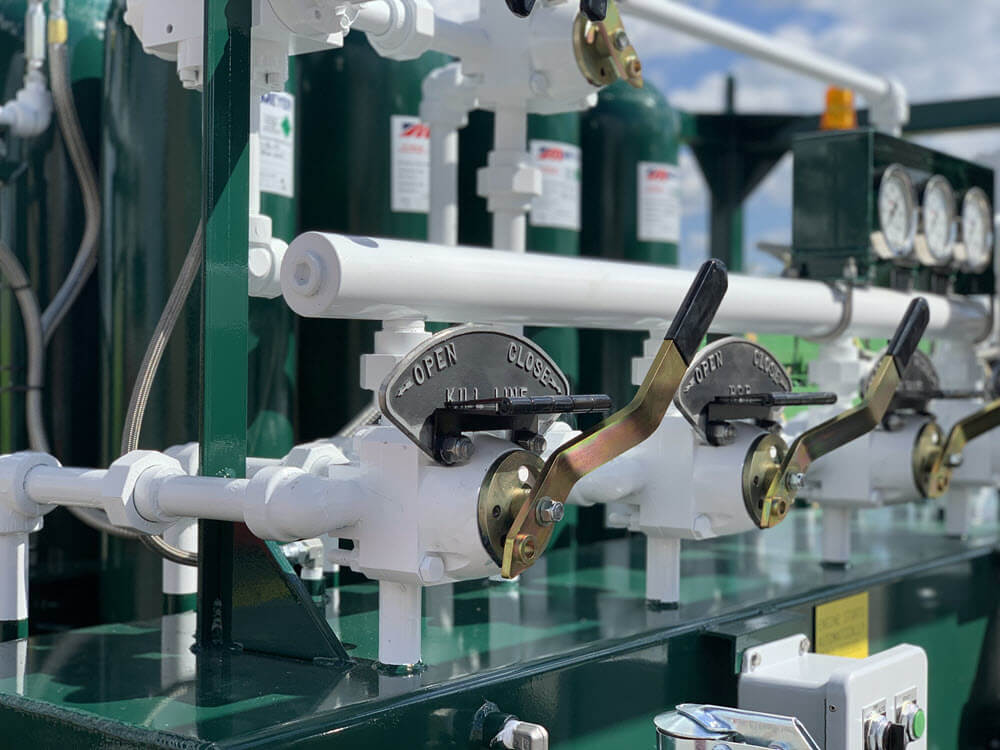
MEYER manufactures, rents, services, and repairs oilfield equipment, which gives customers a way to compare acquisition options with lifecycle support in mind. For BOP accumulator units, MEYER also provides aftermarket support and rental options for short-term, long-term, and leasing applications. That matters because the best acquisition path is not only a financial structure. It is a support strategy.
Equipment Classes That Fit Each Path
Not every equipment class belongs on the same acquisition path. Some assets are better suited for purchase because they run constantly and remain central to the fleet. Others are better suited for rental because they support short-term demand, backup coverage, seasonal peaks, or region-specific work. Lease-to-own becomes attractive when the customer expects ongoing use but wants to confirm utilization before taking full ownership.
BOP accumulator units can fit lease-to-own when a contractor expects regular pressure control work but wants a gradual ownership path. Grease units may fit long-term rental when frac schedules increase but the customer does not want to permanently expand the fleet. SPYDER manifolds may fit rental or lease-to-own when the customer needs multi-station greasing for a defined frac program that may grow into a longer-term requirement. Hydrostatic test units and flushing units may fit rental when testing or cleanup demand is project-based.
Our recommendation is to match the path to use pattern. Core, frequently used equipment should be evaluated for lease-to-own or purchase. Variable-demand support equipment should be evaluated for long-term rental. Standby equipment for seasonal surge, winter maintenance, or high-volume frac work should be evaluated as rental first unless utilization becomes predictable.
Lease-to-Own, Long-Term Rental, and Purchase Options
Key Takeaway: Lease-to-own is strongest when the customer wants eventual ownership, long-term rental is strongest when flexibility matters, and purchase is strongest when utilization and lifecycle responsibility are clear.
Lease-to-Own vs Long-Term Rental vs Purchase Table
The cleanest way to compare acquisition paths is to separate the financial structure from the operating reality. A lease-to-own plan may look more expensive than a short rental at first, but it can make sense when the equipment becomes a long-term asset. A long-term rental may look expensive next to purchase over a long horizon, but it can protect the customer from idle assets, maintenance responsibility, and changing project needs. A purchase may look like the highest upfront cost, but it can be the lowest long-term path if utilization stays high and the buyer is prepared to own service responsibility.
| Factor | Lease-to-Own | Long-Term Rental | Purchase |
|---|---|---|---|
| Capital impact | Spreads cost over time | Preserves capital and avoids ownership | Highest upfront commitment |
| Ownership outcome | Potential ownership after terms | No ownership unless converted | Immediate ownership |
| Flexibility | Moderate | Highest | Lowest after purchase |
| Best use case | Core equipment with growing utilization | Project, surge, backup, or uncertain demand | Known long-term fleet need |
| Maintenance planning | Depends on agreement terms | Often supported through rental relationship | Owner must manage lifecycle plan |
| Common MEYER equipment fit | BOP accumulators, grease units, test units | SPYDER manifolds, test units, standby equipment | High-utilization core fleet assets |
| Decision trigger | The customer may want to own the asset later | The customer needs flexibility now | The customer knows utilization will stay high |
Based on MEYER product specifications and rental support options.
The comparison verdict is direct. Choose lease-to-own when the unit is likely to become a long-term asset but capital timing matters. Choose long-term rental when flexibility, backup coverage, project timing, or regional movement matters more than ownership. Choose purchase when the asset is core to the fleet, utilization is predictable, and the buyer is ready to own maintenance planning, repair timing, and replacement decisions.
Fleet Planning for Accumulators, Grease Units, and Test Units
Fleet planning should start with the equipment classes that create the highest schedule risk when unavailable. For many drilling and pressure control teams, that includes BOP accumulator units, greasing units, SPYDER manifolds, hydrostatic test units, flushing units, and related support equipment. These units may not all run every day, but they can become critical when the schedule depends on pressure control readiness, valve maintenance, testing, or cleanup.
For BOP accumulator units, the decision often depends on whether the customer needs regular drilling support, backup capacity, or temporary coverage during service. For grease units and SPYDER manifolds, the decision may depend on frac volume, valve count, grease record needs, and whether the equipment will move from pad to pad. For hydrostatic test units, the decision may depend on testing frequency, shop workload, field testing needs, and whether the unit supports internal maintenance or customer-facing service.
Procurement leads should evaluate each class by utilization, mobility, service responsibility, and regional coverage. A customer with high utilization in one basin may choose lease-to-own. A customer covering uncertain seasonal work may choose long-term rental. A rental company trying to expand its offering may use lease-to-own as a bridge between customer demand and permanent fleet expansion.
If your team is comparing lease-to-own, long-term rental, or purchase, we can help review the equipment class, expected utilization, region, service expectations, and fleet timing before you commit. MEYER can discuss rental availability for accumulators, grease units, SPYDER manifolds, hydrostatic test units, flushing units, and related well control support equipment. We can also help you think through whether a rental should be staged as backup, used for a defined project, or evaluated as part of a longer ownership path. Start through our request more information form or call 877-44-MEYER to compare options with our team.
Multi-Basin Rental Planning Across MEYER Service Regions
Key Takeaway: Multi-basin rental planning should account for equipment availability, freight, service access, local demand cycles, and whether a unit may need to move between regions.
Odessa, Kilgore, Epping, Corpus Christi, and Houston Fleet Considerations
Regional demand changes the rental decision. In West Odessa and the Permian Basin, equipment planning often centers on high activity levels, fast response, remote sites, and the need to support drilling, frac, and maintenance work without waiting on long-distance mobilization. In Kilgore and East Texas, fleet planning may involve Haynesville-area work, pressure control support, and short-notice service demand. In Epping and the Bakken, cold weather, longer logistics windows, and seasonal maintenance cycles can make standby planning more valuable.
Corpus Christi and Houston bring a different mix of Gulf Coast service access, port-adjacent logistics, shop work, offshore-adjacent movement, and equipment that may move between yard maintenance and active field deployment. A customer operating across multiple basins may need a different acquisition path in each location. One region may justify lease-to-own because utilization is steady. Another region may justify long-term rental because project timing is uncertain. A third region may only need seasonal backup.
Multi-basin fleet planning should also include freight and support timing. A unit that is affordable on paper may become expensive if it is far from the job, difficult to service, or unavailable when demand spikes. We recommend mapping equipment classes to basin demand before choosing the commercial structure. That is especially important for rental companies and operators that support several crews at the same time.
| Region | Planning Pressure | Common Equipment Focus | Likely Acquisition Fit |
|---|---|---|---|
| West Odessa / Permian | High activity and fast response | Accumulators, grease units, SPYDER manifolds | Lease-to-own or long-term rental |
| Kilgore / East Texas | Short-notice service support | Test units, accumulators, valve support | Long-term rental or staged backup |
| Epping / Bakken | Seasonal logistics and cold weather | Standby pressure control equipment | Long-term rental or seasonal staging |
| Corpus Christi / Gulf Coast | Shop, field, and logistics coordination | Test units, flushing units, accumulators | Rental, lease-to-own, or purchase review |
| Houston | Regional service and equipment movement | Pressure control and test support | Long-term rental or project support |
Based on MEYER service region and rental fleet planning.
For customers planning across multiple basins, MEYER can help compare availability, rental duration, service expectations, and whether a unit should stay in one region or be positioned for movement. We can also discuss staged rentals, sub-rental needs, long-term rental coverage, and whether a lease-to-own structure makes sense for equipment that is becoming a repeated fleet requirement. Our team supports customers through our domestic service locations and rental network, including key oilfield regions such as Odessa, Kilgore, Epping, Corpus Christi, and Houston. Use our service locations resource or contact our team to review timing, equipment fit, and rental structure.
Contrarian Insight: Why Lowest Day Rate Is Rarely the Lowest Total Cost
Key Takeaway: A low day rate can become expensive if the unit creates downtime, freight delays, service gaps, poor configuration fit, or emergency replacement costs.
Procurement teams often compare rental quotes by day rate first. That is understandable, but it can produce the wrong answer. The lowest day rate is rarely the lowest total cost if the equipment is not close to the job, does not match the configuration, lacks service support, or requires extra backup equipment because the customer does not trust uptime.
Total cost should include freight, mobilization, demobilization, rig-up time, crew standby, service response, replacement timing, parts access, downtime exposure, and internal coordination. A cheaper unit that arrives late, needs rework, or cannot be supported quickly may cost more than a higher-rate unit that is ready, properly configured, and supported by a stronger service network.
This is especially true for BOP accumulator units, grease units, SPYDER manifolds, and hydrostatic test units. These assets affect the work around them. If a grease unit is down, valve maintenance slows. If a test unit is unavailable, inspection and verification work may wait. If a BOP accumulator unit is not ready, pressure control planning becomes more complicated. The cost is not only rental cost. It is the cost of what cannot happen while the equipment is unavailable.
We recommend comparing acquisition paths by total job cost, not just rate. Ask what happens if the job extends, the region gets busy, the unit needs service, or the customer wants to keep the asset. Those answers often reveal whether long-term rental, lease-to-own, or purchase is the more practical path.
Field Operations Insight: Staging Extra Equipment for Seasonal Surges
Key Takeaway: Seasonal surge planning works best when backup equipment is staged before demand peaks, not after every crew in the basin needs the same assets.
Seasonal surges expose weak fleet planning. A frac schedule can accelerate, winter maintenance can pull primary units out of service, a drilling program can shift regions, or a customer can request additional support with little notice. When those changes happen across a basin, the equipment everyone needs becomes harder to secure.
Staging extra equipment before a surge gives operations teams more control. A standby BOP accumulator unit can protect pressure control continuity while a primary unit receives service. An extra grease unit can support high-volume valve maintenance when activity increases. A SPYDER manifold can help a frac crew manage multiple valves with more repeatable greasing. A hydrostatic test unit can keep inspection and verification work moving when shop or field demand spikes.
Long-term rental is often the first path to evaluate for seasonal surges because it gives the customer access without immediate ownership. Lease-to-own may make sense if the seasonal surge turns into recurring utilization. Purchase may make sense only when the customer expects the extra equipment to remain useful after the surge ends.
The practical planning question is simple. Will this equipment still be needed after the surge? If the answer is no, rent it. If the answer is maybe, compare long-term rental and lease-to-own. If the answer is yes and utilization is predictable, evaluate lease-to-own or purchase.
Key Takeaways
- Lease-to-own fits equipment that may become part of the core fleet.
- Long-term rental fits project-based demand, seasonal surges, and backup coverage.
- Purchase fits predictable utilization and clear lifecycle responsibility.
- The lowest day rate is not always the lowest total cost.
- MEYER can help compare acquisition paths for accumulators, grease units, SPYDER manifolds, test units, and related equipment.
Frequently Asked Questions About Lease-to-Own Oilfield Equipment
When does lease-to-own make sense?
Lease-to-own makes sense when the customer expects long-term use but wants to preserve capital, prove utilization, or avoid committing to a full purchase immediately. It is often worth evaluating for equipment that may become part of the core fleet, such as BOP accumulator units, grease units, hydrostatic test units, or other pressure control support equipment. If the need is temporary or uncertain, long-term rental may be a better first step. If utilization is predictable and ownership responsibility is clear, direct purchase may be the better long-term path.
Who handles service on rented or leased equipment?
Service responsibility depends on the rental, lease, or purchase agreement. That is why customers should clarify inspection, maintenance, repair response, replacement equipment, documentation, and field support before choosing a path. MEYER manufactures, rents, services, and repairs oilfield equipment, which allows customers to discuss equipment access and service expectations together. For BOP accumulator units, MEYER also supports aftermarket service and rental options for short-term, long-term, and leasing applications. The right agreement should reduce uptime risk rather than create confusion once the equipment is in the field.
Which units are most commonly rented?
Common rental categories include BOP accumulator units, grease units, SPYDER manifolds, hydrostatic test units, flushing units, and related pressure control support equipment. MEYER’s rental fleet includes more than 300 pieces of oilfield equipment across these types of assets. The best rental fit depends on the customer’s job duration, region, utilization, service expectations, and whether the equipment is filling a temporary gap or becoming a repeated fleet need. For high-utilization equipment, customers may also want to compare lease-to-own or purchase options.
Can MEYER support sub-rentals?
MEYER supports rental customers across multiple oilfield regions and can discuss sub-rental, long-term rental, and lease needs based on equipment availability. Contact our team to review the equipment class, region, timing, and support requirements.
Lease-to-own, long-term rental, and purchase paths each have a place in oilfield equipment planning. The right decision depends on utilization, capital timing, service responsibility, regional demand, and whether the equipment will become part of the customer’s core fleet. From our headquarters in Corpus Christi, TX, MEYER supports rental companies, operators, procurement leads, drilling contractors, and service teams that need reliable access to accumulators, grease units, SPYDER manifolds, hydrostatic test units, flushing units, and related oilfield equipment. With manufacturing, rentals, service, and aftermarket support under one team, we can help compare the commercial path and the operating reality together. Call 877-44-MEYER or use our request more information form to discuss lease-to-own, long-term rental, or purchase options.
MEYER
Manufacturing, rentals, service, and aftermarket support for oilfield equipment.
Need help choosing between lease-to-own, long-term rental, and purchase for core oilfield equipment?