

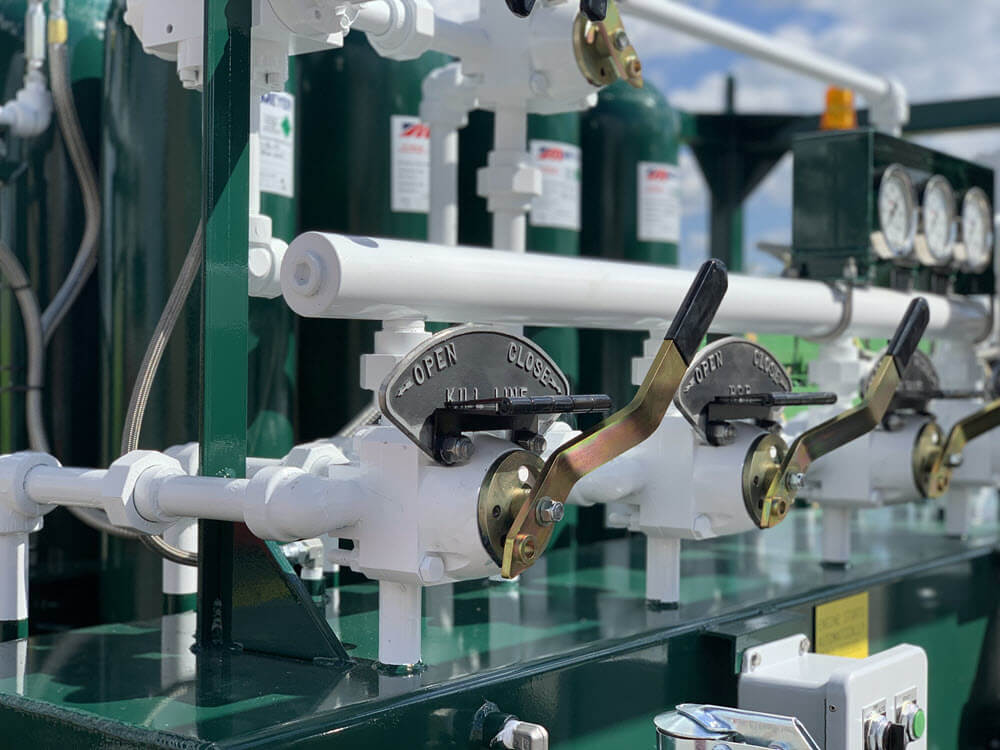
Hydrostatic Mobile Test Unit vs Shop Test Unit
Mobile vs Shop Hydrostatic Test Units: How to Choose the Right Setup
Compare mobile and shop hydrostatic test units for BOP and wellhead testing, then request the right MEYER setup.
MEYER’s hydrostatic mobile test unit and hydrostatic shop test unit are built for the same core job, but they are not designed for the same testing environment. A mobile unit is the better fit when you need fast field deployment for valves, wellheads, or select pressure-control components near the jobsite. A shop test unit is the better fit when the priority is a controlled testing environment, repeatable setup, and tighter control over the overall test process for BOPs, wellheads, and valves. After that basic distinction, the real selection decision comes down to pump package, tank capacity, filtration, relief systems, operator stand-off distance, documentation needs, and whether the asset should be tested in the field or in a facility. Here at MEYER, we manufacture both hydrostatic mobile test units and hydrostatic shop test units, and we also support rentals, service, and field operations through our domestic service network. In this article, we explain how each configuration works, where each one fits best, and how we recommend selecting the right pressure testing setup for BOP, valve, and wellhead work.
A hydrostatic mobile test unit is a portable pressure testing system used to perform hydrostatic tests in the field. A hydrostatic shop test unit is a fixed or shop-based pressure testing system used in a controlled environment. For operators working across shale basins and Gulf Coast operations, the choice affects testing speed, setup control, safety spacing, and documentation consistency.
Request a Hydrostatic Test Unit Quote
Table of Contents
Pump ratings and power packages
Tank capacity, filtration, and relief systems
Field testing vs controlled shop testing
Configuration Comparison and Operational Value
BOP, valve, and wellhead application scenarios
Offshore-adjacent Corpus Christi and Houston testing demands
Safety Engineering Analysis: Operator Stand-Off Distance and Remote Panels
Forgotten Specs: Filtration, Rupture Disc Assemblies, and Chart Recording
Pressure Testing Fundamentals
Key Takeaway: We recommend choosing a hydrostatic test unit by matching the testing environment and control requirements to the asset being tested, not by treating mobile and shop setups as interchangeable.
Pump ratings and power packages
Hydrostatic testing starts with the pump package because the pump determines how the unit will build and hold test pressure under actual field or shop conditions. Our hydrostatic mobile test unit page highlights NOV triplex pumps and John Deere diesel motors, which tells the buyer two important things right away. First, the unit is designed for field portability and dependable pressure generation. Second, the package is meant for real oilfield testing conditions rather than light-duty bench work. We also state that we will size the unit to API guidelines and build it to customer requirements, which is important when the application changes from valve testing to wellhead testing or other pressure-control work.
We recommend reviewing the pump package around these factors:
- target test pressure
- fluid volume required during the test
- site power independence
- transport and deployment constraints
- asset class being tested
A shop test unit changes the conversation. In the shop, the question is usually less about portability and more about controlled pressure testing in a safer, more repeatable environment. Our shop unit page positions that equipment specifically for controlled hydrostatic pressure tests used on BOPs, wellheads, and valves. That distinction matters because a BOP or wellhead test performed in a facility often benefits from better setup control, better fixture consistency, and easier repeatability than the same test performed in a crowded field environment.
When we talk to operators, we do not frame this as a simple mobile-equals-fast and shop-equals-accurate decision. The better framing is field-access flexibility versus controlled testing discipline. A mobile unit is often the right answer when moving the asset to a shop costs more time than the test itself. A shop unit is often the better answer when the asset, the documentation expectations, or the safety plan benefit from a stable testing environment. That is why we recommend starting with the test objective and the operating setting before getting attached to one configuration.
Tank capacity, filtration, and relief systems
The next layer is fluid handling and protection. Our hydrostatic mobile test unit data indicates tank options from 225 to 750 gallons, along with stainless filtration, Pressure-Trol valves, relief valves, and rupture disc assemblies. Those details matter because the quality of a pressure test depends on more than the pump. Tank volume affects how practical the unit is for the job. Filtration affects how cleanly the system operates. Relief and rupture protection affect how safely the unit behaves if the test setup does not go as planned.
We recommend paying close attention to these items because they are often the first specs crews overlook when they only compare pressure capability:
- tank size relative to the asset and test duration
- filtration quality and ease of maintenance
- pressure relief path
- rupture disc assembly coverage
- hose and connection layout
In the shop, these same features still matter, but the advantage shifts. A facility-based testing environment usually gives us more room to control fluid management, maintain cleaner setups, and standardize how the test is run from job to job. That is one reason our shop unit page emphasizes a safe, reliable shop environment rather than only headline pressure performance. For many operators, that controlled environment is the real value of the shop setup. It reduces variables that can complicate test quality and documentation in the field.
Field testing vs controlled shop testing
The field-versus-shop choice is where the selection decision becomes practical. We recommend a mobile unit when the job requires fast deployment, reduced transport burden, and field access near the asset. Our mobile unit page explicitly positions the product for safe, fast field testing of valves and wellheads, and recent MEYER content reinforces that mobile units are useful for pre-season field testing and efficient startup planning.
We recommend a shop unit when the asset should be brought into a more controlled environment for repeatable test execution. Our shop unit page explicitly says these systems are commonly used for BOP hydrostatic pressure testing, wellhead pressure testing, and valve testing in a safe, reliable shop environment. That language is important because it makes clear that shop units are not only for convenience inside a facility. They are for cases where control over the testing process has real value.
In other words, field testing and shop testing solve different operational problems. Field testing reduces movement and speeds up access to the job. Shop testing improves environmental control and often strengthens repeatability for higher-discipline work. We recommend choosing based on where the asset is, how the test must be controlled, and what level of field variability the operator can tolerate.
Talk to Our Test Equipment Team
Configuration Comparison and Operational Value
Key Takeaway: We recommend mobile units when access and speed drive the decision, and shop units when control, consistency, and safer facility testing carry more weight.
Mobile vs shop test unit
The cleanest way to compare these units is to evaluate how each one supports the test objective. Our own product pages create that distinction clearly. The mobile unit is built around safe, fast field testing of valves and wellheads. The shop unit is built around controlled hydrostatic pressure testing in a safe, reliable shop environment for BOPs, wellheads, and valves. That is not marketing overlap. It is a real configuration difference.
| Factor | Hydrostatic Mobile Test Unit | Hydrostatic Shop Test Unit |
|---|---|---|
| Primary environment | Field deployment | Controlled shop environment |
| Main advantage | Fast access to the asset | Better process control and repeatability |
| Common applications | Valves, wellheads, field verification | BOPs, wellheads, valves in facility testing |
| Power package orientation | Portable field-ready package, diesel-driven options | Facility-centered controlled testing setup |
| Setup flexibility | High near the jobsite | High within standardized shop process |
| Safety control | Strong when designed with proper stand-off and hose layout | Stronger overall environmental control |
| Best For | Jobs where moving the asset is inefficient | Jobs where tighter control of the test process matters most |
Based on MEYER product specifications.
Here is our recommendation after the comparison. If the operator needs a test performed near the worksite and wants to avoid the logistics of transporting the asset to a facility, a mobile unit is usually the right choice. If the operator wants the test performed in a more controlled setting with fewer field variables, a shop unit is usually the better choice. We do not recommend defaulting to mobile just because it is faster to deploy. We also do not recommend defaulting to shop just because it sounds more controlled. The correct answer is the one that fits the asset, the location, and the testing objective.
BOP, valve, and wellhead application scenarios
The buyer decision becomes easier when we connect the unit type to the asset type and scenario.
| Operator Profile | Specific Scenario | Recommendation | Because |
|---|---|---|---|
| Field service crew | Valve testing at an active site | Mobile unit | The unit can be deployed at the job and reduce transport delay |
| Drilling contractor | Wellhead pressure testing during a tight field schedule | Mobile unit | Fast field access usually matters more than shop transfer time |
| Maintenance manager | Planned BOP hydrostatic testing during shop turnaround | Shop unit | Controlled facility testing supports process discipline and repeatability |
| Gulf Coast operator | Mixed valve and wellhead testing with yard access | Review by job | Some assets justify field testing while others fit better in the shop |
| Rental customer | Short-term seasonal testing demand | Mobile rental review | Rental can support field demand without immediate capital spend |
| Multi-asset fleet | Standardized maintenance campaign | Shop unit with field support as needed | Consistency matters across repeated tests |
Based on MEYER product specifications and recent rental-use guidance.
We generally advise these use cases:
- Field operator + valve or wellhead near the job + tight schedule = mobile unit, because mobility reduces the delay created by moving the asset offsite.
- Maintenance team + BOP test during a planned service interval = shop unit, because process control usually matters more than portability.
- Operator with mixed assets and changing job conditions = configuration review, because one unit type may not be the best fit across every test scenario.
That is the decision-support conclusion we give most often. Use a mobile unit when access and speed are the dominant variables. Use a shop unit when the test benefits from a more controlled, standardized environment. That distinction is especially important for buyers deciding between purchase, rental, and service planning.
When customers reach out to us about hydrostatic testing equipment, we start with the asset type, test location, and timing of the work rather than pushing one standard package. Our team can review whether the job fits a hydrostatic mobile test unit, a hydrostatic shop test unit, or a rental strategy tied to a short testing window. We also support manufacturing, rentals, service, and aftermarket work through our broader pressure-control equipment network, which helps us look at the full job instead of only the pump package. If the project is tied to BOP work, valve testing, or wellhead pressure verification, we can align the quote with the actual testing environment and timeline. To start the review, send us the equipment scope through meyernow.com/request-more-information.html or call 877-44-MEYER and we will help you size the right setup for the job.
Check Rental and Build Options
Regional Field Authority
Key Takeaway: We see the strongest case for mobile test units on Gulf Coast and offshore-adjacent jobs where field access and schedule speed matter, while shop units stay strong where yard control and planned testing windows are available.
Offshore-adjacent Corpus Christi and Houston testing demands
Regional conditions shape the selection more than many buyers expect. Along the Gulf Coast, especially around Corpus Christi and Houston, the testing demand often involves offshore-adjacent operations, port access, yard activity, and mixed asset movement between field locations and service facilities. That creates a real split in equipment fit. A mobile unit is often attractive when testing needs to happen near the worksite or when moving the asset to a facility creates unnecessary delay. A shop unit becomes more valuable when the operator already has yard access and wants tighter control over how the pressure test is executed.
Our regional support network reinforces that decision path. MEYER’s service locations page confirms support across major oilfield regions, and recent company content highlights strong presence in Corpus Christi, Odessa, and Houston for equipment, service, and rapid field response. That matters because pressure-testing decisions are rarely made in isolation. They are tied to transport time, service access, and whether the operator needs a unit for a short field window or a longer controlled maintenance cycle.
For Gulf Coast work, our recommendation is straightforward. If the job is near Corpus Christi and speed to field matters most, a mobile unit often creates the better operational result. If the asset is already moving through a controlled service or maintenance process, a shop unit may create a cleaner test path. In Houston and similar support hubs, both options can make sense, but the right answer still depends on where the asset is, how the test must be run, and how much process control the operator needs.
When a Gulf Coast customer needs to line up pressure-testing equipment, we can coordinate the request around location, timing, and asset type instead of forcing a generic package. Our domestic service network gives us room to support testing jobs across active regions, and our rentals and service capabilities help us cover short-term and planned work alike. If the job needs a field-ready mobile unit, a shop-based testing path, or a mix of both across a larger maintenance program, we can help map that out before the testing window arrives. To start the review, call 877-44-MEYER or use meyernow.com/request-more-information.html so we can line up the right pressure-testing plan around your schedule.
Safety Engineering Analysis: Operator Stand-Off Distance and Remote Panels
Key Takeaway: We recommend evaluating operator position, hose layout, and control location with the same seriousness as pump and pressure specs because testing safety depends on where the crew is during the test.
One of the most overlooked differences between test-unit setups is how the operator interacts with the equipment during the test. MEYER’s recent field-testing content states that long hoses allow operators to work from a safe distance away on hydrostatic mobile test units. That is a practical safety feature, not a minor accessory detail. When crews are testing valves and wellhead components in the field, stand-off distance can materially change how safely the job is executed.
We recommend reviewing these questions on every hydrostatic testing job:
- where the operator stands during pressurization
- how the hose layout affects exposure
- whether the controls support safe spacing
- whether field congestion reduces safe positioning
- whether a controlled shop setup would reduce testing risk
This is one reason a shop unit can be the better answer even when a mobile unit is technically capable of doing the job. A facility environment often gives us more room to control where people stand, how the asset is secured, and how the test is monitored. On the other hand, a well-designed mobile unit with strong hose and control layout can still create a safe field-testing path when taking the asset to the shop is impractical. We do not recommend judging safety only by maximum pressure. We recommend judging it by the whole testing setup.
Schedule a Pressure Testing Review
Forgotten Specs: Filtration, Rupture Disc Assemblies, and Chart Recording
Key Takeaway: We see buyers make better testing decisions when they review the support specs around the test, not only the headline pressure capability of the unit.
The forgotten specs are often the ones that determine whether the unit performs cleanly and predictably over time. Our hydrostatic mobile test unit materials reference stainless filtration, relief valves, and rupture disc assemblies. Those items are easy to skip past when a buyer is focused on pressure capability and pump brand, but they directly affect maintenance burden, protection behavior, and test control.
| Spec Item | Why It Matters | Common Buying Mistake |
|---|---|---|
| Filtration | Helps protect the system and maintain cleaner operation | Treated as secondary to pump rating |
| Relief valve | Supports controlled pressure protection | Assumed to be standard without review |
| Rupture disc assembly | Adds protection path in abnormal conditions | Overlooked until the safety review |
| Tank volume | Affects test practicality and duty cycle | Compared too late in the process |
| Hose layout | Affects operator position and field usability | Ignored until deployment |
| Recording needs | Affects how the test is documented | Left vague at quote stage |
We recommend adding documentation and recording expectations to the review early, especially when the customer needs a consistent test record across multiple assets or service intervals. That detail is often easier to define on the front end than to correct after the equipment is already in use. For buyers deciding between a mobile and shop system, these support specs often reveal which configuration will stay easier to manage over the life of the unit.
Key Takeaways
- Mobile test units are best when field access and speed are the main priorities.
- Shop test units are best when the job benefits from a controlled testing environment.
- We recommend matching the unit to the asset type, test location, and documentation needs.
- Operator stand-off distance, filtration, and relief protection matter as much as headline pressure specs.
- MEYER supports hydrostatic testing through manufacturing, rentals, service, and a domestic service network.
Frequently Asked Questions About Hydrostatic Test Units
Which unit fits BOP testing?
We usually recommend a shop test unit first when the BOP test benefits from a controlled environment, standardized setup, and tighter process control. Our hydrostatic shop test unit page explicitly lists BOP hydrostatic pressure testing as a common application, along with wellhead and valve testing. A mobile unit may still play a role in broader field operations, but for planned BOP testing, the shop configuration is often the cleaner choice because the environment itself supports more consistent execution.
When is shop testing better?
Shop testing is better when the asset can be moved into a facility without creating unacceptable schedule impact and when the operator wants stronger control over the test environment. We recommend it for jobs where repeatability, controlled setup, and tighter safety management outweigh the convenience of field deployment. That is exactly how our shop unit page positions the equipment, which is why we advise customers not to default to field testing just because it appears faster.
Are rental units available?
Yes. Our recent mobile-unit content states that operators can access compliant equipment without committing to long-term ownership, and our broader rentals pages support short-term and longer-term equipment access across the fleet. For customers facing a seasonal testing window, a turnaround event, or a temporary field campaign, rental can be the right way to cover the testing need without moving straight to purchase. We recommend sending the asset type, location, and date window so we can match the request to available equipment.
What pressure ranges are common?
The exact pressure range depends on the asset, the duty of the job, and the unit configuration. We size our mobile units to customer requirements and API guidelines, which is why we recommend reviewing the application before locking in the package. In practice, the more important question is not only the target pressure. It is whether the pump, tank, filtration, protection devices, and testing environment all support that pressure safely and consistently.
We build hydrostatic testing equipment to match the way real oilfield testing work gets done, whether that means fast field deployment or controlled shop execution. From our headquarters in Corpus Christi, TX, we support customers through an API-certified manufacturing and service organization with 11 domestic service locations and a 300+ unit rental fleet that helps cover temporary and planned testing demand. If you are deciding between a hydrostatic mobile test unit and a shop test unit, we recommend reviewing the asset type, testing environment, safety spacing, and documentation expectations before committing to the final package. We can help size the unit, review rental availability, and coordinate the right configuration around your schedule. To request a quote or line up support, call 877-44-MEYER.
MEYER
Manufacturing, rentals, service, and aftermarket support for oilfield equipment.
Need help choosing between a mobile unit and a shop testing setup?