

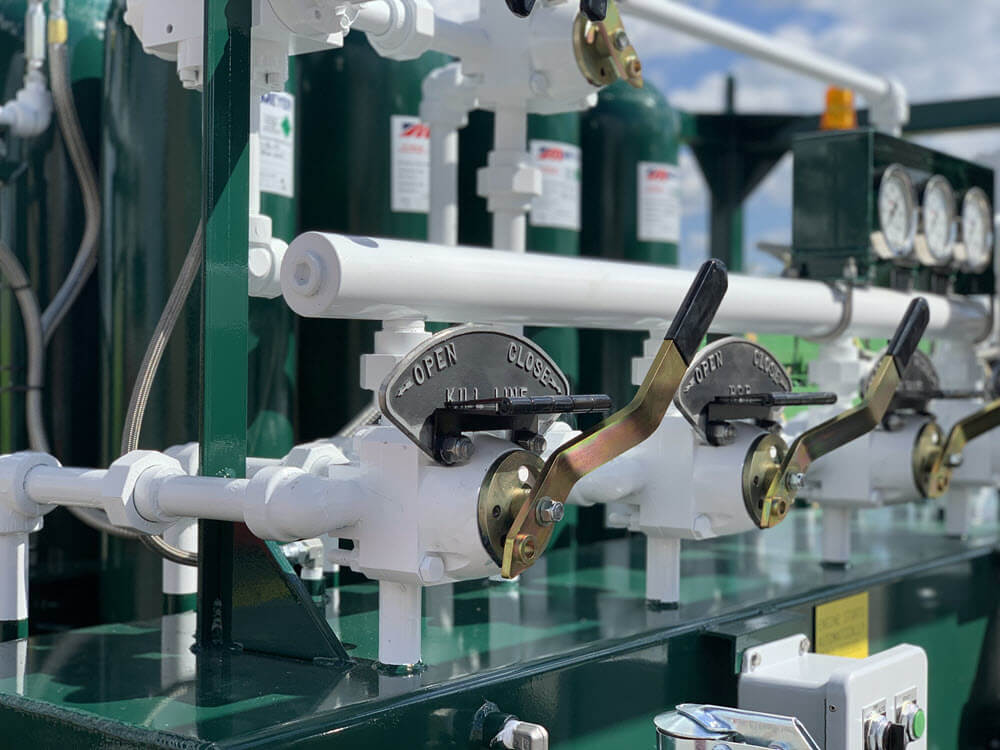
Nitrogen Backup System for BOP Accumulators
See when a nitrogen backup system supports BOP accumulator readiness and request API-16D guidance from MEYER.
A nitrogen backup system for BOP accumulator units supports well control readiness by adding stored energy capacity when a closing unit must maintain hydraulic response during power interruption, pump delay, remote operations, or high-demand closing sequences. MEYER builds BOP accumulator units to applicable API-16D guidelines, and we use nitrogen backup planning to help operators, drilling contractors, workover crews, and rental companies strengthen redundancy around accumulator bottles, pre-charge discipline, hydraulic volume, and closing performance.
In field terms, nitrogen backup is not a shortcut for proper accumulator sizing. It is part of a broader stored energy plan that should account for bottle volume, pre-charge condition, hydraulic fluid demand, BOP stack requirements, power package selection, remote panel needs, and service documentation. We recommend reviewing nitrogen backup when a job has high well control consequence, limited power reliability, remote deployment, cold-weather exposure, or a need for additional backup capacity without relying only on an immediate pump restart.
Our team looks at nitrogen backup alongside the complete BOP accumulator package: API-16D context, electric or diesel power, air motor options, remote panels, AutoStart Box configurations, arctic enclosures, secure access lockout, rental backup units, and aftermarket support. This guide explains how nitrogen backup works, why pre-charge discipline matters, how to compare standard accumulators with added backup capacity, and when a rental backup unit may be the more practical operational choice.
Definition: A nitrogen backup system for BOP accumulators is a stored energy configuration that supports hydraulic readiness when the closing unit needs additional backup capacity. It is commonly used to support BOP control functions during power interruption, pump delay, or remote operations. For operators working across US shale basins and international markets, it helps by strengthening accumulator redundancy and well control response planning.
Table of Contents
Nitrogen Backup Fundamentals for BOP Accumulators
Stored Hydraulic Energy and Backup Function
Nitrogen Bottle Sizing and Pre-Charge Considerations
Accumulator Readiness During Power Interruption
Nitrogen Backup Configurations and Operational Value
Standard Accumulator vs Nitrogen Backup Accumulator vs Rental Backup Unit
Drilling, Workover, and Remote-Site Use Cases
Regional Redundancy Planning Across Active Oilfield Regions
Technical Deep Dive: Why Nitrogen Pre-Charge Discipline Matters for Closing Performance
Safety Engineering Analysis: Backup Energy Planning During Well Control Events
Frequently Asked Questions About Nitrogen Backup for BOP Accumulators
Nitrogen Backup Fundamentals for BOP Accumulators
Key Takeaway: Nitrogen backup should be evaluated as part of the complete BOP accumulator energy plan, including bottle capacity, pre-charge condition, hydraulic demand, power package reliability, and API-16D context.

Stored Hydraulic Energy and Backup Function
A BOP accumulator unit stores hydraulic energy so the control system can operate well control functions when the crew needs reliable response. Nitrogen-charged accumulator bottles are central to that stored energy function because the compressed gas helps drive hydraulic fluid out of the bottle when the system calls for flow. A nitrogen backup system adds redundancy by increasing the available stored energy plan around the accumulator, especially where power interruption, pump delay, or high-demand closing sequences must be considered before the job starts.
We build accumulator systems around the actual BOP stack, control functions, operating pressure needs, and field environment. MEYER BOP accumulator units are sized and built in accordance with applicable API-16D guidelines, and our engineering team evaluates backup capacity as part of the larger control system, not as an isolated accessory. That distinction matters because backup energy only helps when the unit is correctly sized, properly charged, inspected, and connected to a serviceable hydraulic circuit.
When we review nitrogen backup needs, our technicians look at practical field factors:
- BOP stack functions and expected hydraulic volume demand.
- Accumulator bottle count, bottle condition, and pre-charge status.
- Power package reliability, including electric, diesel, or air motor support.
- Remote panel requirements and expected operator position.
- Cold-weather, remote-site, or offshore-adjacent operating risk.
- Service records, inspection schedule, and field test requirements.
The specification cluster is straightforward: nitrogen backup supports BOP accumulator readiness only when bottle capacity, pre-charge, hydraulic fluid demand, pump support, and control logic work together. We recommend treating nitrogen backup as one part of a complete well control energy plan because stored pressure without proper sizing, inspection, and documentation can create false confidence.
| Readiness Factor | What We Check | Why It Matters |
|---|---|---|
| Stored energy capacity | Bottle count, volume, and system demand | Supports closing readiness during demand events |
| Nitrogen pre-charge | Pressure condition and inspection record | Protects usable hydraulic volume and response |
| Hydraulic control circuit | Valves, manifolds, hoses, gauges, and controls | Reduces restriction, leaks, and response uncertainty |
| Power package | Electric, diesel, air motor, or AutoStart support | Maintains recharge and system recovery planning |
| Remote control needs | Remote panel, access, operator position | Supports safer and clearer field operation |
| Service documentation | Inspection, testing, and maintenance records | Supports compliance and readiness review |
Nitrogen Bottle Sizing and Pre-Charge Considerations
Nitrogen bottle sizing should follow the required well control functions, usable fluid volume, operating pressure, and applicable API-16D design context. We do not recommend selecting backup capacity by bottle count alone. Two systems can have similar bottle quantities but very different readiness profiles if pre-charge condition, hydraulic demand, control circuit layout, and pump recovery are not the same.
Pre-charge discipline matters because the nitrogen side of the accumulator determines how stored energy is available during operation. If pre-charge is out of tolerance, the unit may not deliver the usable volume or response the crew expects. Our technicians advise checking pre-charge through proper service procedures, documenting the result, and reviewing trends across inspections rather than treating the check as a one-time formality.
We also recommend reviewing bottle condition, isolation points, gauges, labels, and access before deployment. A backup system that is difficult to inspect is harder to trust under field pressure. That is why serviceable layout, clear gauge visibility, and accurate records matter as much as the added nitrogen capacity itself.
Accumulator Readiness During Power Interruption
Power interruption is one of the practical reasons operators ask about nitrogen backup. If electric power is interrupted or a pump takes time to restart, the accumulator’s stored energy plan becomes more important. Backup nitrogen capacity can help support hydraulic readiness during that window, but it should be reviewed together with the full package: power source, AutoStart logic, diesel pump availability, air motor configuration, remote panel setup, and service condition.
In remote operations, the risk is not only loss of power. It is response time. A workover rig in a remote Permian location, a winter-exposed Bakken job, or a Gulf Coast site with weather-driven access constraints may not have the same service timing as a shop-supported yard. We recommend planning backup capacity before deployment, not after the first delayed response or failed readiness check.
Our arctic enclosure options can also be configured with remote panels, motor packages, nitrogen backup systems, cold-weather options, and certification packages. For cold-weather or remote work, we often review nitrogen backup in the same conversation as heating, power, visibility, access, and rental backup planning.
Nitrogen Backup Configurations and Operational Value
Key Takeaway: The right backup strategy depends on whether the operation needs integrated redundancy, temporary coverage, rental flexibility, or a custom accumulator build for long-term well control reliability.
Standard Accumulator vs Nitrogen Backup Accumulator vs Rental Backup Unit
A standard accumulator, a nitrogen backup configuration, and a rental backup unit can all support pressure control planning, but they solve different problems. The standard accumulator is the core closing unit. The nitrogen backup configuration strengthens the stored energy plan inside or alongside the system. The rental backup unit adds operational flexibility when a job needs temporary redundancy, service coverage, or a fast replacement path.
| Factor | Standard Accumulator | Nitrogen Backup Accumulator | Rental Backup Unit |
|---|---|---|---|
| Primary Role | Core BOP control and stored energy | Added stored energy redundancy | Temporary or standby equipment coverage |
| Best For | Standard drilling and workover control needs | Remote, high-consequence, or power-sensitive jobs | Service coverage, seasonal demand, or emergency support |
| Ownership Impact | Owned or rented base unit | Custom build or configured upgrade path | No permanent fleet commitment required |
| Service Focus | Routine inspection and readiness testing | Pre-charge checks and added bottle documentation | Availability, transport, setup, and field support |
| Operational Value | Baseline well control readiness | Additional stored energy margin | Reduces downtime while primary unit is serviced |
| Ideal Application | Known stack and normal power reliability | High-risk well control programs needing redundancy | Temporary backup, repair windows, and surge coverage |
Based on MEYER product specifications.
The comparison verdict is practical: choose a standard accumulator when the base unit is correctly sized and the operating environment does not require additional redundancy. Choose a nitrogen backup accumulator when the job needs integrated stored energy margin for power-sensitive, remote, or high-consequence operations. Choose a rental backup unit when the operation needs temporary coverage, service continuity, or standby support without committing to a permanent custom build.
Drilling, Workover, and Remote-Site Use Cases
Nitrogen backup is most useful when the consequence of delayed accumulator response is high. We evaluate the backup strategy by operator profile, job type, service access, and power reliability.
- Drilling contractor + remote Permian location + nitrogen backup review: We recommend evaluating added backup capacity because remote access and H2S-related planning can increase the cost of delayed response.
- Workover crew + short-duration well intervention + rental backup unit: We recommend rental backup when the need is temporary and service continuity matters more than permanent ownership.
- Operator + cold-weather Bakken deployment + arctic enclosure with nitrogen backup: We recommend reviewing cold-weather protection, pre-charge checks, and power package reliability together because low temperatures can affect readiness planning.
- Rental company + mixed customer demand + configurable accumulator fleet: We recommend building flexibility into the fleet because some customers need standard units and others need backup energy or specialty power packages.
The decision-support rule we use is direct: add integrated backup capacity when redundancy must remain with the unit, and stage a rental backup when the business need is temporary, seasonal, or tied to a service window. We advise operators to compare both paths before mobilization because last-minute backup decisions usually cost more and create less confidence.
If your team is deciding between a standard accumulator, a nitrogen backup configuration, a rental backup unit, or a custom accumulator package, we can help review the well control requirement before you commit. We can discuss accumulator sizing to applicable API-16D guidelines, bottle count, pre-charge documentation, power package options, remote panels, AutoStart support, and rental availability. Our engineering team can also review whether the job needs integrated redundancy or whether a staged rental unit is the better operating choice. We support operators, drilling contractors, workover crews, rental companies, and pressure control teams through our domestic service network and manufacturing support. Call 877-44-MEYER or use our request more information form to request a configuration review, quote, or rental availability check.
Regional Redundancy Planning Across Active Oilfield Regions
Key Takeaway: Nitrogen backup planning changes by region because Permian remote access, Bakken cold exposure, and Gulf Coast offshore-adjacent logistics create different accumulator readiness risks.
Permian, Bakken, and Offshore-Adjacent Redundancy Demands
Our West Odessa, Texas team sees accumulator redundancy through the lens of Permian activity levels, remote lease roads, H2S planning, and high schedule pressure. In that environment, the question is not only whether a BOP accumulator unit meets the base requirement. The question is whether the crew has enough backup energy, service access, power reliability, and rental support to keep the well control plan practical when the job changes.
Our Epping, North Dakota service presence sees a different risk profile in Bakken operations. Cold weather can affect startup planning, hose handling, battery reliability, inspection timing, and operator access. Nitrogen backup may need to be reviewed with arctic enclosure options, pre-charge documentation, diesel or electric power choices, and rental staging before extended cold affects the schedule.
Around Corpus Christi and Houston, offshore-adjacent work and Gulf Coast logistics can make backup planning more dependent on mobilization timing, port access, yard preparation, and service routing. A unit that can be easily serviced at a facility may still need a stronger backup plan once it is staged for field or offshore-adjacent work. For international support, including Vaca Muerta region planning, we recommend earlier coordination because transport time and documentation needs can make late configuration changes harder.
| Region | Redundancy Pressure | Recommended Review |
|---|---|---|
| Permian Basin / West Odessa, TX | Remote access, H2S planning, and high activity | Nitrogen backup, power package, and rental backup |
| Bakken Shale / Epping, ND | Cold exposure and long service windows | Arctic enclosure, pre-charge records, and standby planning |
| Gulf Coast / Corpus Christi, TX | Offshore-adjacent logistics and port access | Manufacturing review, service routing, and rental timing |
| Houston, TX | Facility work and regional equipment movement | Service access, parts, testing, and backup staging |
| International deployments | Transport timing and documentation requirements | Earlier configuration planning and spare strategy |
| Eagle Ford Shale | High-volume field activity and frac support | Accumulator rental support and service documentation |
Based on MEYER product specifications.
If your job crosses multiple regions, we can help coordinate accumulator planning through our nationwide service network. We have 11 domestic service locations and a rental fleet of more than 300 pieces of oilfield equipment, which allows us to discuss permanent builds, staged rentals, service scheduling, and backup unit timing together. Our Corpus Christi headquarters, West Odessa support, Houston facility, Kilgore team, and Epping presence give our customers multiple paths to review equipment before it reaches the field. For this second step, we recommend using our service locations resource or calling 877-44-MEYER to schedule a readiness conversation. We can help you decide whether nitrogen backup should be included in a custom unit, supported through service documentation, or paired with rental backup coverage.
Technical Deep Dive: Why Nitrogen Pre-Charge Discipline Matters for Closing Performance
Key Takeaway: Nitrogen backup is only as dependable as the pre-charge discipline, inspection process, and documentation behind the accumulator bottles.
Pre-charge discipline matters because a BOP accumulator depends on the relationship between nitrogen pressure and hydraulic fluid volume. If pre-charge is too low, too high, undocumented, or inconsistently checked, the unit may not perform the way the crew expects. We advise customers to treat pre-charge checks as a controlled readiness item, not a simple gauge reading taken at the last minute.
Our technicians review pre-charge in context. We look at the bottle condition, hydraulic demand, valve functions, operating temperature, service history, and whether the unit has been sitting, transported, exposed to cold, or recently repaired. A nitrogen backup system may add capacity, but it also adds more points that must be inspected and documented. The more critical the well control function, the more important those records become.
A useful pre-charge program should confirm the pressure condition, inspection timing, access method, gauge reliability, isolation procedure, and correction path if the reading is outside the expected range. For custom accumulator units, we recommend designing the layout so technicians can perform these checks without fighting poor access or unclear labeling. That is where custom build quality, gauge panel visibility, and serviceable manifold layout directly support closing performance.
Safety Engineering Analysis: Backup Energy Planning During Well Control Events
Key Takeaway: Backup energy planning supports well control safety by reducing dependence on one power source, one pump response, or one unverified stored energy assumption.
During a well control event, the accumulator system needs to respond according to the job’s control requirements. Backup energy planning helps reduce exposure when primary power, pump response, or access conditions are less predictable. We do not view nitrogen backup as a replacement for correct accumulator sizing, inspection, or API-16D context. We view it as one layer in a larger readiness plan.
A strong backup energy review should confirm:
- The BOP functions that must be operated and the hydraulic volume they require.
- The accumulator bottle condition, bottle count, and pre-charge documentation.
- The power package and whether pump recovery is electric, diesel, air, or AutoStart-supported.
- The remote panel or operator control path during a high-pressure event.
- The rental backup plan if the unit needs service during the job.
- The service location and technician support available near the operating region.
Backup energy planning is valuable because it makes assumptions visible before the crew depends on them. If a unit needs nitrogen backup, a rental standby package, an AutoStart Box, arctic enclosure support, or a different power package, the safest time to decide is before mobilization. Our job is to help crews build a readiness plan that fits the stack, the site, the region, and the consequence of delayed response.
Key Takeaways
- Nitrogen backup supports stored energy redundancy for BOP accumulator readiness.
- Pre-charge checks and documentation are critical to closing performance.
- MEYER builds BOP accumulator units to applicable API-16D guidelines.
- Rental backup units may be better for temporary coverage or service windows.
- Regional planning matters across the Permian, Bakken, Gulf Coast, and international deployments.
Frequently Asked Questions About Nitrogen Backup for BOP Accumulators
What does nitrogen backup do on a BOP accumulator?
Nitrogen backup supports the stored energy plan on a BOP accumulator by adding redundancy for hydraulic readiness. In practical field terms, it helps the accumulator maintain response capability during power interruption, pump delay, or high-demand closing sequences. We still size and review the full accumulator system to applicable API-16D guidelines because backup capacity only helps when the bottles, pre-charge, hydraulic circuit, power package, and controls are properly configured and documented.
How is nitrogen pre-charge checked?
Nitrogen pre-charge should be checked through proper accumulator service procedures using suitable gauges, isolation steps, and documentation. Based on what our technicians see across our service network, the key is consistency: record the reading, confirm the expected range, review service history, and correct issues before the unit is deployed. We recommend checking pre-charge as part of accumulator inspection, repair, recertification planning, and field readiness review, especially before remote or cold-weather work.
When is backup capacity worth adding?
Backup capacity is worth adding when the job has high well control consequence, remote service access, unreliable power, cold-weather exposure, or a need for additional stored energy margin. We often review nitrogen backup for drilling, workover, offshore-adjacent, and remote basin operations where delayed response creates more risk than the cost of planning redundancy. If the need is temporary, we may recommend a rental backup unit instead of a permanent build change.
Can MEYER build custom accumulator backup systems?
We can build custom accumulator configurations that account for nitrogen backup, power package selection, remote panels, arctic enclosure needs, AutoStart support, and service access. Our engineering team reviews the BOP stack, operating environment, applicable API-16D context, and field support plan before recommending a configuration.
Nitrogen backup planning helps crews strengthen BOP accumulator readiness before power interruption, remote operations, cold weather, or high-demand closing sequences create pressure on the well control plan. From our headquarters in Corpus Christi, TX, we build, rent, service, and repair accumulator systems for operators, drilling contractors, workover crews, rental companies, and pressure control teams. We are an API-16D licensed manufacturer, and our engineering team can help review accumulator sizing, pre-charge documentation, power package selection, and backup capacity. Our 300+ piece rental fleet and 11 domestic service locations also give customers a practical path for temporary backup coverage. Call 877-44-MEYER or use our request more information form to discuss nitrogen backup, custom accumulator builds, or rental availability.
MEYER
Manufacturing, rentals, service, and aftermarket support for well control equipment.
Need help deciding between nitrogen backup, AutoStart support, arctic enclosure options, or a rental backup unit?
Related Articles
Keep reading more MEYER well control, accumulator readiness, API-16D, and rental planning articles.
Accumulator Systems
BOP Accumulator Systems in Corpus Christi
Review how accumulator systems support hydraulic pressure, BOP response, and well control readiness for Gulf Coast drilling conditions.
API-16D Guidance
API 16D Certification Standards in Corpus Christi
See how API-16D compliance supports accumulator, manifold, and hydraulic control reliability for pressure control operations.
Power Readiness
AutoStart vs Manual BOP Units
Compare automatic restart logic, manual operation, power recovery, and accumulator readiness for drilling control units.
Rental Planning
BOP Accumulator Rental Cost Benefits
Compare long-term BOP accumulator rental benefits for cost control, compliance planning, and operational flexibility.