
Oil Industry Winterizing: The Essential Checklist

Oil Industry Winterizing Checklist for MEYER Equipment
Use MEYER’s oil industry winterizing checklist to prep BOPs, valves, hoses, fluids, and rentals before cold weather hits.
Oil industry winterizing is the process of preparing oilfield equipment, fluids, hoses, valves, BOP control systems, rentals, and crew procedures for cold-weather operation before freezing conditions create downtime or safety exposure. MEYER approaches winterization as a pressure control readiness process, not just a seasonal maintenance task. We inspect hydraulic systems, protect or drain water-bearing components, check grease and sealant behavior, review hoses and fittings, confirm power reliability, and help operators stage equipment before winter storms or cold starts interrupt drilling, workover, pressure testing, or frac activity.
For drilling contractors, operators, rental companies, and maintenance managers, winter preparation matters most when equipment must respond quickly in poor weather. A BOP accumulator that reacts properly in mild conditions can still struggle if fluid viscosity increases, fittings leak, batteries weaken, hoses stiffen, or exposed lines freeze. A grease system that performs well in summer can slow down when sealant and lubricant movement becomes harder to control. Hydrostatic test units, flushing units, and support equipment also need seasonal review because water, debris, and pressure components do not tolerate freeze cycles well.
Our team treats winterizing as a practical field process built around inspection, documentation, service planning, safety discipline, and backup readiness. We look at what the crew needs to keep working, what must be protected before temperatures fall, what should be drained or staged, and what rental equipment can reduce downtime. This guide gives you a step-by-step winterization process, cost factors, cold-weather safety procedures, basin-specific planning notes, and our field view on how winterization protects pressure control equipment across US oilfield operations.
Oil industry winterizing is the process of preparing oilfield equipment, fluids, lines, valves, controls, and crew procedures for cold-weather operation. It is commonly used to prevent freezing, delayed equipment response, fluid thickening, and avoidable downtime. For operators working across US shale basins and international markets, it helps protect safety, uptime, and pressure control readiness.
Table of Contents
Oilfield Winterization Fundamentals for Pressure Control Equipment
Step-by-Step Equipment Inspection Before Cold Weather
Hydraulic Fluids, Grease Flow, Sealant Behavior, and Cold Starts
Freeze Protection, Heated Storage, Draining, and Deployment Planning
Winterization Options, Cost Factors, and Operational Value
Regional Winterization Demands Across US Oilfield Operations
Safety Engineering Analysis: Cold-Weather Pressure Control Risk
Field Operations Insight: Staging Rentals and Spare Units Before Winter Weather Hits
Oilfield Winterization Fundamentals for Pressure Control Equipment
Key Takeaway: Winterization should start with the pressure control systems that must function immediately, including accumulators, valves, hoses, grease systems, test units, flushing units, and power packages.
Step-by-Step Equipment Inspection Before Cold Weather
A practical winterization program starts with a system-by-system inspection. We recommend beginning with the equipment that affects well control, pressure containment, fluid movement, and service response. That usually means BOP accumulator units, remote panels, hydraulic lines, grease units, manifolds, valves, hydrostatic test units, flushing equipment, and rental assets staged outdoors.
Our winter inspection process focuses on visible condition, stored energy, fluid movement, pressure integrity, and operator access. Cold weather does not create every failure, but it exposes weak points that may stay hidden during mild conditions. Small leaks, worn seals, poor hose routing, low batteries, dirty filters, water left in circuits, and contaminated fluids can become larger problems once temperature, wind, ice, and crew access all work against the job.
A winter-ready inspection should include:
- Hydraulic oil level, fluid condition, filtration, and cold-start behavior.
- Hoses, fittings, valves, gauges, regulators, accumulators, and relief components.
- Grease pump output, sealant compatibility, hose routing, and fitting condition.
- Water-bearing lines, tanks, drains, test circuits, and washdown equipment.
- Battery condition, charger operation, engine start reliability, and fuel quality.
- Outdoor staging, covers, access points, lifting points, lighting, and walk paths.
- Crew access, footing, hand protection, visibility, and emergency response routes.
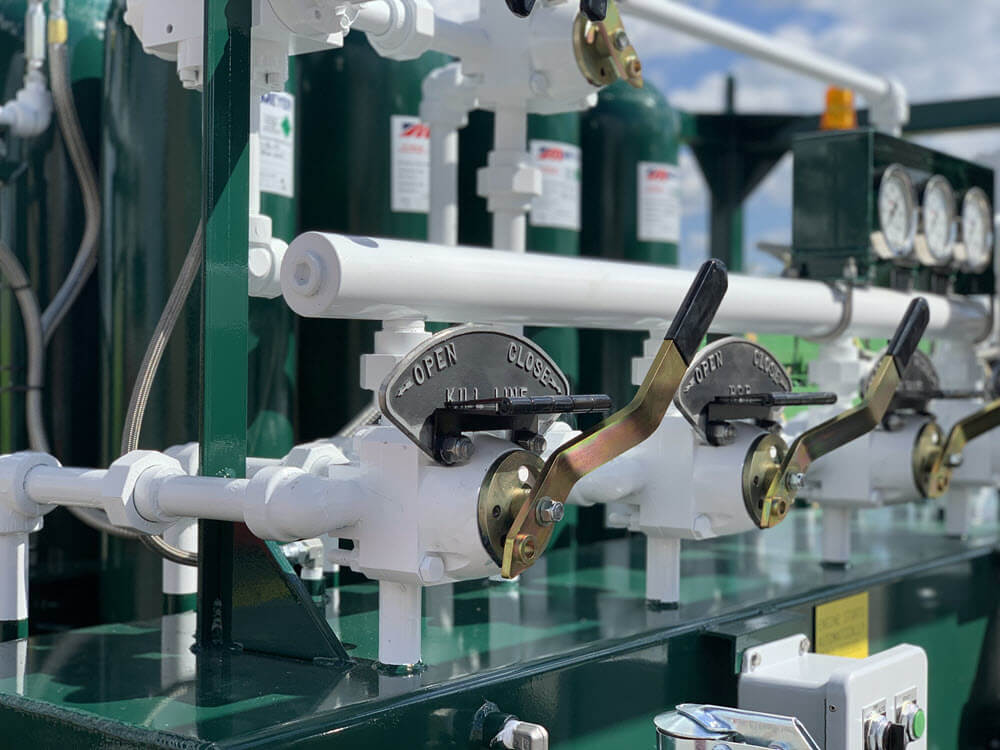
For BOP accumulator units, we focus on hydraulic readiness and control reliability. Our BOP accumulator units are sized and built according to applicable API-16D guidelines, and winter service should protect the same performance expectations in the field. Cold-weather inspection should confirm that the unit can build, hold, and deliver hydraulic pressure without avoidable restriction from fluid condition, leak paths, frozen drains, weak power, or hose damage.
| System | Winterization Item | Why It Matters | Field Check |
|---|---|---|---|
| BOP accumulator unit | Hydraulic oil, pumps, bottles, gauges | Protects closing readiness | Check fluid, leaks, charge, and pressure response |
| Grease unit | Grease type, pump output, hose condition | Maintains valve lubrication | Test flow and inspect fittings |
| Hydrostatic test unit | Tank, pump, relief path, drains | Prevents freeze damage and unsafe testing | Drain water and verify pressure controls |
| Flushing unit | Tank, burner, pump, hose routing | Protects cleanup readiness | Remove water and inspect hoses |
| Remote panel | Lines, controls, access | Supports safer operator position | Confirm response and visibility |
| Rental equipment | Staging, covers, documentation | Reduces winter startup delay | Inspect before dispatch or standby |
| Crew work area | Walking paths, lighting, PPE | Reduces cold-weather exposure | Clear ice, mark controls, confirm access |
Hydraulic Fluids, Grease Flow, Sealant Behavior, and Cold Starts
Cold weather changes how fluids behave. Hydraulic oil can thicken, grease can move more slowly, sealants can become harder to pump, and engine-driven packages may require more attention before reliable operation. The issue is not only temperature. It is how temperature affects response time, pump load, hose flexibility, gauge readability, and crew decisions under pressure.
We recommend checking the fluid side of each system before freezing weather arrives. For accumulator units, that means reviewing hydraulic fluid condition, filter status, reservoir condition, and pump performance during startup. For greasing systems, that means confirming grease type, flow behavior, pressure capability, and whether the crew can apply the right amount without forcing a system beyond safe operating practice.
Our field teams also look at the difference between equipment that is cold and equipment that is ready. A package can start and still be slow. A valve can move and still need better lubrication. A hose can hold pressure and still be too stiff, exposed, or poorly routed for safe winter work. That is why we do not treat winterization as a cosmetic check.
For pressure control equipment, the goal is to keep the system predictable. We want pumps to load properly, valves to respond cleanly, gauges to remain readable, and operators to avoid field improvisation caused by frozen drains, stiff hoses, thickened grease, or sluggish hydraulic response.
Freeze Protection, Heated Storage, Draining, and Deployment Planning
Freeze protection starts with removing water from places where it should not remain. Water left in tanks, test circuits, low points, hose runs, washdown systems, or exposed drains can expand and damage components. We recommend draining, drying, capping, covering, and documenting equipment condition before freezing weather hits, especially for test units and flushing packages that use water in normal service.
The crude oil winterization process also depends on fluid handling and flow assurance. Field teams should review crude storage, transfer lines, valves, pumps, heater availability, tank conditions, and the risk of wax, paraffin, or water-related restrictions. We do not treat crude winterization as separate from equipment winterization, because a cold-flow problem can quickly become an equipment access, pressure, or schedule problem.
Heated storage can help, but it does not replace proper preparation. Equipment may sit in a heated yard and then move to a remote pad, a cold lease road, or an exposed rig floor. For that reason, we plan around where the unit will actually work, not only where it sits before dispatch.
In Bakken Shale operations, winter planning may require more aggressive cold-weather staging because temperatures can fall well below what Gulf Coast crews see during a short freeze. In Corpus Christi or Houston, the risk may be less frequent, but sudden cold snaps still create problems when equipment was not drained, covered, checked, or staged because crews assumed mild weather would hold.
Deployment planning should answer three questions before winter work begins. What equipment must operate immediately? What equipment can be protected but not used until startup? What backup unit should be staged if service time is limited? Those answers guide whether we recommend winter service, rental staging, or a full readiness review.
Winterization Options, Cost Factors, and Operational Value
Key Takeaway: The lowest-cost winter plan is not always the lightest checklist; it is the plan that prevents the most expensive downtime, service delay, or pressure control exposure.
Basic Winter Checks vs Full Winterization vs Rental Staging
Oilfield winter preparation usually falls into three paths: basic checks, full winterization, and rental staging. Each has a place. The right choice depends on how critical the equipment is, how cold the operating region gets, how long the unit will sit exposed, and how quickly the crew must respond if equipment fails.
Basic checks are useful for low-risk seasonal review. They help crews spot leaks, worn hoses, weak batteries, low fluids, missing covers, and obvious freeze points. Full winterization goes deeper by addressing fluid condition, water removal, component protection, startup readiness, safety access, and documentation. Rental staging adds an operational backup plan for crews that cannot afford to wait on service once weather moves in.
| Planning Path | Basic Winter Checks | Full Winterization | Rental Staging |
|---|---|---|---|
| Primary Goal | Spot visible issues | Prepare equipment for cold operation | Keep backup equipment ready |
| Best For | Mild regions or low-risk assets | Critical pressure control equipment | High-uptime drilling, frac, or workover programs |
| Typical Scope | Visual inspection, fluid level check, covers | Draining, fluid review, hose inspection, functional checks | Standby accumulators, grease units, test units, support equipment |
| Cost Driver | Labor time | Labor, parts, fluids, documentation | Rental duration, freight, service scope |
| Downtime Impact | Low if no issues found | Lower risk during winter operation | Lowest response delay if primary unit fails |
| Documentation Value | Limited | Stronger maintenance record | Stronger contingency record |
| Crew Safety Value | Basic hazard review | Better access and response planning | Reduces rushed cold-weather repairs |
| Ideal Application | Short cold snaps | Seasonal readiness programs | Remote, high-cost, or high-volume operations |
Based on MEYER product specifications.
For operators, the difference matters because cold-weather failure is rarely just a repair bill. It can affect rig time, frac schedule, pressure testing, crew safety, and equipment availability across a basin. We recommend full winterization for critical pressure control equipment and rental staging when the cost of waiting exceeds the cost of having backup equipment ready.
A basic checklist may be enough for noncritical equipment in a mild region. A full winterization path is better for BOP accumulator units, grease systems, hydrostatic test units, flushing units, and any asset expected to work outdoors through extended cold. Rental staging is the strongest path when the operation cannot pause for transport, diagnosis, parts, or shop time.
Cost planning should include labor, replacement hoses, fittings, hydraulic fluid review, grease or sealant changes, draining and drying time, covers, transport, service center capacity, standby rental cost, and the value of avoided downtime. We advise crews to compare winterization cost against the cost of rig delay, frac crew delay, failed pressure testing, or emergency service under poor weather conditions.
Use Cases for Operators, Drilling Contractors, and Rental Companies
Winterization decisions should be tied to the operating profile, not just the calendar. We usually see four common scenarios.
- Drilling contractor in the Bakken Shale with exposed pressure control equipment: We recommend full winterization plus backup planning because extended cold can affect hydraulic response, hose handling, grease movement, and engine startup reliability.
- Operator in the Permian Basin preparing for intermittent cold fronts: We recommend targeted winter service on BOP accumulators, valves, grease units, and test equipment because short freezes can still expose weak seals, fluids, batteries, drains, and fittings.
- Rental company supporting Eagle Ford or Gulf Coast customers: We recommend pre-dispatch winter checks and clear documentation because equipment may move quickly between mild storage and colder field conditions.
- Maintenance manager preparing a crude oil winterization plan: We recommend reviewing tanks, transfer lines, valves, heat support, water removal, and pressure control equipment together because fluid restriction and equipment readiness are connected in the field.
Our decision-support rule is simple: if the equipment is tied to well control, pressure testing, hydraulic closure, valve function, crude movement, or frac-site maintenance, crews should treat winterization as an operational readiness item. If the equipment can be taken out of service without schedule impact, a lighter check may be acceptable.
If your crew is preparing for winter work, we can help review the equipment list, confirm what should be inspected, and discuss whether service or rental support makes more sense. Start with our team through the MEYER homepage or call 877-44-MEYER to reach our team. We can help with BOP accumulator support, grease units, hydrostatic test units, flushing units, preventive maintenance, and rental availability based on the job location and schedule. Our engineering and service teams can also help identify whether the equipment should be checked in the field, routed through a service center, or supported with standby rental equipment. For colder programs, we recommend contacting us before the first major freeze, because parts, freight, and rental demand can tighten quickly once weather begins affecting several basins at the same time.
Regional Winterization Demands Across US Oilfield Operations
Key Takeaway: Winterization should match the basin because a Bakken cold-weather plan, a Permian readiness plan, and a Gulf Coast freeze plan do not carry the same risk profile.
Bakken, Permian, Eagle Ford, and Gulf Coast Readiness Factors
Our Epping, North Dakota service presence supports crews facing some of the harshest winter conditions in US oilfield work. In the Bakken, extended freezing temperatures can affect hydraulic startup, hose flexibility, access, engine reliability, grease movement, and outdoor maintenance. Crews should plan earlier, stage parts more carefully, and confirm equipment condition before cold weather becomes constant.
Our West Odessa, Texas team sees a different pattern in the Permian Basin. Cold may not last as long as it does in North Dakota, but remote sites, high activity levels, H2S concerns, and tight schedules make response time critical. A sudden freeze can still create problems if accumulator units, valves, grease lines, test equipment, crude transfer equipment, or rental assets were not checked before the weather changed.
In Eagle Ford operations, seasonal planning often centers on high-volume frac work, valve maintenance, and keeping support equipment ready between jobs. Around Corpus Christi and Houston, winterization may also involve offshore-adjacent logistics, port access, humidity, and equipment moving between yard storage and active field service. Gulf Coast crews may underestimate freeze exposure because it is less frequent, but short cold events can still damage water-bearing systems.
| Region | Common Winter Risk | Equipment Focus | Recommended Planning Path |
|---|---|---|---|
| Bakken Shale | Extended severe cold | Accumulators, hoses, engines, controls | Full winterization and standby planning |
| Permian Basin | Remote sites and sudden freezes | BOP units, valves, grease systems | Targeted winter service and fast response |
| Eagle Ford Shale | High-volume frac activity | Grease units, SPYDER support, valves | Pre-dispatch checks and maintenance records |
| Corpus Christi and Houston | Gulf Coast cold snaps and logistics | Test units, flushing units, rental fleet | Drain, cover, inspect, and stage rentals |
| Oklahoma and Rockies | Variable winter severity | Hydraulic systems and mobile equipment | Basin-specific inspection schedule |
| International support | Long-distance planning needs | Rental planning and documentation | Earlier coordination and spare planning |
Based on MEYER product specifications.
Regional winterization works best when the plan matches the operating environment. We dispatch from multiple service locations, support major US basins, and can help crews prepare equipment before it moves into colder field conditions. That is especially important for rental assets, because a unit may be inspected in one region and used in another with very different weather exposure.
For teams planning winter service or rental coverage, we can coordinate through our nationwide service network with 11 domestic locations and a rental fleet of more than 300 pieces of oilfield equipment. Our Corpus Christi, Texas headquarters, West Odessa location, Epping service presence, Houston support, Kilgore team, and other locations help crews reduce downtime when the weather window is narrow. If your priority is maintenance scheduling, we can help route equipment into the right service path. If your priority is uptime, we can discuss spare BOP accumulator units, grease units, hydrostatic test units, flushing units, or related support equipment. Visit our service locations or call 877-44-MEYER to talk through winter timing, transport, and rental availability.
Safety Engineering Analysis: Cold-Weather Pressure Control Risk
Key Takeaway: Cold weather becomes a safety issue when equipment response becomes slower, less predictable, or harder for crews to operate under pressure.
Winterization protects more than the equipment. It protects the decision window crews rely on during pressure control work. If a hydraulic system responds slowly, a valve requires excessive force, a hose becomes difficult to position, or a test unit cannot be safely prepared, the crew has less margin at the exact time weather is already making the job harder.
The most serious cold-weather risks often come from combined conditions. A small leak becomes harder to repair with gloves and wind. A stiff hose creates body-positioning risk. Ice around a unit slows access. Poor lighting makes gauge reading harder. A sluggish grease path tempts crews to push harder than they should. A frozen drain can damage equipment or delay testing. None of those issues has to be dramatic by itself to affect safe work.
We recommend winterizing around pressure control readiness because BOP systems, valves, accumulators, and test equipment are not optional support assets. They sit close to the safety case of the job. That means the winter plan should confirm function, access, visibility, documentation, and backup equipment before weather becomes a constraint.
A strong cold-weather safety review should ask:
- Can the equipment respond at the required time and pressure?
- Can crews access controls, valves, gauges, and drains safely?
- Have water-bearing components been drained or protected?
- Are hoses routed to reduce trip, bend, and strain hazards?
- Is backup equipment available if the primary unit fails?
- Are PPE, lighting, footing, and communication procedures ready for the weather?
- Has the crew reviewed cold-start procedures before the shift begins?
Safety improves when crews do not have to invent winter procedures during a freeze. The better plan is to inspect, service, document, and stage the right support before the first cold-weather failure forces a rushed repair.
Field Operations Insight: Staging Rentals and Spare Units Before Winter Weather Hits
Key Takeaway: Rental staging is often the practical difference between a controlled winter maintenance plan and a cold-weather shutdown.
Winter rental planning works best before the whole basin needs the same assets at the same time. Once a freeze is in the forecast, demand can rise for BOP accumulator units, grease units, hydrostatic test units, flushing units, and related support equipment. Freight also becomes harder to schedule, especially when roads, yards, and rigs are dealing with the same weather system.
We recommend rental staging when the equipment supports active well control, frac work, pressure testing, crude transfer, or critical maintenance. A standby unit can keep the operation moving while the primary asset receives service. It can also reduce the temptation to run questionable equipment because there is no immediate backup.
Rental planning should account for:
- The equipment class that would stop work if it failed.
- The nearest service location and realistic transport time.
- The expected freeze duration and road conditions.
- The cost of standby rental compared with rig or frac downtime.
- The inspection and documentation needed before startup.
- The crew’s ability to swap, connect, and operate the backup unit safely.
- The spare hoses, fittings, covers, fluids, and accessories needed with the rental.
Our rental fleet includes more than 300 pieces of oilfield equipment, and we support short-term, long-term, and leasing needs across multiple regions. That matters during winter because a rental is not just a piece of equipment. It is a timing tool. The right standby plan lets crews service one unit without surrendering the job schedule to weather, transport, or parts availability.
For winter programs, we also recommend pairing rental staging with preventive maintenance. A rental unit should not become an excuse to ignore the primary asset. It should create the breathing room needed to do the work correctly.
Key Takeaways
- Winterizing protects pressure control readiness, not just equipment condition.
- BOP accumulators, valves, hoses, grease units, test units, and flushing units should be inspected before freezing weather.
- Hydraulic fluid, grease, sealants, drains, batteries, and hose routing are common cold-weather risk points.
- MEYER rental staging can reduce downtime when service work overlaps winter operations.
- Basin-specific planning matters because Bakken, Permian, Eagle Ford, and Gulf Coast winter risks differ.
Frequently Asked Questions About Oil Industry Winterizing
What is included in oil industry winterizing?
Oil industry winterizing includes inspecting pressure control equipment, checking hydraulic fluids, reviewing grease and sealant performance, draining water-bearing components, protecting hoses and fittings, confirming battery or engine startup reliability, and staging backup equipment when downtime risk is high. We also recommend documenting condition before winter because service history helps crews separate seasonal problems from existing wear. For equipment such as BOP accumulator units, hydrostatic test units, flushing units, and grease systems, winterizing should focus on function, pressure readiness, safe access, cold-weather response, and crew safety.
How early should oilfield equipment be winterized?
We recommend starting winterization before the first expected freeze, not after the first equipment problem. For northern operations such as the Bakken, that often means earlier seasonal planning because extended cold can affect storage, transport, and startup. For Permian, Eagle Ford, Corpus Christi, and Houston operations, timing may depend on forecast patterns, but sudden freezes still justify early inspection. Crews should allow time for service, parts, freight, rental staging, draining, documentation, and follow-up checks before the equipment is needed.
What equipment is most at risk in cold weather?
The equipment most at risk includes systems with hydraulic fluid, grease, sealant, water, exposed hoses, batteries, engines, drains, gauges, and pressure components. BOP accumulator units deserve special attention because cold-weather readiness affects hydraulic control performance. Hydrostatic test units and flushing units also need careful draining and protection because water left in the wrong place can freeze and damage components. Grease units, valves, remote panels, and hose assemblies should be checked because cold can slow movement, stiffen hoses, reduce visibility, and make field operation harder.
Can MEYER provide rentals during winter maintenance?
We provide rental support for oilfield equipment when crews need backup capacity during winter maintenance, service work, or seasonal surges. Our rental fleet includes more than 300 pieces of oilfield equipment, and we can discuss short-term, long-term, or leasing needs. Call 877-44-MEYER to check availability.
Winterizing oilfield equipment is one of the most practical ways to protect uptime before cold weather puts pressure on crews, assets, and schedules. From our headquarters in Corpus Christi, TX, we support operators, drilling contractors, rental companies, frac crews, and maintenance teams that need pressure control equipment ready before winter conditions arrive. We are an API-16D licensed manufacturer, and our team understands how accumulator units, grease systems, test units, flushing equipment, valves, and support rentals fit into real field operations. With 11 domestic service locations and a rental fleet of more than 300 pieces of oilfield equipment, we can help you plan service, check rental availability, or prepare equipment before freezing conditions create downtime. Call 877-44-MEYER or request support through our request more information form.
MEYER
Manufacturing, rentals, service, and aftermarket support for oilfield equipment.
Need help deciding between winterization service, rental staging, or preventive maintenance?