

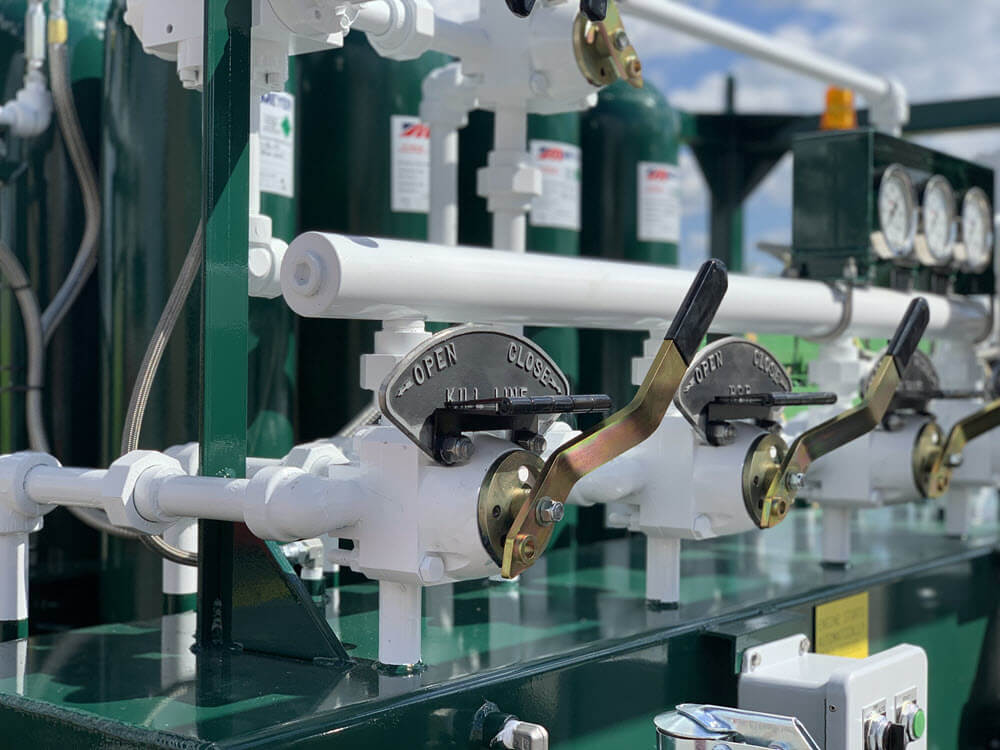
Oilfield Command Center Emergency Shutdown Panels
Oilfield Emergency Shutdown Panels
Compare oilfield emergency shutdown panel options and request custom command center guidance from MEYER.
Oilfield command center emergency shutdown panels help crews stop or isolate critical control functions from a clear operating location when field conditions change. For operators, automation leads, drilling contractors, and HSE teams, the panel design matters because emergency shutdown controls must be easy to identify, fast to reach, and matched to the way the crew actually works around accumulators, command centers, remote control stations, and field control systems.
MEYER builds command center and control-system equipment for well control environments where shutdown response, operator visibility, remote control, and hydraulic equipment integration all need to work together. Depending on the job, an emergency shutdown panel may be built as a standalone push-button station, integrated into a command center, or configured with PLC touchscreen controls. The right design depends on the equipment being controlled, the field layout, the operator position, the red-zone plan, and the response procedure.
This article explains how oilfield emergency shutdown panels are planned, how 24-volt push-button controls compare with PLC touchscreen options, how command center integration supports field authority, and why ESD control placement should be designed around real crew movement instead of only a drawing. We also cover drilling, frac, and multi-well use cases, regional control-system needs across the Permian, Eagle Ford, and Houston service environment, and key questions to ask before requesting a custom panel.
Definition: An oilfield emergency shutdown panel is a field control panel designed to let crews stop, isolate, or trigger shutdown logic for selected well control, pressure control, or support equipment functions. It is commonly used as a standalone ESD station, a command center control feature, or part of a PLC touchscreen system. For operators working across US shale basins and international markets, it helps by improving response clarity, reducing red-zone exposure, and giving crews a defined control point during changing field conditions.
Request Command Center Guidance
Table of Contents
Emergency Shutdown Panel Fundamentals
Standalone ESD Panel Functions
24-Volt Push-Button and PLC Touchscreen Options
Integration with Command Centers and Accumulator Controls
Configuration Comparison and Operational Value
Standalone ESD vs Command Center ESD vs PLC Touchscreen System Table
Drilling, Frac, and Multi-Well Control Use Cases
Regional Field Authority for Control-System Requirements
Safety Engineering Analysis: Response Time, Control Placement, and Red-Zone Reduction
Field Operations Insight: Designing ESD Controls Around How Crews Work
Frequently Asked Questions About Oilfield Emergency Shutdown Panels
Emergency Shutdown Panel Fundamentals
Key Takeaway: An emergency shutdown panel should be designed around the equipment being controlled, the operator position, the field response plan, and the need for fast, clear action during changing site conditions.
Standalone ESD Panel Functions
A standalone ESD panel gives crews a defined control point for emergency shutdown action outside the main equipment package. In oilfield settings, that can be useful when a crew needs a dedicated shutdown station near a command center, accumulator control location, frac support area, test station, or operator access point. The goal is not only to add another button. The goal is to place the control where the right person can reach it quickly and understand what action it triggers.
Standalone emergency shutdown panels can be built for simple push-button logic or tied into a broader control system, depending on the equipment and operating plan. We review what the panel must shut down, what signal it must send, what equipment it must communicate with, and how the crew will confirm the action. Clear labeling, panel placement, wiring discipline, environmental protection, and field-service access all matter because the panel has to be dependable when the site is under pressure.
When we review an ESD panel request, we focus on practical field questions:
- Which equipment functions should the emergency shutdown panel control?
- Where will the operator stand during normal and emergency response?
- Should the panel use 24-volt push-button controls, PLC touchscreen logic, or both?
- Does the panel need to integrate with accumulators, remote controls, or command center systems?
- How should the panel be labeled so crews understand the action immediately?
- What service access will technicians need for inspection, troubleshooting, and future changes?
The specification cluster is direct: an oilfield ESD panel should connect shutdown intent, control voltage, panel location, command center integration, accumulator interface, and response procedure. We recommend resolving those details before fabrication because emergency control changes are harder to make after the equipment is already wired, mounted, and deployed.
| ESD Planning Factor | What We Review | Why It Matters |
|---|---|---|
| Shutdown function | Equipment action, signal path, and confirmation method | Defines what the panel actually controls |
| Operator placement | Crew position, red-zone plan, and command center layout | Supports faster response and safer access |
| Control method | 24-volt push button, PLC touchscreen, or combined design | Matches controls to crew expectations and system complexity |
| Integration | Command center, accumulator, remote panel, and control-system interface | Prevents disconnected control logic |
| Field service access | Panel access, wiring, labeling, and troubleshooting space | Reduces downtime during inspection and repair |
24-Volt Push-Button and PLC Touchscreen Options
A 24-volt push-button emergency shutdown panel is often preferred when the crew needs a clear, physical, dedicated control. Push-button controls are direct, easy to label, and familiar to crews who need fast action without moving through multiple screens. This can be valuable around drilling, frac, workover, test, and support equipment where response clarity matters more than interface complexity.
PLC touchscreen controls can add value when the system needs more detailed status, interlocks, alarms, sequencing, or multiple control functions inside a command center. A touchscreen can help organize information, but it should not make emergency action harder to perform. When we review PLC touchscreen options, we look at how the screen is used, where the ESD command sits, whether there is a physical backup, and how operators are trained to respond.
In many field environments, the best approach is not one or the other. A command center may use a PLC touchscreen for monitoring and operating logic while still keeping a physical ESD push button in a prominent location. We recommend matching the control method to the crew, the system complexity, and the consequence of delayed response.
Integration with Command Centers and Accumulator Controls
Emergency shutdown panel design should be reviewed with the command center and accumulator controls that surround it. If a crew operates BOP accumulator functions, remote panels, grease systems, test units, or support equipment from a shared control area, the ESD logic should not feel like an unrelated add-on. It should be placed, labeled, and wired so the crew understands how the shutdown action fits the rest of the system.
MEYER command center work can include operator-focused control layouts, push-button control, PLC touchscreen options, remote operation support, and field-ready integration with well control and support equipment. We review whether the ESD panel should be a separate station, part of the command center, or integrated into an accumulator control system.
The most useful ESD panel is the one that fits the actual control path. If the shutdown command needs to affect accumulator support, pump controls, remote panels, or other field equipment, those relationships should be defined before the panel is built. We recommend early review so wiring, enclosure layout, labels, and operator controls support the field response plan.
Configuration Comparison and Operational Value
Key Takeaway: Standalone ESD panels, command center ESD controls, and PLC touchscreen systems each solve a different field control problem, so selection should follow the crew position, system complexity, and response procedure.
Standalone ESD vs Command Center ESD vs PLC Touchscreen System Table
The right emergency shutdown design depends on what the crew needs to control and how the field site is organized. A standalone ESD panel can give crews a direct shutdown point. A command center ESD control can centralize shutdown action near the operator. A PLC touchscreen system can add monitoring and control logic for more complex field setups. The best choice is the one that gives the crew the clearest action path.
| Factor | Standalone ESD Panel | Command Center ESD | PLC Touchscreen System |
|---|---|---|---|
| Primary Role | Dedicated shutdown station | Centralized shutdown from operator location | Integrated control, monitoring, and shutdown logic |
| Best For | Simple, direct emergency control | Crewed command center operation | Multi-function control systems |
| Control Interface | Physical push button | Push button, panel control, or integrated station | Touchscreen with programmed logic |
| Operational Strength | Fast recognition and simple action | Shutdown control near primary operator | Status visibility and control flexibility |
| Design Watchout | Placement and labeling must be clear | Command center layout must avoid confusion | Emergency action should not be buried in screen logic |
Based on MEYER product specifications.
The comparison verdict is practical: choose a standalone ESD panel when the site needs a dedicated shutdown station. Choose command center ESD integration when the primary operator should control shutdown from a centralized location. Choose PLC touchscreen integration when the system needs more monitoring, sequencing, or control logic, while still making emergency action easy to reach and understand.
Drilling, Frac, and Multi-Well Control Use Cases
Emergency shutdown panel design should follow the field use case. A drilling contractor may need ESD controls tied to accumulator or remote panel operation. A frac crew may need a control point positioned away from pressure areas. A multi-well pad may need clearer authority over which system or zone is being controlled.
- Drilling contractor + accumulator support + command center ESD: We recommend reviewing the ESD panel with accumulator controls, remote panel location, and the operator’s response procedure.
- Frac crew + red-zone reduction + standalone shutdown station: We recommend placing the ESD control where crews can act without entering unnecessary pressure exposure areas.
- Multi-well pad + multiple control points + PLC touchscreen system: We recommend clear screen logic, visible labels, and simple emergency action paths so the crew knows what each command affects.
- HSE team + site response planning + custom panel review: We recommend reviewing labels, access, operator authority, and field drills before final panel design is approved.
The decision-support passage is simple: design the ESD panel around the moment the crew needs it, not only around the equipment list. Control placement, label clarity, and signal logic should all make emergency response easier to perform correctly.
If your team is comparing standalone ESD panels, command center integration, PLC touchscreen controls, or accumulator control interfaces, we can help review the right configuration before fabrication. We can discuss 24-volt push-button controls, command center layout, remote control needs, field wiring, operator position, and service access. Our team supports operators, automation leads, drilling contractors, HSE teams, rental companies, and pressure control professionals across our manufacturing and service network. Call 877-44-MEYER or use our request more information form to request a custom command center or ESD panel review.
Regional Field Authority for Control-System Requirements
Key Takeaway: ESD panel planning changes by region because Permian, Eagle Ford, and Houston control-system needs can involve different crew layouts, pressure exposure, and service requirements.
Permian, Eagle Ford, and Houston Control-System Requirements
In the Permian Basin, control-system planning often has to account for remote sites, H2S awareness, high activity, and fast equipment movement. An ESD panel for that environment should be easy to identify, easy to service, and matched to the crew’s actual location during operations. Our West Odessa support helps customers think through field access, pressure exposure, and service timing before equipment is staged.
In the Eagle Ford, control placement can be especially important around frac support, workover activity, and multi-service coordination. A standalone ESD panel may help crews maintain a clearer shutdown point outside the most active work zone. For Houston-area facility and shop work, control-system requirements may lean more toward integrated panels, PLC touchscreen options, documentation, and service access.
Our Corpus Christi manufacturing and service base gives us a practical path to review ESD panels with command centers, accumulator controls, support equipment, and rental planning. We recommend involving the control-system team early so the panel design matches the basin, the job, and the operator’s field authority model.
| Region or Site | Control-System Pressure | ESD Planning Priority |
|---|---|---|
| Permian Basin / West Odessa, TX | Remote activity, H2S awareness, and fast equipment movement | Standalone ESD access and accumulator control integration |
| Eagle Ford Shale | Frac support, workover activity, and service coordination | Red-zone reduction and clear crew access |
| Houston, TX | Facility work, shop support, and control documentation | PLC touchscreen, command center, and serviceable panel design |
| Corpus Christi, TX | Manufacturing, Gulf Coast logistics, and custom control builds | Command center configuration and quality review |
Based on MEYER product specifications.
If your field control requirements vary by basin, we can help review the command center, panel placement, and service access plan before the equipment is built. We have 11 domestic service locations and a rental fleet of more than 300 pieces of oilfield equipment, which gives our customers support across manufacturing, rental, service, repair, and aftermarket programs. Our Corpus Christi headquarters, West Odessa location, Houston support, Kilgore team, and Epping service presence help us keep field needs connected to control-system requirements. For this second step, we recommend using our service locations resource or calling 877-44-MEYER to discuss ESD panel planning.
Safety Engineering Analysis: Response Time, Control Placement, and Red-Zone Reduction
Key Takeaway: ESD panels support field safety most effectively when they reduce response confusion, shorten the path to action, and help crews avoid unnecessary red-zone movement.
Emergency shutdown panel design should begin with response time. If the crew has to search for the right control, move through a pressure area, or interpret unclear labels, the panel is not doing its job well enough. A good ESD design makes the emergency action obvious from the operator’s normal position and from the response position defined by the field plan.
Control placement is part of red-zone reduction. In some field layouts, the safest shutdown control is not on the equipment itself. It may be at a command center, a remote panel, or a standalone station that allows the crew to act without entering a higher-risk area. We review that placement with the customer because each job has a different equipment layout and crew movement pattern.
The panel should also make authority clear. Operators should know which control affects which system. Labels should match field language. Buttons should be positioned where they are visible and protected. PLC screens should not hide emergency action inside complex navigation. We recommend reviewing the emergency response plan, not only the electrical drawing, before the panel design is finalized.
Field Operations Insight: Designing ESD Controls Around How Crews Work
Key Takeaway: ESD controls should be built around crew movement, operator authority, visibility, and service access because those details decide how well the panel works in the field.
The field operations lesson is simple: crews do not operate from a perfect drawing. They operate around trucks, skids, lines, hoses, weather, noise, PPE, shift changes, and changing job conditions. If an ESD panel is technically wired correctly but hard to see, poorly labeled, or placed where crews do not naturally work, the design should be reconsidered.
Before we recommend a panel layout, we ask customers to confirm:
- Who has shutdown authority during normal operations?
- Where does that person stand during active field work?
- What equipment should the ESD panel control?
- Does the crew need a physical push button, a PLC touchscreen, or both?
- Can the shutdown action be performed without entering a red-zone area?
- Can technicians access the panel for inspection, repair, and future modifications?
ESD panel design improves when the conversation includes operations, HSE, automation, maintenance, and equipment service teams. Each group sees a different risk. Our job is to help combine those requirements into a panel that is understandable, serviceable, and aligned with the field response plan.
Key Takeaways
- Oilfield ESD panels should be designed around the equipment, operator position, and emergency response procedure.
- Standalone ESD panels work well when crews need a dedicated shutdown station.
- Command center ESD controls can centralize shutdown action near the primary operator.
- PLC touchscreen systems can support monitoring and control logic, but emergency action should remain easy to reach.
- MEYER can custom-build command center and emergency shutdown panel configurations around field control needs.
Frequently Asked Questions About Oilfield Emergency Shutdown Panels
What does an oilfield emergency shutdown panel do?
An oilfield emergency shutdown panel gives crews a defined control point to stop, isolate, or trigger shutdown logic for selected field equipment. The exact function depends on the system being controlled. In command center and well control environments, ESD panels may be used with accumulator controls, support equipment, remote stations, or PLC-based control systems. We recommend defining the shutdown action, operator position, and confirmation method before the panel is built.
When is a standalone ESD panel needed?
A standalone ESD panel may be needed when crews need a dedicated emergency shutdown station outside the main equipment package or command center. This can help when the operator needs a clear control point near the work area, away from a red-zone area, or at a specific field response position. We review standalone panels when control placement, shutdown authority, and crew access are important parts of the safety plan.
Can ESD panels integrate with accumulators?
ESD panels can be designed to integrate with accumulator controls when the field control plan requires that interface. The design should define what functions are affected, how the signal is sent, how the operator confirms action, and how the panel is serviced. MEYER can review emergency shutdown controls alongside accumulator units, remote panels, command centers, and PLC touchscreen options.
Can MEYER custom-build control panels?
We can custom-build control panels and command center configurations around the equipment, field layout, control logic, operator position, and service requirements. Our team can review 24-volt push-button controls, PLC touchscreen options, ESD panel placement, accumulator integration, and command center design before recommending a build path.
Oilfield emergency shutdown panels should make response faster, clearer, and better matched to field authority. From our headquarters in Corpus Christi, TX, we build, rent, service, and repair well control and support equipment for operators, automation leads, drilling contractors, HSE teams, rental companies, and pressure control professionals. We can help review standalone ESD panels, 24-volt push-button controls, PLC touchscreen options, command center integration, accumulator interfaces, and service access. Call 877-44-MEYER or use our request more information form to discuss a custom emergency shutdown panel or command center configuration.
MEYER
Manufacturing, rentals, service, and aftermarket support for well control and field control equipment.
Need help comparing standalone ESD panels, command center ESD controls, or PLC touchscreen systems?
Related Articles
Keep reading more MEYER articles on well control equipment, accumulator readiness, field controls, and service planning.
Accumulator Systems
BOP Accumulator Systems in Corpus Christi
Review how accumulator systems support hydraulic pressure, BOP response, and well control readiness for Gulf Coast drilling conditions.
Power Readiness
AutoStart vs Manual BOP Units
Compare automatic restart logic, manual operation, pressure response, and accumulator readiness for drilling control units.
API-16D Guidance
API 16D Certification Standards in Corpus Christi
See how API-16D compliance supports accumulator, manifold, and hydraulic control reliability for pressure control operations.
Inspection Guide
BOP Accumulator Inspection Checklist
Use a practical accumulator inspection framework for pressure, fluid volume, mechanical integrity, and field readiness.