
Pressure Testing Safety Protocols
Understanding Pressure Testing in Oilfield Operations
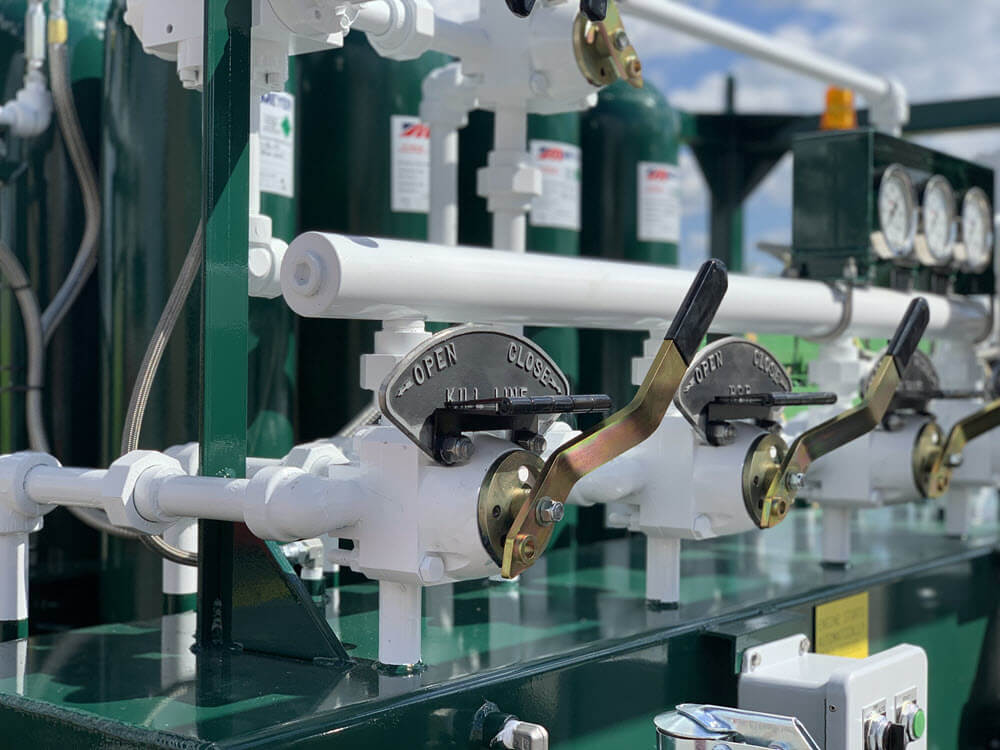
Pressure testing is an essential process used to confirm the integrity of pressure-containing components such as blowout preventer systems, valves, manifolds, and piping assemblies. The procedure verifies that equipment can safely hold and control pressure before deployment.
At MEYER’s Corpus Christi TX facility, every hydrostatic and functional test follows strict API and ASME safety protocols to protect personnel, ensure compliance, and maintain operational reliability.
While testing may appear routine, without proper controls it can pose significant safety risks such as high-energy fluid release or component rupture. MEYER mitigates these risks through rigorous training, disciplined procedures, and certified testing practices.
Core Safety Procedures for Pressure Testing

- Pre-Test Inspection and Preparation
All components are visually inspected before pressurization. Technicians check for corrosion, cracks, and secure fitting installation. Any loose or damaged part is replaced immediately. - Use of Proper Test Medium
MEYER uses water or compatible hydraulic fluids, avoiding compressed gas, to reduce stored energy and prevent explosive failures during hydrostatic testing. - Safe Work Zones and Barriers
Designated testing areas are secured with barriers and warning signage. Only trained personnel may enter controlled zones during testing operations. - Gradual Pressurization and Monitoring
Pressure is increased slowly using calibrated pumps. MEYER technicians monitor gauges and indicators continuously to detect irregularities before reaching test limits. - Controlled Depressurization
After testing, pressure is released gradually to prevent hydraulic shock. Systems are inspected again to verify structural integrity.
These steps align with API 6A, API 16D, and ASME Section VIII testing standards.
Common Risks and How MEYER Prevents Them
Potential Hazards
- Over-pressurization causing component rupture
- Hose whip or fitting ejection from poor connections
- Fluid leaks due to seal wear or degradation
- Inaccurate readings from uncalibrated gauges
Preventive Measures
- Pre-test safety meetings and job hazard analyses
- Use of certified test equipment and calibrated instruments
- Continuous pressure monitoring during tests
- Redundant relief valves and layered safety controls
MEYER’s safety-first approach ensures each test meets or exceeds API and ASME requirements for controlled, reliable operations.
MEYER’s Pressure Testing Services and Compliance Support
At MEYER’s Corpus Christi TX service facility, all hydrostatic test units and control manifolds are maintained and certified per API guidelines.
Services include:
- Hydrostatic and functional testing for oilfield control systems
- Documentation and certification for compliance audits
- Rental of certified test equipment for field operations
Learn more about our preventative maintenance and equipment rental options for portable hydrostatic test units and field-ready systems.
Safe pressure testing protects personnel, equipment, and production uptime. Partnering with MEYER ensures strict adherence to API and ASME standards, delivering verified safety and reliability in every test.
For guidance or to schedule a pressure testing service in Corpus Christi TX, contact MEYER’s technical team today.