

Rupture Disc Assembly Safety in Hydrostatic Testing
Rupture Disc Assembly Safety in Hydrostatic Testing
Understand rupture disc assemblies in hydrostatic testing, compare their role with relief valves, and review test unit protection with MEYER.
A rupture disc assembly provides a non-reclosing pressure-relief opening when the differential pressure across the disc reaches its specified burst conditions. In a hydrostatic test unit, it forms part of an engineered overpressure-protection arrangement. To review or replace one, confirm the disc, holder, pressure and temperature basis, fluid service, and discharge arrangement specified for the actual equipment.
If you are choosing a test unit or ordering a replacement disc, a pressure number on a tag is only part of the answer. The device has to suit the liquid service, fit the approved holder, and work within the complete test circuit. It also needs a discharge arrangement that manages what happens when it opens.
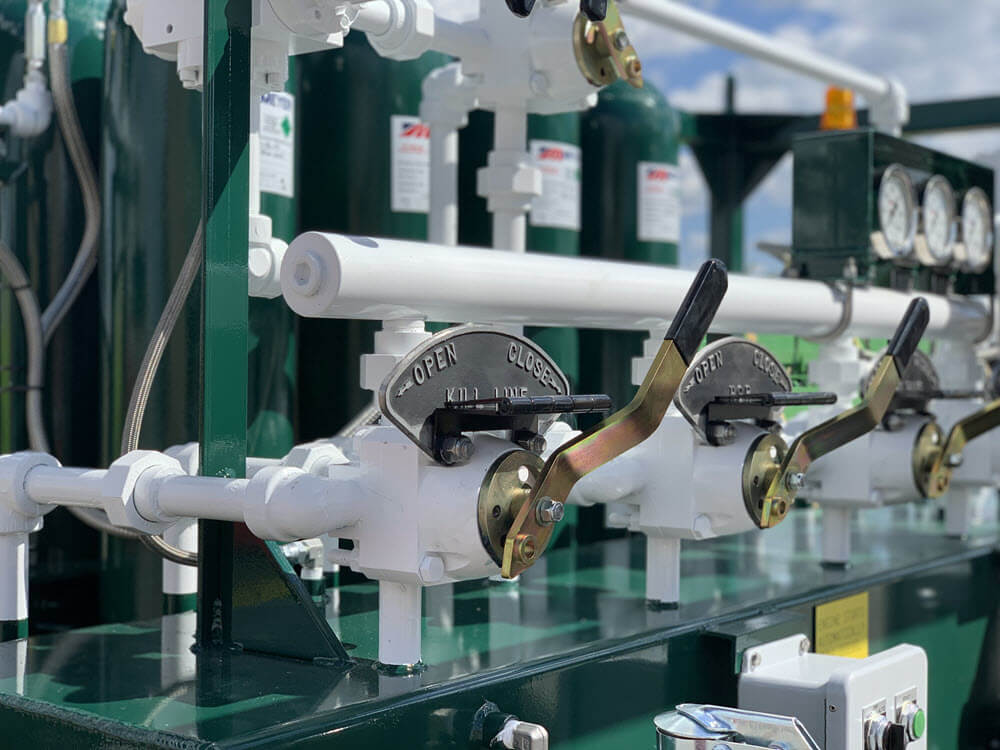
At MEYER, our hydrostatic mobile test unit product information lists a stainless steel relief valve with a redundant rupture disc assembly. We manufacture, rent, and service hydrostatic testing equipment, and can review the configuration required for your application.
Definition: A rupture disc assembly is a non-reclosing pressure-relief device that includes the pressure-sensitive disc and its specified holder or integrated mounting arrangement. The disc is designed to open at specified burst conditions. Once activated, it cannot be reset like a reclosing valve.
Discuss Your Test Unit Protection
Hydrostatic Test Protection: Rupture Discs, Relief Valves, and Replacement
What the Rupture Disc Does in a Hydrostatic Test Unit
Why a Relief Valve and Rupture Disc Are Not Interchangeable
What to Confirm Before Specifying or Replacing a Disc
What to Do When a Protective Device Operates
Keep People Clear of the Release and Test Area
Prepare the Records for Your Next Service or Equipment Review
What the Rupture Disc Does in a Hydrostatic Test Unit
Separate Pressure Control From Overpressure Protection
Normal test controls manage pressure during the test. Protective devices address overpressure scenarios covered by the equipment's design. They have different jobs, even when they are connected to the same pump discharge circuit.
Our hydrostatic mobile test units list a Pressure-Trol valve, filtration, and relief protection with a redundant rupture disc assembly. Review those features as parts of the complete package rather than assuming that one device makes the others unnecessary.
A rupture disc is not an operating control, an emergency stop, or a substitute for a properly specified test setup. Its presence also does not establish that every item connected to the unit is protected at an acceptable pressure.
Understand What Non-Reclosing Means
A disc opens by rupturing and does not return to its original protective condition when pressure falls. The test cannot simply be reset and continued as if a control valve had been adjusted.
After activation, the unit needs the response, assessment, and restoration work required by its procedure. Depending on the product, restoration may involve a specified replacement disc or an integrated assembly. The holder also needs assessment where required; it should not be assumed reusable regardless of its condition.
Check the Device Against the Actual Circuit
The pressure relationship across a disc matters, including pressure on its outlet side. Review the approved drawing to establish what the device protects and where its discharge goes. Do not treat the upstream gauge reading as a complete description of the conditions at the disc.
This is especially important when equipment has been modified. A changed discharge connection, added valve, or different return arrangement can affect the protection design even if the replacement disc has the same marked pressure.
Why a Relief Valve and Rupture Disc Are Not Interchangeable
Compare Their Functions Without Assuming the Layout
A reclosing relief valve is designed to open and reseat under its specified conditions. A rupture disc is non-reclosing. Neither characteristic, by itself, establishes which device is primary, whether the devices have independent flow paths, or how the whole system responds to a fault.
| Review Item | Reclosing Relief Valve | Rupture Disc Assembly |
|---|---|---|
| Response after actuation | Designed to reseat under specified conditions | Disc does not reset after rupture |
| Identification | Valve model, setting, materials, and service requirements | Disc type, holder, marked burst conditions, and product identification |
| Performance review | Setting, condition, capacity, and application suitability | Burst conditions, capacity, fluid service, backpressure, and installation requirements |
| Maintenance planning | Inspection, verification, and service under the applicable program | Manufacturer-specific inspection and replacement requirements |
| After an event | Assess the event and required checks before resuming | Assess the event and restore the specified assembly before resuming |
The table describes device characteristics, not alternative safety packages you can select by preference. The accepted protection arrangement comes from the equipment design and applicable requirements.
Verify What Redundancy Means on Your Unit
Two installed devices do not, by themselves, prove that there are two independent relief paths. Discs and valves can be arranged differently, including in series or in separate paths. Shared piping, isolation arrangements, or a restricted discharge can affect the complete protective function.
For your unit, ask for the approved schematic and the intended role of each device. Confirm which equipment is within the protected boundary and what conditions the design addresses. Do not infer that a single failure is harmless merely because both device names appear on a specification sheet.
Likewise, a relief valve reseating is not automatic permission to continue a test. Follow the test procedure's response and restart requirements whenever a protective device operates unexpectedly.
What to Confirm Before Specifying or Replacing a Disc
Match the Disc and Holder
Identify the disc manufacturer, model, size, material, and corresponding holder or integrated assembly. Use the approved component references and manufacturer instructions. Similar dimensions and the same pressure marking do not establish interchangeability.
Keep the disc's identification tag or supplied records connected to the unit. If the existing device cannot be identified, obtain technical clarification before ordering a substitute. Do not assume a holder accepts any disc that physically fits.
Review Burst Pressure and Coincident Temperature Together
Burst pressure is specified with a temperature basis. Confirm the coincident temperature relevant to the disc's expected burst condition, together with the operating environment and manufacturer data. Ambient air temperature alone may not describe the temperature of the installed disc.
Distinguish the marked burst pressure, burst tolerance, and any manufacturing design range. They are related specification terms, but they are not interchangeable. Use the documentation for the selected product rather than applying one manufacturer's percentage to every rupture disc.
Confirm Suitability for Liquid and Cycling Service
Check that the selected design is suitable for the actual test medium and service. A disc intended for a different gas, vapor, or liquid application should not be substituted based only on pressure and size.
For repeated testing, provide the manufacturer with the expected pressure cycles and operating conditions. Use the product's specified operating-ratio basis and cycling suitability when reviewing the selection. A disc that remains intact is not proof that its service-life requirements have been met.
Check Capacity, Backpressure, and the Discharge Arrangement
The burst-pressure marking does not establish the complete relief capacity of the installed arrangement. The engineering review must consider the pressure source, protected equipment, connected flow paths, and applicable discharge conditions.
Backpressure can affect disc performance, and a discharge modification can change more than where liquid is collected. Do not add a smaller hose, close a valve, or redirect the outlet without the required design review. Follow the approved arrangement rather than adapting it during test setup.
Coordinate Protection With the Permitted Test Conditions
Review the pump's capability alongside the permitted test conditions of the test article and every included component. The highest pressure the pump can produce is not an authorized test pressure for whatever is connected to it.
For each assignment, confirm that the specified settings and protective devices are appropriate to the approved test setup. Do not raise a relief setting or select a higher burst-pressure disc simply because the current device interferes with reaching a desired test pressure. That conflict needs technical review.
Where applicable, ASME BPVC Section XIII addresses rules for overpressure protection, including rupture disk devices and combinations. Whether particular code provisions apply to your test unit or test article depends on its design and governing requirements. The presence of a rupture disc does not independently establish code compliance for the whole package.
What to Do When a Protective Device Operates
Treat the Event as a Reason to Pause and Review
If a disc activates or a protective device operates unexpectedly, follow the equipment's approved response procedure and keep personnel clear of the release area. Do not bypass the device or fit a higher-rated replacement to finish the job. Qualified personnel should establish the cause and the conditions required before testing can resume.
A ruptured disc does not independently identify the cause. Assessment may need to consider the pressure history, correct component selection, temperature, installation, service exposure, and possible damage. Keep those as investigation questions rather than declaring a cause from appearance alone.
Preserve the Information Needed for Assessment
Retain the available pressure record, disc identification, test setup details, and observations from the event. Record which equipment was connected and any changes made since the previous test. Follow the site's requirements for preserving components or evidence.
Restoring the specified relief device is only part of returning the package to service. The cause, any affected equipment, and required inspection or verification work also need to be addressed. Keep the assessment and completed work with the unit's records.
For routine replacement planning, use the manufacturer's instructions and the applicable maintenance program. There is no single replacement interval that should be applied to every disc model, pressure cycle, and service environment.
Keep People Clear of the Release and Test Area
Review Exposure During Ramp-Up, Hold, and Pressure Release
Overpressure protection matters throughout the test, not only during the hold period. Include pressure build-up, the hold, transitions, and pressure release in the test's risk review.
Confirm operator position, controlled access, barriers where required, and the approved discharge route. A relief opening can release liquid and energy; a remote control position does not make every other location around the setup acceptable for personnel.
Use the specified arrangements for monitoring and stopping the test. Instrument visibility and calibration status support those decisions, but neither replaces the required protective devices or the test-area controls.
Remote Operation Helps Address a Different Part of the Risk
Our hydrostatic shop test units include an optional remote-panel configuration. That can separate the operator's control position from the test booth, while the pressure-protection arrangement performs its own role within the package.
Our remote-panel shop test unit guide discusses that configuration in more detail. For broader setup planning, see our pressure testing safety guidance.
Prepare the Records for Your Next Service or Equipment Review
Before requesting a replacement or configuration review, gather:
- Unit model, serial number, and current schematic.
- Test medium and intended test pressure range.
- Test article details and applicable test requirements.
- Disc and holder identification, materials, and supplied certification records.
- Marked burst conditions, tolerance, and manufacturing range where applicable.
- Relief-valve identification and the documented coordination of the devices.
- Discharge arrangement and any known changes to the circuit.
- Service history, cycling information, and details of any activation or damage.
That information helps the service team review the existing arrangement instead of selecting a replacement from a pressure number alone. The equipment file should reflect what is installed, including approved substitutions or modifications.
Use our service locations resource to coordinate support for equipment working around Corpus Christi, Houston, Odessa, or another operating region. Confirm the scope, suitable location, and timing for the actual work rather than assuming every facility handles every component in the same way.
Key Takeaways
- A rupture disc is non-reclosing and needs the specified restoration work after activation.
- The disc, holder, temperature basis, liquid service, and discharge arrangement must be reviewed together.
- Two devices do not automatically establish independent relief paths or protection against every fault.
- The pump's maximum capability does not authorize that pressure for every test article.
- Unexpected operation requires assessment before testing resumes; a replacement alone does not resolve the cause.
- Remote operation, test-area controls, and overpressure protection address different parts of the risk.
Frequently Asked Questions About Rupture Disc Assemblies
What Does a Rupture Disc Assembly Do?
It provides a non-reclosing relief opening at specified burst conditions as part of an engineered pressure-protection arrangement. Its performance depends on the specified disc, holder, pressure and temperature basis, and installed circuit. An activated disc cannot be reset like a reclosing valve.
Why Use a Rupture Disc With a Relief Valve?
They can perform complementary roles in the approved design. However, having both devices does not independently prove there are two separate relief paths or that every single fault is covered. Confirm their intended roles and installation from the unit's schematic and design documentation.
Can I Replace a Disc With Another One Marked at the Same Pressure?
Not on that basis alone. Confirm the manufacturer-approved disc and holder combination, size, material, temperature basis, fluid service, and other required specifications. A component that fits physically or carries a similar pressure marking is not automatically an acceptable replacement.
What Should Happen After a Disc Bursts?
Follow the approved response procedure and have qualified personnel assess the event before work resumes. Restore the specified device or assembly and complete any required corrective work and verification. Do not bypass the device or install a higher burst-pressure disc to continue testing.
Does MEYER Offer Test Units With Rupture Disc Assemblies?
Our hydrostatic mobile test unit product information lists a stainless steel relief valve with a redundant rupture disc assembly as a standard feature. We also manufacture configurable testing equipment and offer rentals and service support. Confirm the specific arrangement for the unit being purchased, rented, or reviewed.
Review Your Test Unit Protection With MEYER
If you are specifying a new package or reviewing an existing unit, send us the equipment identification, application, pressure range, test medium, and available protection-system records. Include any activation history or proposed change to the circuit.
Our mobile vs shop test unit comparison can help with the broader equipment decision. For a temporary requirement, we can also discuss hydrostatic test unit rentals, subject to the application and available configurations.
From our headquarters in Corpus Christi, Texas, we manufacture, rent, and service hydrostatic testing equipment. Use our request more information form or call 1-877-44-MEYER to discuss the appropriate configuration or service review for your unit.
Request Test Unit Configuration Guidance
More Hydrostatic Testing and Pressure Protection Guides
Test area planning
Pressure Testing Safety
Review equipment preparation, operator positioning, and pressure-testing precautions.
Equipment selection
Mobile vs Shop Test Units
Compare field and shop configurations for your testing requirements.
Operator controls
Remote-Panel Hydrostatic Shop Test Unit Features
Explore remote-panel operation for a controlled shop testing environment.
Pump selection
Triplex Pump Hydrostatic Test Unit Selection
Review pressure capability, flow, and other pump selection considerations.