

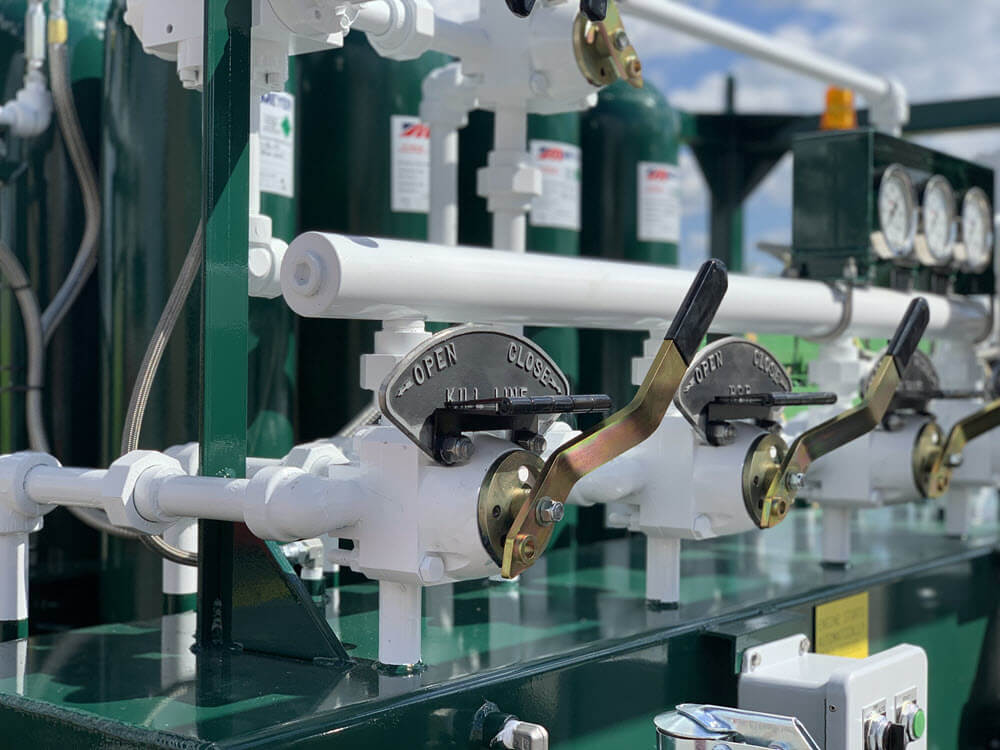
What is a Grease Injector? | Oilfield Grease Units & Lubrication Systems | MEYER
See how grease injectors deliver precise lubrication to oilfield equipment, and explore MEYER's greasing units and manifold systems.
A grease injector is a metering device that delivers a controlled, measured amount of grease to a specific lubrication point, helping oilfield equipment run reliably under demanding field conditions. MEYER designs greasing units and manifold systems that work alongside injectors to keep critical components properly lubricated across a jobsite, reducing premature wear, unplanned downtime, and costly repairs.
In practical terms, a grease injector is not just a nozzle. It is part of a metered lubrication circuit that depends on injector output, line condition, manifold pressure, and grease type all working together. We recommend reviewing injector performance whenever equipment shows early wear signs, inconsistent lubrication, or when a greasing system is being specified for a new application.
Definition: A grease injector is a metering component that delivers a fixed, measured volume of grease to a single lubrication point each time the system cycles. Injectors are used in centralized and manifold-based lubrication systems to keep multiple points across a piece of equipment properly greased without manual application at each point.
Table of Contents
Grease Injector vs Standard Greasing Unit vs Manifold System
Grease Injector Fundamentals
Key Takeaway: Grease injectors meter a fixed volume of grease to a single point, and they only perform reliably when line condition, manifold pressure, and grease type are matched to the application.

Oilfield equipment relies on consistent lubrication to reduce friction, prevent premature wear, and avoid unplanned downtime. A grease injector is the component that makes this possible at scale, delivering a precise, repeatable amount of grease to a single point every time the lubrication system cycles, rather than relying on manual greasing at each fitting.
MEYER builds greasing units and manifold systems that support multiple injectors across a single piece of equipment, so every bearing, joint, or wear point receives consistent lubrication on the same schedule. Our engineering team evaluates injector output, line routing, and manifold pressure together, because a grease injector is only as reliable as the system feeding it.
When we review a greasing system, we look at practical field factors:
- Number of lubrication points and required grease volume per cycle.
- Grease type and consistency for the operating temperature and load.
- Manifold pressure and line length to each injector.
- Injector output consistency and adjustability.
- Access for inspection and maintenance in the field.
How Grease Injectors Work
A grease injector connects to a central grease supply line and meters a fixed volume of grease out to its assigned lubrication point each time the system pumps a cycle. The injector's internal piston moves a set distance with each cycle, which is what makes the output measured and repeatable rather than dependent on how long a grease gun trigger is held.
This metered approach is what allows a single manifold system to serve many lubrication points reliably. Each injector can be adjusted or sized for the volume its specific point needs, so a bearing that requires more grease than a smaller joint can be configured accordingly, all from the same central system.
| System Element | Function | Why It Matters |
|---|---|---|
| Grease injector | Meters a fixed grease volume to one lubrication point | Delivers consistent, repeatable lubrication |
| Manifold | Distributes grease from the pump to multiple injectors | Supports many lubrication points from one system |
| Grease unit / pump | Supplies pressurized grease to the manifold | Drives the entire lubrication cycle |
| Supply and return lines | Carry grease to and from injectors | Line condition affects delivery pressure and output |
Review Multi-Station Grease Manifolds
Types of Grease Injectors
Key Takeaway: The right injector configuration depends on how many points need service, how far apart they are, and how much grease each point requires per cycle.
Grease Injector vs Standard Greasing Unit vs Manifold System
A grease injector, a standard greasing unit, and a multi-station manifold system all support equipment lubrication, but they solve different scale problems. The injector is the metering component itself. The standard greasing unit is a simpler system built for fewer lubrication points. The manifold system extends that same metering principle across many points at once.
| Factor | Standard Greasing Unit | Multi-Station Manifold System |
|---|---|---|
| Best For | Equipment with fewer lubrication points | Equipment with many distributed lubrication points |
| Injector Count | Fewer injectors, simpler routing | Multiple injectors per manifold station |
| Service Focus | Routine inspection and refill | Per-injector output checks and line inspection |
Based on MEYER product specifications. If your equipment has a small number of lubrication points, a standard greasing unit is usually the more practical choice. If you are managing a piece of equipment with many wear points, such as a drilling rig or large closing unit, a manifold system with multiple injectors gives every point its own metered supply from a single source.
Field Use Cases Across Oilfield Regions
Key Takeaway: Grease injector performance can be affected by temperature, dust, and access, so field conditions should factor into how a greasing system is specified and maintained.
Cold weather can thicken grease and affect injector output, so operators in colder regions may need to review grease type and injector adjustment more closely during winter months. In dusty or high-exposure environments, line and fitting inspection becomes more important to keep injectors from drawing in contamination. Wherever your equipment operates, MEYER's service network can help review greasing system performance as part of routine equipment maintenance.
If your team is deciding between a standard greasing unit and a multi-station manifold system, or reviewing why an existing system isn't keeping up with equipment demands, we can help review the lubrication requirement before you commit. Call 877-44-MEYER or use our request more information form to request a configuration review or quote.
Maintenance and Inspection
Key Takeaway: Routine maintenance, checking injector output, inspecting lines for wear, and confirming manifold pressure, helps extend equipment life and avoid costly repairs.
A greasing system is only as reliable as its weakest injector or line. We recommend checking injector output regularly to confirm each point is still receiving its intended grease volume, inspecting supply and return lines for wear or damage, and confirming manifold pressure stays within the range the system was designed for.
- Check injector output at each service interval to confirm consistent metering.
- Inspect supply and return lines for cracking, wear, or leaks.
- Confirm manifold pressure matches the system's designed operating range.
- Use the grease type specified for the application and operating temperature.
- Keep service records so injector performance trends are easy to review over time.
Schedule Greasing System Service
Frequently Asked Questions About Grease Injectors
What does a grease injector do?
A grease injector meters a fixed, repeatable volume of grease to a single lubrication point each time the system cycles. This allows equipment with many lubrication points to receive consistent servicing from one central greasing system instead of manual application at each point.
How is grease injector output checked?
Injector output is typically checked as part of routine equipment maintenance, confirming that each injector is still delivering its intended grease volume per cycle. We recommend building this check into your regular service schedule rather than waiting for a wear issue to appear.
Do I need a manifold system or a standard greasing unit?
This depends on how many lubrication points your equipment has. A standard greasing unit works well for equipment with fewer points, while a multi-station manifold system is better suited for equipment with many distributed lubrication points that all need consistent, metered service.
Can MEYER help specify a greasing system for my equipment?
Yes. Our team can review your equipment's lubrication points, grease requirements, and operating environment to recommend the right combination of greasing unit, manifold, and injectors for your application.
MEYER
Manufacturing, rentals, service, and aftermarket support for oilfield equipment, including greasing systems.
Related Articles
Keep reading more MEYER greasing system and equipment maintenance articles.
Greasing Systems
SPYDER™ Grease Manifold System
See how the SPYDER™ manifold system supports multi-point lubrication for oilfield equipment.